- Home
- Best Foods for Diabetes and What to Avoid
- List of Low Glycemic Index Foods for Diabetes
Low Glycemic Index Foods: A Practical List for Blood Sugar Control
If you live with diabetes, it is understandable to want a simple answer to the question, “What blood sugar should I aim for?”
For many adults, there are well-established treatment targets. However, I always remind my patients that these are general goals, not one-size-fits-all rules. Your safest target depends on your age, type and duration of diabetes, medicines, risk of hypoglycemia, pregnancy status, kidney or heart disease, and overall health.
The goal is not to keep glucose at one perfect number all day. It is to remain within a safe range as consistently as possible while avoiding prolonged high blood sugar and unnecessary low blood sugar.
Quick Answer: Common Blood Glucose Targets
For many nonpregnant adults with diabetes, commonly used treatment goals are:
- Before meals: 80–130 mg/dL (4.4–7.2 mmol/L)
- Peak after meals: below 180 mg/dL (below 10.0 mmol/L), measured 1–2 hours after the beginning of the meal
- A1C: below 7% (below 53 mmol/mol), when this can be achieved safely
| Measurement | Common target | What it means |
|---|---|---|
| Before meals | 80–130 mg/dL (4.4–7.2 mmol/L) |
A common premeal target for many nonpregnant adults |
| Peak after meals | Below 180 mg/dL (below 10.0 mmol/L) |
Usually assessed 1–2 hours after the beginning of the meal |
| A1C | Below 7% (below 53 mmol/mol) |
A common longer-term goal when it can be reached safely |
What Does “Acceptable Blood Glucose” Mean?
An acceptable blood glucose level is not necessarily the same as a “normal” glucose level in someone without diabetes.
When we set a diabetes target, we balance two priorities: keeping glucose low enough to reduce the risk of long-term complications while avoiding hypoglycemia and treatment that is too aggressive for the individual patient.
A single blood glucose reading does not provide a complete picture of diabetes control. In clinical practice, I consider the broader pattern, including fasting and premeal glucose levels, post-meal readings when appropriate, A1C, episodes of hypoglycemia, symptoms, current medications, and, when available, continuous glucose monitoring (CGM) data. These measures should also be interpreted in the context of established blood glucose and A1C ranges for normal glucose, prediabetes, and diabetes.
Acceptable Blood Glucose Before Meals
For many nonpregnant adults with diabetes, a common target before meals is 80–130 mg/dL (4.4–7.2 mmol/L).
This gives us useful information about your baseline glucose before food begins to raise it. If most of your premeal readings are within your agreed target, that is encouraging, but they should still be interpreted together with your post-meal pattern, A1C, low-glucose episodes and overall treatment plan.
A reading of 80 mg/dL is not hypoglycemia. It is near the lower end of the usual premeal target. Hypoglycemia is generally defined as glucose below 70 mg/dL.
If fasting or premeal readings are repeatedly above your personal target, possible contributors include overnight glucose production, meal or medication timing, illness, poor sleep, stress and changes in physical activity. A pattern over several days is more informative than one isolated morning reading.
If morning glucose is your main concern, see our guide to fasting blood sugar levels.
Acceptable Blood Glucose After Meals
For many adults with diabetes, a common target is a peak post-meal glucose below 180 mg/dL (10.0 mmol/L).
When post-meal glucose is being assessed, it is generally measured 1–2 hours after the beginning of the meal. The timing matters because this period is intended to capture glucose near its post-meal peak.
One reading slightly above 180 mg/dL does not necessarily mean your treatment is failing. A larger meal, more carbohydrate than usual, illness, stress, poor sleep or reduced activity can all affect the result. More important questions are whether higher readings occur frequently, remain elevated for a long time, or appear alongside an A1C or CGM pattern showing excessive glucose exposure.
Because blood glucose changes throughout the day, the timing of a measurement matters, particularly when interpreting blood sugar levels after eating.
How Does A1C Fit With Daily Blood Sugar Targets?
Daily readings show what your blood sugar is doing at a particular moment. A1C provides a broader view of glucose exposure over the previous two to three months, with more recent weeks contributing more to the result.
For many nonpregnant adults with diabetes, a common A1C goal is below 7% (53 mmol/mol) when it can be achieved safely. Some people may benefit from a lower goal. Others need a less stringent goal because hypoglycemia, frailty, serious comorbidities, cognitive or functional limitations, or treatment burden makes tighter control less safe.
I would not interpret A1C in isolation. Two people can have the same A1C while experiencing very different patterns of highs and lows.
Learn more in A1C vs Blood Sugar, or use our HbA1c to Average Glucose Calculator.
What If I Use a Continuous Glucose Monitor?
A continuous glucose monitor, or CGM, helps us look beyond individual fingerstick readings. It shows how much time glucose spends within, above and below the target range.
| CGM metric | Common goal for many adults |
|---|---|
| Time in range: 70–180 mg/dL | More than 70% of the time |
| Time below 70 mg/dL | Less than 4% of the time |
| Time below 54 mg/dL | Less than 1% of the time |
| Time above 180 mg/dL | Less than 25% of the time |
CGM goals also need to be individualized. Some older adults with complex health problems, for example, may need more permissive goals to reduce the risk of hypoglycemia.
What About Bedtime Blood Sugar?
There is no single bedtime glucose target appropriate for every adult with diabetes. Bedtime goals depend on insulin use, risk of overnight hypoglycemia, age, other medical conditions, recent exercise, meal timing and the treatment plan you follow.
If you use insulin or medicines that can cause hypoglycemia, your clinician may give you a specific bedtime target. Follow that individualized plan rather than relying on a universal bedtime number from the internet.
What Is Considered Low Blood Sugar?
For people with diabetes, glucose below 70 mg/dL (3.9 mmol/L) is considered hypoglycemia and should be taken seriously. A level below 54 mg/dL (3.0 mmol/L) is more clinically significant.
Symptoms may include shakiness, sweating, hunger, palpitations, dizziness, weakness, irritability, confusion or difficulty concentrating. If you have a hypoglycemia treatment plan, follow it promptly. Frequent low readings require medical review because medication dose, meal timing or activity may need adjustment.
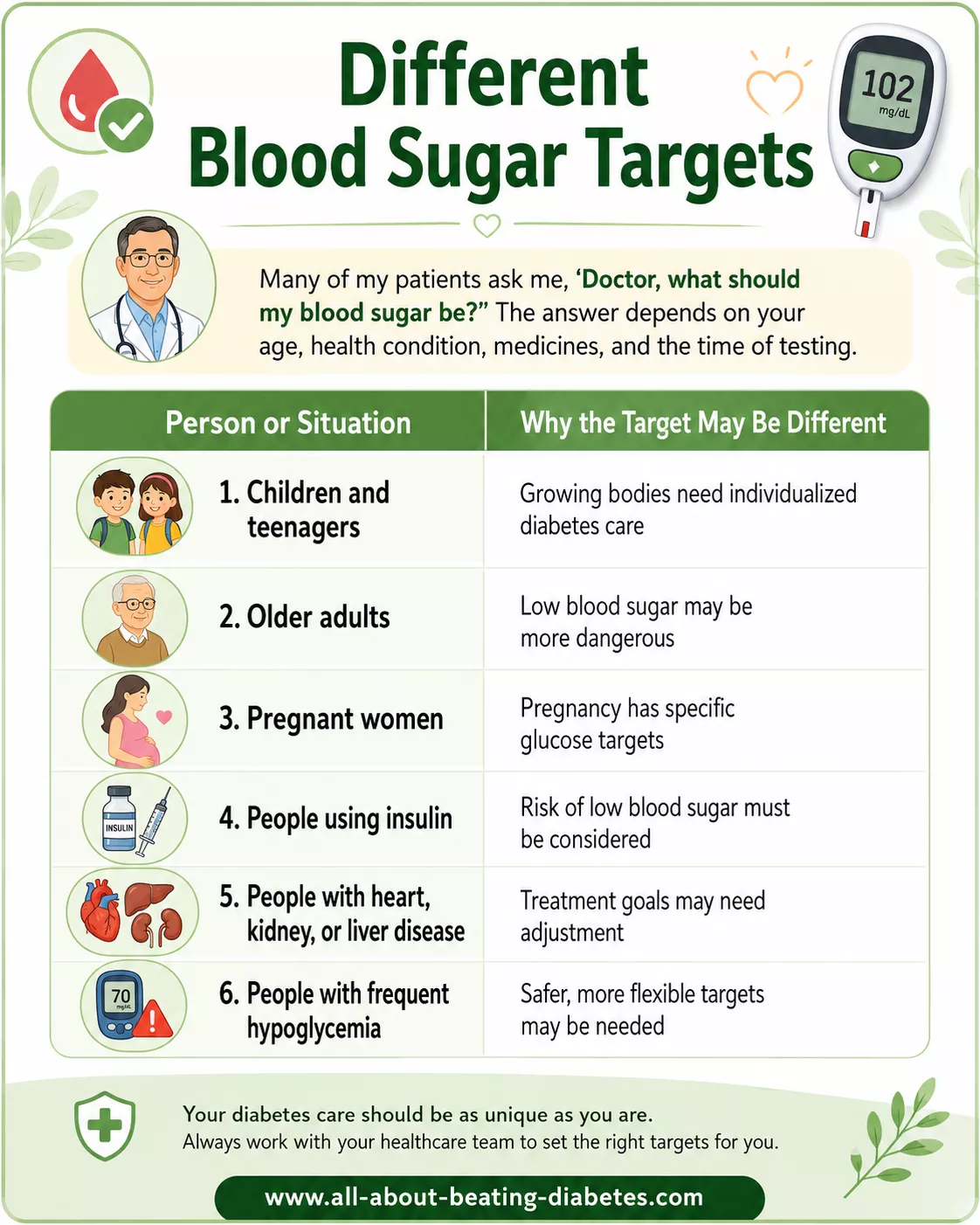
Why Your Personal Target May Be Different
I would not give exactly the same glucose goal to every patient. Your targets may need to be individualized if you:
- are pregnant or planning pregnancy;
- are a child or adolescent;
- are an older adult;
- have frequent or severe hypoglycemia;
- have impaired awareness of low blood sugar;
- have significant kidney, heart, liver or other medical disease;
- have cognitive or functional limitations;
- have lived with diabetes for many years; or
- use insulin or medicines that increase hypoglycemia risk.
An older adult who is otherwise healthy may still have relatively tight glucose goals. Someone with frailty, several serious illnesses or recurrent hypoglycemia may need more relaxed targets because preventing low blood sugar becomes the greater priority.
What Can Affect Your Blood Glucose Readings?
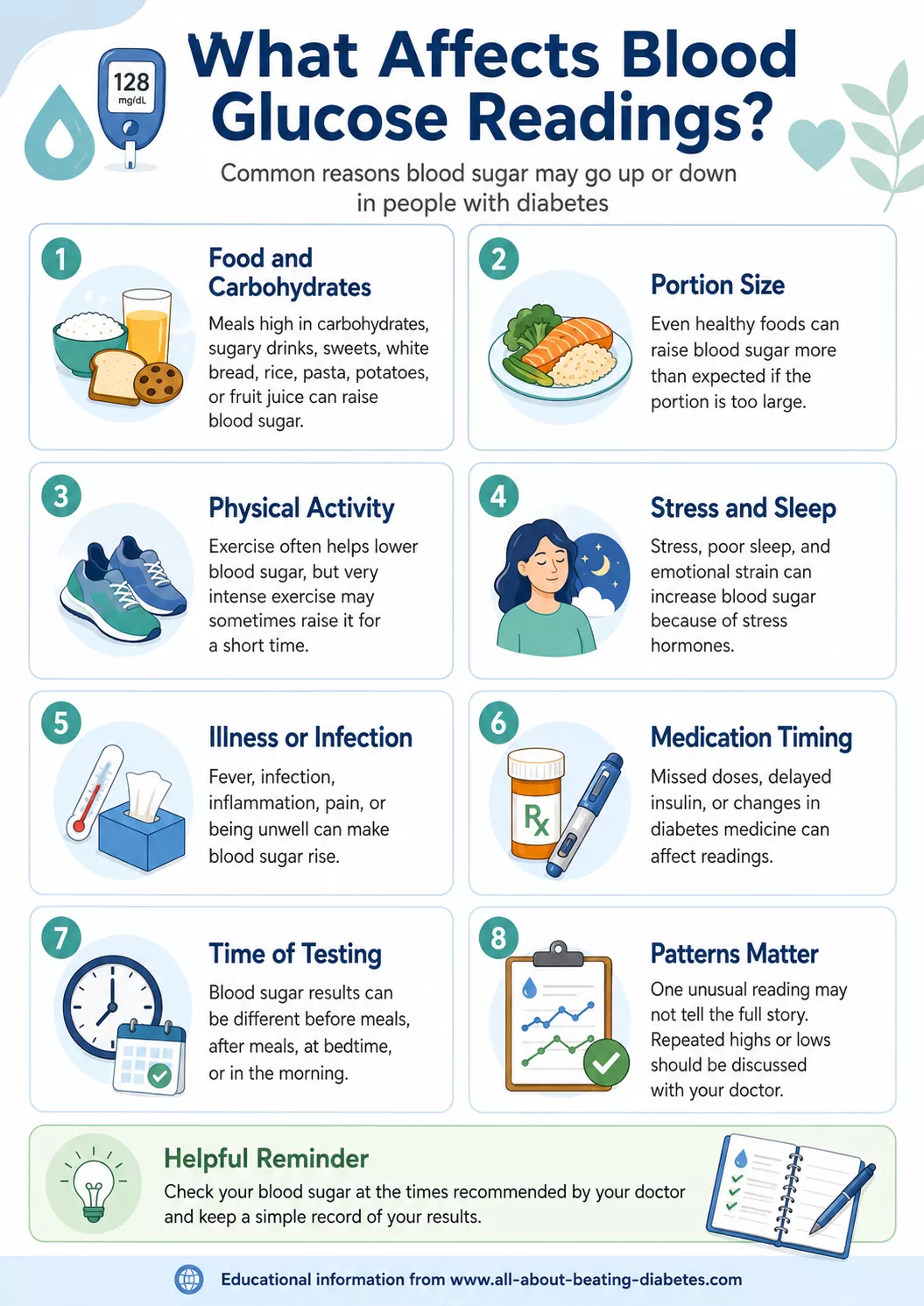
Even when your treatment plan has not changed, glucose can vary from day to day. Common influences include:
- meal size and carbohydrate content;
- physical activity;
- stress and sleep;
- infection, illness or pain;
- dehydration or alcohol;
- hormonal changes;
- medication timing;
- missed insulin or diabetes medicine; and
- corticosteroids and some other medicines.
This is why I encourage patients to look for patterns rather than reacting strongly to one unusual result.
How to Keep Blood Glucose Closer to Your Target
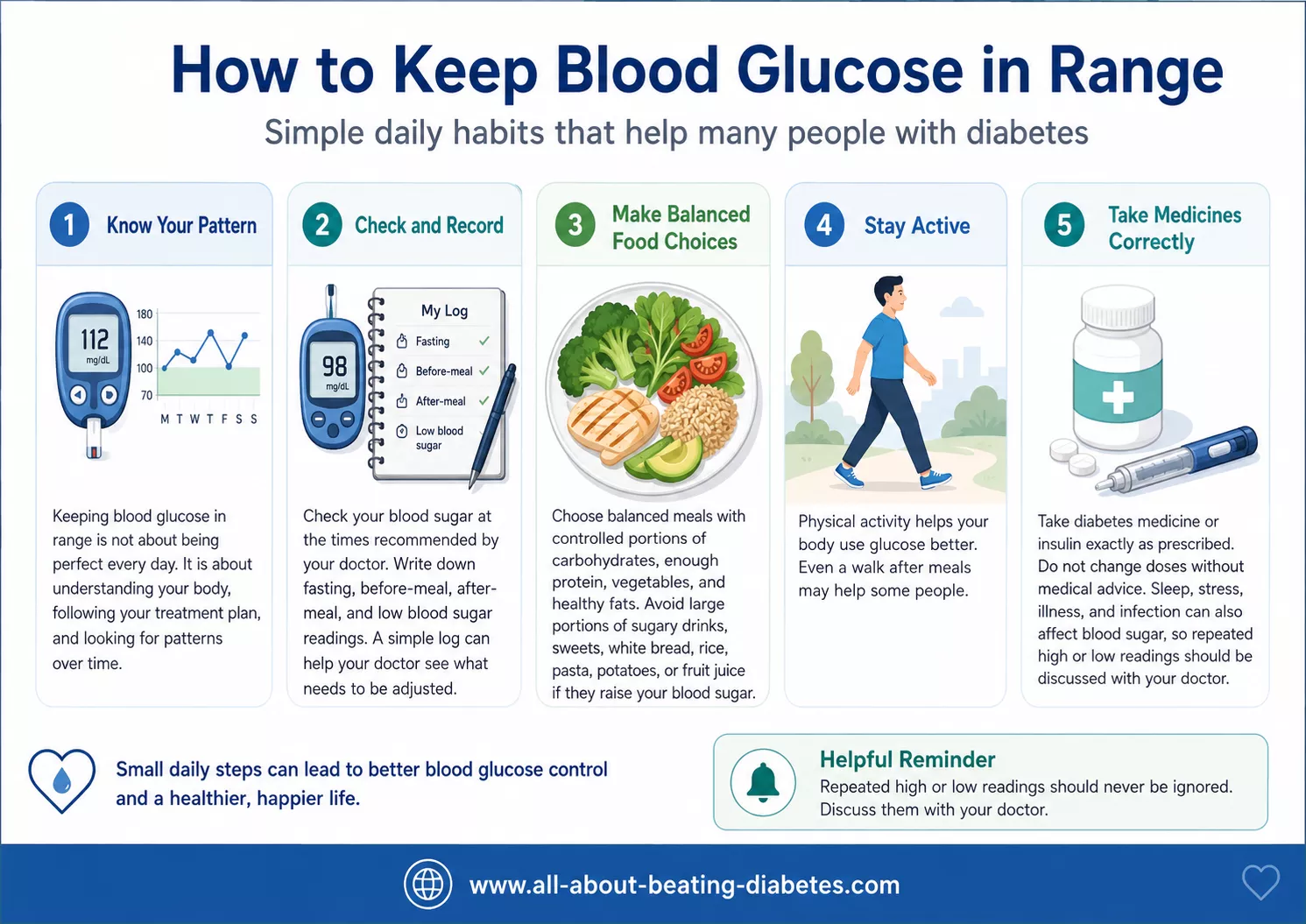
Keeping glucose in range does not require perfect numbers every day. The practical goal is to make the overall pattern safer and more consistent. Depending on your treatment plan, helpful steps may include:
- taking insulin or diabetes medicine exactly as prescribed;
- checking glucose at the times recommended by your healthcare team;
- keeping carbohydrate portions reasonably consistent when this is part of your plan;
- choosing meals with vegetables, protein, fiber and appropriate carbohydrate portions;
- being physically active regularly;
- reviewing repeated highs or lows instead of changing medication on your own;
- paying attention to sleep, illness, stress and hydration; and
- bringing your glucose log or CGM report to medical appointments.
Do not change insulin or medication doses because of one unusual result unless your healthcare professional has given you a specific adjustment plan.
Dr. Albana’s Perspective
When a patient asks whether a blood sugar number is “acceptable,” I first ask when it was measured and what target we agreed on for that person.
A premeal glucose of 125 mg/dL may be within the usual target for many adults with diabetes. The same number means something different if we are discussing a fasting laboratory test used to screen a person who has not been diagnosed with diabetes.
I also do not judge diabetes control from one good reading or one bad reading. I want to know whether most values are reasonably close to target, whether there are repeated highs, whether low glucose is occurring, and whether the A1C or CGM report tells the same story.
The best target is not the lowest number you can achieve. It is the range that offers meaningful long-term protection while remaining safe and realistic for your health and treatment.
When Should You Contact Your Doctor?
Contact your healthcare team if:
- glucose is repeatedly above your agreed target;
- you have repeated readings below 70 mg/dL;
- you experience nighttime hypoglycemia;
- your A1C is rising despite apparently reasonable daily readings;
- your CGM shows frequent highs or lows;
- you are ill and glucose becomes difficult to control;
- you are unsure whether medication or insulin needs adjustment; or
- your target may no longer be appropriate because of pregnancy, aging or a new medical condition.
Related Questions
Is 130 mg/dL acceptable for someone with diabetes?
It depends on when it was measured. For many nonpregnant adults, 130 mg/dL is at the upper end of the common premeal target. After a meal, it may also be within an acceptable range, but your individual target may differ.
Is 180 mg/dL after eating acceptable?
For many adults with diabetes, the common goal is a peak post-meal glucose below 180 mg/dL, assessed 1–2 hours after the beginning of the meal. Frequent readings at or above this level should be reviewed as a pattern.
Is 70 mg/dL acceptable?
Seventy mg/dL is the threshold at which we become concerned about hypoglycemia. A reading below 70 mg/dL should be treated according to your diabetes plan, and repeated lows should be discussed with your healthcare team.
Should everyone with diabetes have the same glucose target?
No. Age, pregnancy, medications, hypoglycemia risk, kidney or heart disease, functional status and other health conditions can all affect the safest goal.
What should my blood sugar be at bedtime?
There is no universal bedtime target for every adult with diabetes. Your bedtime goal should reflect your treatment plan, especially if you use insulin or are at risk of overnight hypoglycemia.
Is A1C below 7% right for everyone?
No. Below 7% is a common goal for many nonpregnant adults, but some people may benefit from a lower goal and others need a less stringent one for safety.
Related Tools and Calculators
Related Resources
Final Key Message
For many nonpregnant adults with diabetes, common treatment goals are 80–130 mg/dL before meals, below 180 mg/dL at the peak after meals, and A1C below 7% when these goals can be achieved safely.
If you use CGM, spending more than 70% of the time between 70 and 180 mg/dL is a common goal for many adults, while time below 70 mg/dL should remain limited.
Most importantly, your target should fit you. A safe plan balances glucose control with your risk of hypoglycemia, medications, age, other medical conditions and daily life. I would rather see a patient follow a realistic, individualized target safely and consistently than chase a “perfect” number that creates unnecessary risk.
References
- American Diabetes Association Professional Practice Committee. Glycemic Goals, Hypoglycemia, and Hyperglycemic Crises: Standards of Care in Diabetes—2026. Diabetes Care. 2026;49(Suppl. 1).
- American Diabetes Association Professional Practice Committee. Older Adults: Standards of Care in Diabetes—2026. Diabetes Care. 2026;49(Suppl. 1).
- American Diabetes Association. Checking Your Blood Sugar.
- National Institute of Diabetes and Digestive and Kidney Diseases. Managing Diabetes. National Institutes of Health.
Medical disclaimer: This information is for general education and does not replace professional medical advice, diagnosis or treatment. Follow the glucose targets and treatment plan recommended by your healthcare professional. Do not change insulin or diabetes medication doses without appropriate medical guidance.
Written by: Dr. Albana Greca Sejdini, MD, MMedSc
Medically reviewed by: Dr. Ruden Cakoni, MD, Endocrinologist
Last medically reviewed: July 2026
Low-glycemic-index foods can be useful when you want carbohydrate to be digested and absorbed more gradually. However, glycemic index is only one part of meal planning. Portion size, total carbohydrate, fiber, food processing, and the complete meal usually matter more than one GI number.
What low GI means · Correct GI ranges · Low-GI food list · Foods without a meaningful GI · Why portions still matter · Glycemic load · Why GI values vary · Meal and snack ideas · How to shop · Check your glucose response · Medicine and insulin safety
What Does “Low Glycemic Index” Mean?
The glycemic index, or GI, ranks carbohydrate-containing foods according to the glucose response they produce under standardized testing conditions. The reference value is glucose or another standard carbohydrate food.
A low-GI food generally produces a slower glucose response than a high-GI food containing the same amount of available carbohydrate. GI mainly describes the quality and speed of carbohydrate digestion. It does not tell you:
- how much carbohydrate is in your usual portion;
- how many calories the food contains;
- whether it is high in fiber, protein, sodium, saturated fat, or vitamins;
- how it affects your glucose when combined with other foods;
- whether it is suitable for your medicine or insulin plan.
Read the broader explanation in Diabetes Diet, Carbohydrates, Glycemic Index, and Glycemic Load.
The Correct Glycemic Index Categories
| GI category | GI value | General meaning |
|---|---|---|
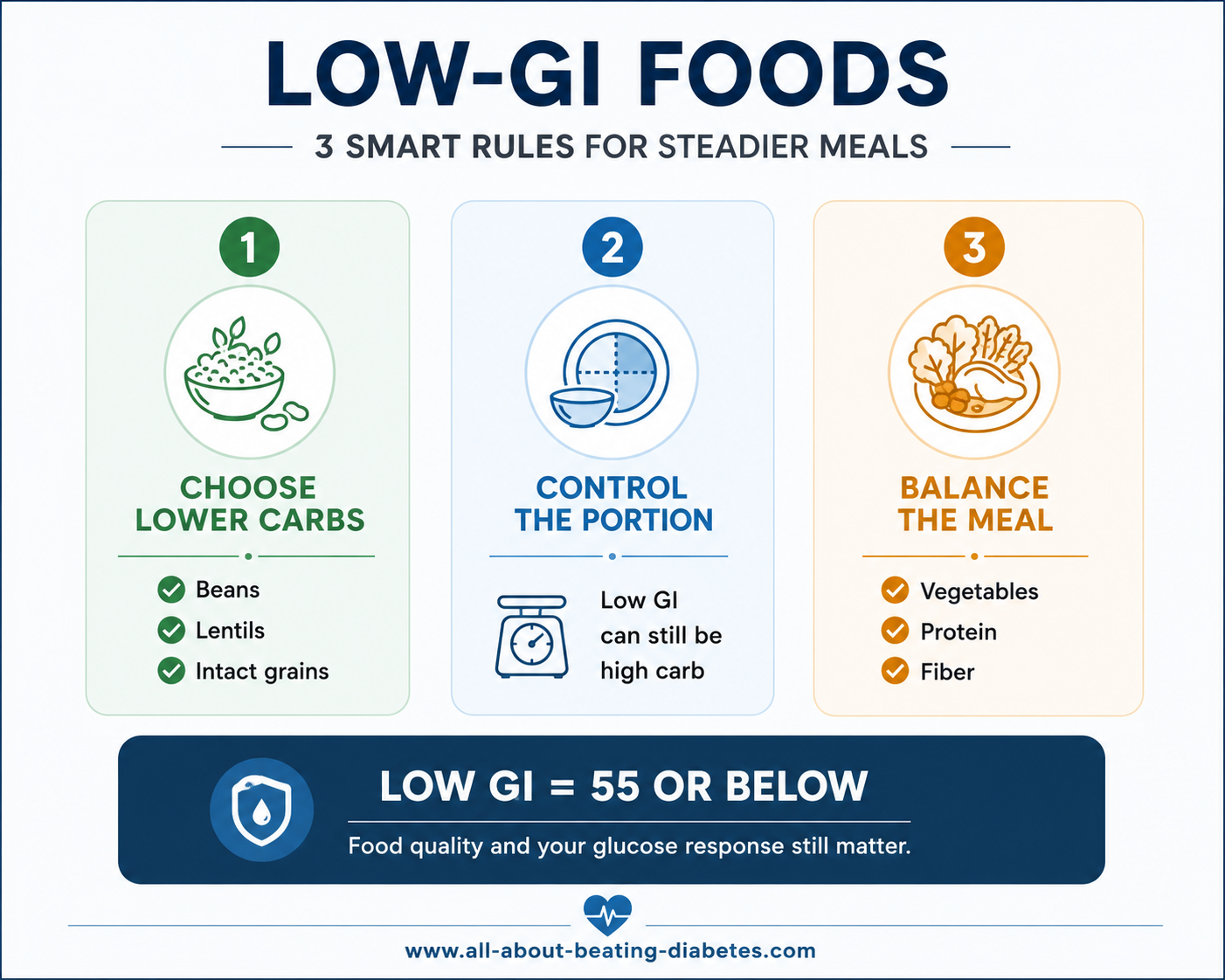
| Low GI | 55 or below | Usually produces a slower glucose response under standardized conditions. |
| Medium GI | 56–69 | Produces an intermediate response. |
| High GI | 70 or above | Usually produces a faster response. |
The older cutoffs of “above 77” for high GI and “55–70” for medium GI are not the standard categories used in current international tables.

Practical List of Low-GI Foods
The food groups below commonly include low-GI options, but the exact value can vary by variety, processing, preparation, ripeness, and laboratory method. Use this as a shopping and meal-planning guide rather than treating every item as guaranteed to have one fixed value.
Beans, lentils, and other legumes
- lentils;
- chickpeas;
- black beans;
- kidney beans;
- navy beans;
- cannellini beans;
- pinto beans;
- split peas;
- soybeans and edamame.
Legumes are among the most dependable low-GI carbohydrate choices because they contain fiber, resistant starch, and plant protein. They still contain carbohydrate, so portions count—especially when served with bread, rice, potatoes, or another starch.
Whole and minimally processed grains
- barley, especially intact or pearled forms;
- steel-cut or traditional oats rather than instant sweetened oatmeal;
- bulgur;
- rye kernels or dense rye bread with intact grain structure;
- quinoa in an appropriate portion;
- buckwheat and buckwheat groats;
- whole-grain kernels such as wheat berries;
- some parboiled or converted rice varieties.
The words “whole grain” do not guarantee a low GI. Finely milled whole-wheat bread may produce a faster response than dense, intact-grain bread. Rice GI varies widely by variety and cooking method, and instant rice is not reliably low GI.
Pasta and noodles
- pasta cooked al dente;
- whole-grain pasta;
- legume-based pasta made from chickpeas, lentils, or beans;
- some durum-wheat noodles.
Pasta often has a lower GI than bread made from similar flour because its structure slows digestion. Large servings can still provide substantial carbohydrate and a high glycemic load.
Whole fruits
Many whole fruits fall in the low-GI range when eaten in realistic portions. Examples commonly include:
- apples and pears;
- oranges and grapefruit;
- peaches, plums, and apricots;
- cherries;
- berries;
- kiwifruit;
- less-ripe bananas;
- some grapes and tropical fruits in moderate portions.
Ripeness and variety matter. Whole fruit usually produces a different response from juice because chewing, fiber, food structure, and portioning slow consumption. See the low-GI fruit guide.
Milk and yogurt
- plain milk;
- unsweetened natural yogurt;
- plain Greek-style yogurt;
- unsweetened soy milk with a suitable nutrition profile.
Dairy foods often have a relatively low GI, but flavored milk, sweetened yogurt, frozen desserts, and specialty drinks may contain substantial added sugar. Low GI does not make chocolate milk or low-fat ice cream an unrestricted diabetes food.
Starchy vegetables
Some starchy vegetables may have low or moderate GI values depending on variety and preparation. Possible options include:
- sweet potato prepared without added sugar;
- corn in a moderate portion;
- green peas;
- some winter squashes;
- specific lower-GI potato varieties.
Most common potatoes are medium or high GI, especially when mashed, baked until very soft, or highly processed. Cooling and reheating may alter resistant starch, but it does not make an unlimited portion glucose-neutral.
Breads and crackers
Lower-GI options may include:
- dense whole-kernel bread;
- traditional sourdough with substantial whole-grain structure;
- pumpernickel or dense rye bread;
- bread containing intact seeds and grains.
Many commercial multigrain, wholemeal, gluten-free, flatbread, cracker, and crispbread products remain rapidly digestible. Read total carbohydrate, fiber, ingredients, and serving size instead of relying on color or marketing language.
Foods That Do Not Have a Meaningful Glycemic Index
GI testing requires a food portion containing a standardized amount of available carbohydrate. Foods with very little or no carbohydrate do not have a useful GI value.
These include:
- nonstarchy vegetables such as leafy greens, broccoli, cauliflower, cucumber, peppers, mushrooms, and zucchini;
- eggs;
- fish, poultry, and unprocessed meat;
- tofu and many unsweetened soy products;
- nuts and seeds in typical portions;
- olive oil and other pure fats;
- cheese with little carbohydrate.
This does not mean these foods have no effect on health or glucose. A high-fat mixed meal may delay digestion and contribute to later hyperglycemia, while processed meat, excess saturated fat, and high sodium can affect cardiovascular health.
Why Portion Size Still Matters
A low-GI food can still raise glucose significantly when the portion contains a large amount of carbohydrate.
For example:
- a large bowl of low-GI pasta may contain several carbohydrate servings;
- a large portion of beans plus rice and bread combines multiple carbohydrate foods;
- juice may have a lower GI than expected but is easy to drink quickly and provides little of the original fruit structure;
- low-GI desserts can still contain added sugar, calories, and saturated fat.
CDC meal-planning guidance emphasizes both what you eat and how much you eat. A practical plate uses half nonstarchy vegetables, one-quarter lean protein, and one-quarter carbohydrate food, with water or an unsweetened drink.
Use the diabetes plate-method and meal-plan guide for practical portions.
Glycemic Load Adds the Portion
Glycemic load, or GL, combines the GI of the food with the amount of available carbohydrate in the portion:
A food can have a low GI but a moderate or high GL when the serving is large. Conversely, a food with a higher GI may have a lower GL when the usual portion contains little carbohydrate.
GL can be more practical than GI alone, but it remains an estimate and depends on a reliable GI value and an accurately measured portion. Read the glycemic load guide.
Why GI Values Change
| Factor | Possible effect |
|---|---|
| Processing and milling | Breaking food into smaller particles often speeds digestion. |
| Cooking time and texture | Longer cooking and softer texture can make starch easier to digest. |
| Variety | Different rice, potato, bread, and fruit varieties may have different responses. |
| Ripeness | Riper fruit often contains more readily available sugars. |
| Food structure and fiber | Intact structure and viscous fiber can slow digestion. |
| Protein, fat, and acidity | May slow the early rise but can prolong later absorption in mixed meals. |
| Individual response | Medicine, insulin, activity, sleep, stress, gut function, and time of day influence results. |
This variation is why exact food values from a chart should be treated as estimates, not guarantees.
Low-GI Meal and Snack Ideas
Breakfast
- traditional oats with plain yogurt, berries, and seeds;
- eggs with nonstarchy vegetables and one slice of dense whole-grain bread;
- plain Greek-style yogurt with apple pieces, nuts, and cinnamon;
- lentil or chickpea-based savory breakfast with vegetables.
Lunch
- lentil soup with salad and a measured piece of dense whole-grain bread;
- chickpea and vegetable salad with olive oil and lemon;
- barley bowl with roasted vegetables and fish or tofu;
- bean wrap using a higher-fiber tortilla, with portion size checked.
Dinner
- grilled chicken or fish, nonstarchy vegetables, and a small serving of barley or lentils;
- vegetable and tofu stir-fry with a measured portion of lower-GI rice;
- whole-grain or legume pasta with vegetables and lean protein;
- bean stew with salad and no additional large starch portion.
Snacks
- whole fruit with nuts;
- plain yogurt with berries;
- raw vegetables with hummus;
- a small apple with peanut or almond butter;
- roasted chickpeas in a measured portion.
These are general examples. Kidney disease, gastroparesis, pregnancy, food allergy, celiac disease, insulin use, and individual carbohydrate goals may require changes.
How to Choose Lower-GI Foods While Shopping
- Check total carbohydrate. Do not look only at “sugars.”
- Check the serving size. Your actual portion may be two or three label servings.
- Look for fiber. Beans, intact grains, whole fruit, nuts, seeds, and vegetables are useful sources.
- Read the ingredient list. Whole grain listed first does not guarantee low GI, but it helps assess food quality.
- Limit added sugar and refined starch.
- Compare similar products. Choose the option with a better combination of carbohydrate, fiber, sodium, saturated fat, and ingredients.
- Be cautious with “low GI” marketing. The claim does not automatically mean low calorie, low carbohydrate, or heart healthy.
A glycemic-index symbol or claim may be useful when backed by standardized testing, but the complete nutrition label still matters.
How to Check Your Personal Glucose Response
- Measure a realistic portion.
- Record all carbohydrate foods in the meal.
- Check glucose before eating when your plan recommends it.
- Check again at the time advised for you—often one to two hours after the first bite.
- Record medicine, insulin, exercise, illness, stress, and sleep.
- Repeat the meal before drawing a firm conclusion.
One glucose reading may be affected by normal meter variation, CGM lag, insulin timing, or activity. Repeated patterns are more useful. See the after-meal blood sugar guide.
Medicine, Insulin, and Low-GI Diet Safety
Replacing rapidly digested carbohydrate with smaller portions of lower-GI foods may reduce after-meal glucose in some people. That can change insulin or medicine needs.
Low-GI food choices do not treat severe hyperglycemia, ketones, DKA, or HHS. Do not use food substitutions to delay urgent care for vomiting, deep breathing, confusion, severe dehydration, or moderate-to-large ketones.
Do Low-GI Foods Prevent Diabetes or Complications?
Low-GI choices may support a healthier overall eating pattern and may produce modest improvements in glucose control for some people. They do not guarantee prevention of type 2 diabetes or protection from heart, kidney, eye, nerve, or foot complications.
Risk reduction depends on the complete care plan, including activity, weight management when appropriate, blood pressure, cholesterol, smoking, sleep, medicine, and regular complication screening.
The most useful strategy is not simply “eat everything under GI 55.” It is to build a high-quality eating pattern with suitable carbohydrate portions and monitor how it works for you.
Most Asked Questions
Are all low-GI foods safe to eat freely?
No. Pasta, beans, bread, fruit, dairy, and other low-GI foods can still provide substantial carbohydrate and calories when portions are large.
Is fruit juice low GI?
Some juices may test in the low or medium range, but juice lacks much of the original fruit structure, is easy to drink quickly, and can provide a large carbohydrate load. Whole fruit is generally the more practical choice.
Is brown rice always low GI?
No. Rice values vary widely by variety and cooking method. Brown color or whole-grain labeling does not guarantee a low GI.
Is whole-wheat bread always low GI?
No. Finely milled whole-wheat bread can still be rapidly digested. Dense intact-grain and some traditional sourdough breads may produce a slower response.
Is cheese a low-GI food?
Cheese contains little carbohydrate, so it usually has no meaningful GI. Its saturated fat, sodium, calories, and portion still matter.
Are low-GI foods enough for type 1 diabetes?
No. People with type 1 diabetes still require insulin and need to count or estimate carbohydrate according to their prescribed method.
Related Questions
- Why Can Blood Sugar Rise After a High-Fiber Meal?
- What Does Blood Sugar of 196 mg/dL Two Hours After Food Mean?
- How Can I Control High Post-Meal Blood Sugar?
- How Many Carbohydrates Are Appropriate for Prediabetes or Diabetes?
Related Resources
- Low-Glycemic Diet: Foods and Meal Plan
- Glycemic Index Chart for Common Foods
- Glycemic Load Chart
- Low-Glycemic-Index Fruits
- Diabetes Diet, Carbohydrates, GI, and GL
- Diabetic Meal Plan and Plate Method
Medical disclaimer: This page provides general education and does not prescribe a carbohydrate amount, insulin dose, or personal diet. Discuss major food changes with your healthcare professional when you use insulin or medicines that can cause hypoglycemia, or if you have pregnancy, kidney disease, gastroparesis, or another medical condition.
References
- American Diabetes Association: Facilitating Positive Health Behaviors and Well-being—Standards of Care in Diabetes 2026
- Centers for Disease Control and Prevention: Diabetes Meal Planning
- Centers for Disease Control and Prevention: Carbohydrate Counting
- Atkinson and colleagues: International Tables of Glycemic Index and Glycemic Load Values 2021
- Chiavaroli and colleagues: Low-GI or Low-GL Dietary Patterns and Cardiometabolic Risk Factors in Diabetes
- American Diabetes Association: Tips for Eating Well
The glycemic index (GI) is a measure of how quickly a carbohydrate-containing food raises blood sugar levels.
Foods with a low GI value (less than 55) are absorbed more slowly and cause a more gradual increase in blood sugar levels.
In the paragraphs that follow, I'll provide a deeper explanation of the concepts surrounding this category of foods.
What does “low glycemic index foods” mean?
The term "low glycemic index foods" refers to foods that have a lower glycemic index value, typically less than 55 on the glycemic index scale. The glycemic index measures how quickly certain foods raise blood glucose levels, with higher values indicating a more rapid increase.
Low glycemic index foods are those that are processed more slowly in the body, resulting in a slower and steadier release of glucose into the bloodstream over time. These foods are absorbed more slowly and have a less significant impact on blood sugar levels.
Low glycemic index foods categories and chart
High Glycemic Index Foods: These are foods with GI above 77. They raise the sugar level faster. Few examples are Water Biscuit, Rice Cake, Rice Krispies, Cornflakes, Weetabox, Broad Beans and Baguette.
Intermediate Glycemic Foods: These are foods with GI index between 55 and 70.Few examples are Darnish Partry, Muffin, Croissant, Ryvita, Water Biscuit, Digestives, Short Bread, Cheese, Hamburger Bun, Whole Meal Bread.
Low Glycemic Index Foods: Has it being explained above, foods with GI index below 55. They include:
BEVERAGES: Soya Milk (GI30), Apples Juice(GI41), Carriot Juice(45), Pineapple Juice(46), Orange Juice(GI52).
BREAD: Multi Grain Breads (48), Whole Grain (50).
CEREAL GRAIN: Pearly Barley (25), Rye (34), Wheat Kernel(41), Rice, Instant(46), Rice Parboiled(48).
DIARY FOODS: Milk, chocolate (24), Milk, Skimmed (32), Ice-Cream(low-fat)GI50.
The benefits of low glycemic index foods
1- First of all, foods with low GI index help to keep your blood sugar levels under control. You will not suffer headache each time you eat them worrying about raise in your blood sugar.
If you want to manage diabetes and foods are something you cannot resist, just eat the right one and you are safe.
2- At the same time, these kinds of foods can help you improve your cholesterol levels too. This is great if you think of problems coming out from both of them: diabetes and high cholesterol.
3- If you both manage diabetes and high cholesterol, at the same time you have reduced the risk of heart disease. And this is due to these low GI foods. 4- If you use these low glycemic index foods, your weight will not cause you problems. Because, you may perfectly manage your body weight if you organize your meal plans around these foods. And you will not worry about what diet to follow to become slimmer.
5- What is more you will feel relieved and your body will feel fresher and healthier. Your overall well-being could be improved too. Don’t you think this is great?
If you eat high calorie foods, you may fulfill all the desires to your gluttony. But, you will do more harm to your body than you think. And at the same you will feel uncomfortable due to “the overload” of foods you take.
Although you may not have diabetes, but you are at risk of having it, if you take low glycemic index foods, will keep safe of any diabetes problems. The solution is on your hand. Just catch it!