- Home
- Best Foods for Diabetes and What to Avoid
- How to Choose Fruit for Diabetes Without Raising Blood Sugar
Choosing Fruits With Diabetes: Best Choices, Portions, and Blood Sugar Tips
Written by: Dr. Albana Greca Sejdini, MD, MMedSc
Medically reviewed by: Dr. Ruden Cakoni, MD, Endocrinologist
Last medically reviewed: July 2026
People with diabetes can eat fruit. Fruit provides carbohydrate, water, fiber, vitamins, minerals, and many plant compounds. The practical questions are not whether a fruit is “good” or “bad,” but how much carbohydrate is in the portion, whether the fruit is whole or processed, how ripe it is, what else is eaten with it, and how your glucose responds.
Are There Really “Good” and “Bad” Fruits for Diabetes?
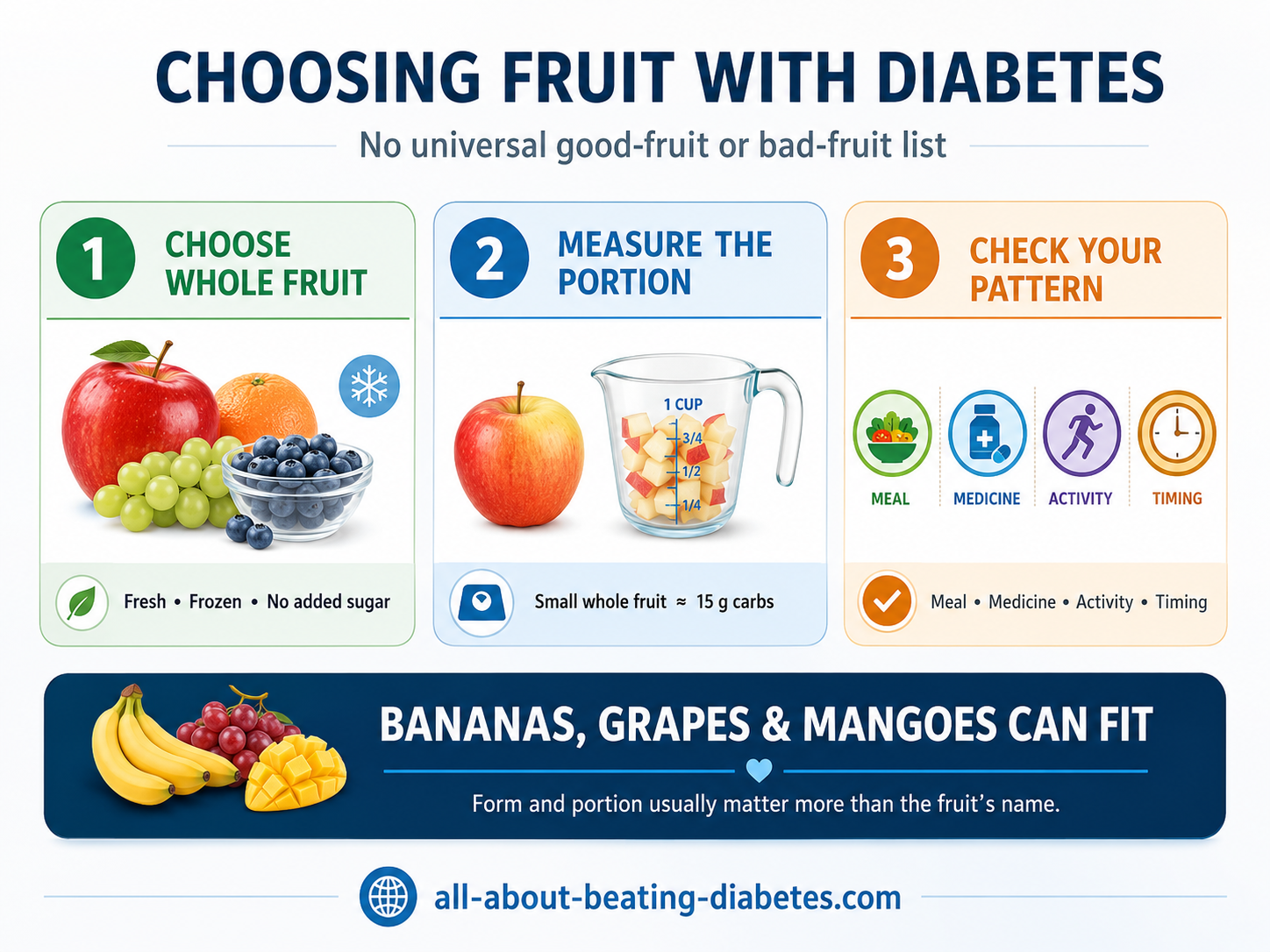
No fruit is universally good or bad. A useful fruit choice depends on:
- the amount of available carbohydrate;
- the portion actually eaten;
- whether the fruit is whole, juiced, dried, blended, or packed in syrup;
- ripeness and variety;
- the rest of the meal;
- insulin and diabetes medicines;
- activity, sleep, stress, illness, and time of day;
- your repeated glucose response.
Whole fruit is usually more filling than juice because it retains more intact structure and fiber and takes longer to eat. Dried fruit is concentrated into a small volume. Canned fruit may be an excellent choice when it is packed in water or its own juice without added sugar.
A fruit that produces an acceptable response for one person may produce a larger rise for another. This is not a reason to fear fruit; it is a reason to use portions and patterns.

What Are the Best Fruit Choices?
The American Diabetes Association lists fresh, frozen, and canned fruit without added sugar as suitable choices. A practical order of preference is:
- Whole fresh fruit in an appropriate portion.
- Plain frozen fruit without added sugar or syrup.
- Canned fruit labeled unsweetened, no added sugar, packed in water, or packed in its own juice.
- Dried fruit in a very small measured portion.
- One hundred percent fruit juice in a small measured portion, used less often than whole fruit.
Variety is useful. Different fruits provide different nutrients and flavors. Examples that can fit include:
- apples, pears, peaches, plums, nectarines, and apricots;
- strawberries, blueberries, raspberries, and blackberries;
- oranges, mandarins, grapefruit, and other citrus fruit;
- cherries and grapes;
- bananas, mangoes, papaya, pineapple, kiwi, and guava;
- watermelon, cantaloupe, and honeydew;
- pomegranate and other culturally familiar fruit.
Avocado is botanically a fruit but behaves nutritionally more like an unsaturated-fat food because it contains little digestible carbohydrate.
Fruit Portions With Approximately 15 Grams of Carbohydrate
The following are general starting points. The exact carbohydrate content varies by fruit size, variety, brand, ripeness, and preparation.
| Fruit form | Approximate portion for 15 g carbohydrate | Practical note |
|---|---|---|
| Small whole fruit | About one small piece | Examples may include a small apple, orange, peach, or pear; weigh or check a database when precision is required. |
| Frozen or canned fruit | About 1/2 cup | Choose no added sugar and count any liquid consumed. |
| Berries or melon | About 3/4–1 cup | These often provide more volume for a similar carbohydrate amount. |
| Banana | About one small banana or roughly half of a large banana | Size and ripeness matter. |
| Grapes, mango, or pineapple | A small measured bowl, often about 1/2–3/4 cup | Do not eat directly from a large bag or container when portion control is difficult. |
| Dried fruit | About 2 tablespoons | Carbohydrate is concentrated and the serving is easy to underestimate. |
| Fruit juice | About 1/3–1/2 cup | Use the label; many glasses contain several carbohydrate servings. |
These examples are not a required daily limit. The number of fruit servings that fits depends on total energy and carbohydrate needs, glucose targets, insulin, activity, kidney function, pregnancy, appetite, and the complete eating pattern.
Should You Choose Fruit by Glycemic Index?
The glycemic index, or GI, compares the average glucose response to foods containing the same amount of available carbohydrate.
- Low GI: 55 or below.
- Medium GI: 56–69.
- High GI: 70 or above.
Most tested whole fruits fall in the low or medium range. GI values vary with cultivar, ripeness, country, processing, and test method. The 2021 International Tables report that fruits are usually low-GI foods, but the same fruit may have more than one tested value.
GI does not tell you:
- how large your serving is;
- how much total carbohydrate you ate;
- whether the food contains added sugar;
- how nutritious the complete meal is;
- exactly how your glucose will respond.
Glycemic load combines GI with the available carbohydrate in the serving:
A large bowl of low-GI fruit can still provide a high carbohydrate load. A small portion of a medium-GI fruit may fit easily.
For fruit-specific values and their limitations, see the Low-Glycemic-Index Fruits Chart and the Glycemic Index Guide.
Are Bananas, Grapes, Mangoes, Apricots, and Kiwi “Bad” Fruits?
No. The older page incorrectly placed bananas, apricots, and kiwi together as high-intermediate fruit.
Bananas
Banana GI varies by variety and ripeness. Less-ripe bananas often contain more resistant starch, while very ripe bananas generally contain more readily available sugar. Portion size is usually more useful than banning bananas.
A practical choice may be one small banana or half of a large banana. Someone who sees a large rise can try a smaller or less-ripe portion, eat it with a balanced meal, or compare another fruit.
Grapes
Grape GI can range from low to medium by variety. The main practical challenge is that grapes are easy to eat in a large quantity. Place one measured portion in a bowl instead of keeping the whole bag nearby.
Mango and pineapple
Both can fit a diabetes meal plan. Use a measured portion rather than a large fruit bowl, juice, or sweetened canned product.
Apricots, peaches, plums, and kiwi
These are commonly low- or moderate-GI choices in ordinary portions. Fresh and dried apricots are not portion-equivalent because drying concentrates carbohydrate.
Watermelon
Older charts often list a high value, while standardized 2021 tests reported low-GI results around 47–55 for several varieties. A reasonable serving also contains relatively modest carbohydrate because watermelon contains much water.
No single fruit deserves a permanent red-light label.
Is Fruit Juice Healthy for Diabetes?
One hundred percent fruit juice can provide vitamins and plant compounds, but it is easy to drink a large carbohydrate dose quickly and it is usually less filling than whole fruit.
Whole fruit generally:
- retains more intact fiber and physical structure;
- requires chewing;
- takes longer to consume;
- makes the portion easier to see;
- supports fullness better.
A typical drinking glass may hold 8–12 ounces, while approximately 1/3–1/2 cup of juice may already contain about 15 grams of carbohydrate. A large glass may therefore provide two or more carbohydrate servings.
“No added sugar” and “100% juice” do not mean carbohydrate-free. Fruit drinks, nectars, punches, and cocktails may also contain added sugar.
Dried Fruit: Nutritious but Concentrated
Raisins, dates, figs, prunes, dried apricots, and dried cherries can fit in small portions. Removing water concentrates carbohydrate and calories into a small volume.
Approximately two tablespoons of dried fruit may provide around 15 grams of carbohydrate. A handful can contain several servings.
Check for added sugar in dried cranberries, mango, pineapple, banana chips, and mixed fruit. Banana chips may also be fried or coated with oil and sugar.
Measure dried fruit before eating it and consider pairing it with nuts or plain yogurt when appropriate.
How to Choose Canned and Frozen Fruit
Canned fruit
Look for:
- unsweetened;
- no added sugar;
- packed in water;
- packed in its own juice.
Fruit in heavy syrup usually provides more added sugar. Draining the syrup may reduce some liquid sugar but does not turn the fruit into a carbohydrate-free food.
Frozen fruit
Plain frozen fruit without added sugar can be as practical and nutritious as fresh fruit. Avoid packages with syrup, sweetened yogurt coating, chocolate, or dessert sauces unless the carbohydrate is intentionally included in the plan.
What About Smoothies and Fruit Salad?
Smoothies
Blending retains more fiber than juicing, but the drink can still contain several fruit servings and be consumed quickly. Commercial smoothies often include juice, sweetened yogurt, syrups, dates, honey, or very large portions.
A more manageable home smoothie might contain:
- one measured fruit portion;
- plain unsweetened yogurt, milk, or a suitable fortified alternative;
- no juice, honey, syrup, or added sugar;
- nuts, seeds, or another appropriate protein or fat source;
- a clearly measured final serving.
A “green smoothie” can still be high in carbohydrate when it contains banana, mango, pineapple, dates, juice, and sweetened yogurt.
Fruit salad
Fruit salad can be a useful choice when the complete portion is measured. A bowl containing several fruits is not automatically one serving. Avoid syrup, honey, sweetened cream, ice cream, or large quantities of dried fruit.
Plain yogurt can add protein and may improve fullness. Low-fat yogurt is not automatically low in sugar; check total carbohydrate and added sugars.
Is Fruit Better With a Meal or as a Snack?
There is no universal rule. The old statement that fruit eaten with a meal raises glucose more than fruit eaten separately was too absolute.
When fruit is eaten with a meal:
- its carbohydrate adds to bread, rice, pasta, potatoes, milk, dessert, or other carbohydrate foods;
- protein, fat, and fiber may slow the early rise;
- a high-fat meal may delay glucose for several hours;
- insulin may need to cover the complete carbohydrate amount.
When fruit is eaten alone:
- the glucose effect may be easier to observe;
- it may be less filling than fruit paired with protein or fat;
- a large or liquid portion can still raise glucose quickly.
The best time depends on the person’s meal plan, medicine, activity, appetite, and glucose pattern. Avoid adding fruit automatically when the meal already contains more carbohydrate than planned.
Should Fruit Be Paired With Protein or Healthy Fat?
Pairing fruit with plain yogurt, nuts, seeds, cheese, eggs, or another suitable protein or fat may improve fullness and slow the initial digestion of the snack.
Examples include:
- a small apple or pear with peanut or almond butter;
- berries with plain Greek-style yogurt;
- an orange with a measured portion of unsalted nuts;
- a peach with cottage cheese;
- half a banana with plain yogurt or nuts.
Pairing does not erase the fruit carbohydrate. Nuts, cheese, and yogurt also add calories, fat, protein, sodium, or carbohydrate depending on the product.
How to Check Your Personal Glucose Response
A structured comparison is more informative than reacting to one high reading.
- Choose one fruit and measure the portion.
- Record the form and ripeness. Note whole, canned, dried, blended, or juice.
- Record whether it was eaten alone or with a meal.
- Check glucose before eating when your plan calls for it.
- Check again at the recommended time—often one to two hours after the first bite.
- Record insulin, medicine, activity, sleep, illness, and stress.
- Repeat the same portion on another day.
- Adjust the portion or meal combination with your diabetes team.
For many nonpregnant adults with diabetes, a common post-meal target is below 180 mg/dL one to two hours after beginning the meal, but your target may differ.
Use the Blood Sugar Log Sheet and the Blood Sugar Levels After Eating guide.
Special Situations
Insulin and carbohydrate counting
Count the fruit’s carbohydrate according to your prescribed method. Do not omit insulin because a fruit has a low GI, and do not calculate insulin from the GI score. Dose decisions use carbohydrate grams, glucose, trend, active insulin, activity, and the personal insulin plan.
Sulfonylureas and other medicines that can cause low glucose
Skipping meals or replacing a usual meal with a small fruit may increase low-glucose risk. Maintain the meal pattern agreed with the prescriber.
Pregnancy and gestational diabetes
Pregnancy uses tighter glucose targets. Some patients tolerate fruit better in smaller portions, paired with protein, or later in the day rather than at breakfast. Follow the obstetric nutrition and monitoring plan.
Kidney disease
Bananas, oranges, dried fruit, kiwi, melon, and some other fruits may be high in potassium. Advanced kidney disease may require individualized potassium, fluid, and carbohydrate guidance. Do not remove all fruit without advice from the kidney team or renal dietitian.
Gastroparesis
Skins, seeds, and large raw-fruit portions may worsen symptoms. Peeled, cooked, canned, or pureed fruit may be easier to tolerate but may be absorbed differently. The plan must balance nutrition, symptoms, insulin timing, and glucose.
Grapefruit and medicines
Grapefruit and related citrus fruits can change the metabolism of several medicines. Check the prescription label or ask a pharmacist whether grapefruit is safe with your treatment.
Treating hypoglycemia
Whole fruit may work too slowly for some lows because of fiber and chewing. Use the fast-acting carbohydrate amount in your written hypoglycemia plan—often glucose tablets, glucose gel, regular soda, or juice—then recheck glucose as instructed.
Does Fruit Cause or Prevent Type 2 Diabetes?
Whole-fruit intake is generally associated with better diet quality and, in observational research, a lower risk of type 2 diabetes for several fruit types. Fruit juice does not show the same pattern consistently.
These studies do not prove that one fruit prevents diabetes. Risk is influenced by genetics, body composition, activity, sleep, smoking, medicines, social factors, and the complete eating pattern.
For someone who already has diabetes, the goal is not to eat unlimited fruit for protection or avoid all fruit for fear of sugar. The goal is to include nutritious fruit in portions that support glucose and overall health.
Common Fruit-Choosing Mistakes
- Calling bananas, grapes, mangoes, or watermelon forbidden foods.
- Assuming low GI means unlimited portions.
- Drinking a large glass of juice and counting it as one fruit serving.
- Eating dried fruit directly from a large bag.
- Assuming a smoothie contains only one serving.
- Ignoring syrup, honey, sweetened yogurt, or juice in fruit salad.
- Choosing “sugar-free” canned fruit without checking total carbohydrate.
- Using one glucose reading to ban a fruit permanently.
- Changing insulin from a GI chart instead of carbohydrate grams and the prescribed plan.
Most Asked Questions
What is the best fruit for diabetes?
There is no single best fruit. Whole fresh, frozen, or canned fruit without added sugar is a good starting point. Choose variety and match the portion to your carbohydrate plan.
Can people with diabetes eat bananas?
Yes. Try a small banana or half of a large banana, consider ripeness, and check the personal response rather than avoiding bananas automatically.
Are grapes bad for diabetes?
No. Grapes can fit, but they are easy to overeat. Place a measured portion in a bowl rather than eating directly from a large container.
Are oranges better than orange juice?
Whole oranges are usually more filling and retain more intact fiber. Orange juice requires a much smaller portion for the same carbohydrate amount.
Is fruit sugar safer than table sugar?
The sugars include similar molecules, but whole fruit packages them with water, fiber, structure, and nutrients. Juice, syrup, and dried fruit deliver a more concentrated carbohydrate amount.
Can I eat fruit at night?
Yes, when it fits your plan. There is no universal ban after a certain hour. Check whether the portion affects bedtime or overnight glucose.
Should I eat fruit separately from meals?
Not necessarily. Fruit may be eaten with a meal or as a snack. Count it within the meal’s total carbohydrate and compare repeated glucose patterns.
How many fruits can I eat each day?
There is no universal number. Needs depend on total carbohydrate, calories, age, activity, medicines, kidney function, pregnancy, and personal goals.
Can a fruit smoothie replace breakfast?
Only when the ingredients provide an appropriate balance of carbohydrate, protein, fat, fiber, and energy. Many smoothies contain several fruit servings and insufficient protein.
Related Questions
- Is Blood Sugar of 196 mg/dL Two Hours After Food High?
- How Can I Manage High Post-Meal Blood Sugar?
- Why Can Blood Sugar Rise After a High-Fiber Meal?
Related Resources
- Low-Glycemic-Index Fruits
- Best Foods for Diabetes
- Diabetic Meal Plan and Plate Method
- Glycemic Index Chart
- How Foods and Drinks Affect Blood Sugar
- Blood Sugar Levels After Eating
Medical disclaimer: This page provides general education and does not prescribe fruit servings, carbohydrate targets, insulin doses, or a personal diabetes meal plan. Discuss substantial dietary changes with your healthcare professional when you use insulin or medicine that can cause low glucose, or when you are pregnant or have kidney disease, gastroparesis, food allergy, or another medical condition.
References
- American Diabetes Association: Facilitating Positive Health Behaviors and Well-being—Standards of Care in Diabetes 2026
- American Diabetes Association: Best Fruit Choices for Diabetes
- National Institute of Diabetes and Digestive and Kidney Diseases: Healthy Living With Diabetes
- Atkinson and colleagues: International Tables of Glycemic Index and Glycemic Load Values 2021
- Muraki and colleagues: Fruit Consumption and Risk of Type 2 Diabetes
- Christensen and colleagues: Effect of Fruit Restriction on Glycemic Control in Type 2 Diabetes
- Park: Fruit Intake in the Prevention and Control of Hypertension and Diabetes