- Home
- Natural Remedies for Diabetes
- Does Bilberry Help Lower Blood Sugar in Diabetes
Bilberry and Diabetes: Blood Sugar Evidence, Benefits, and Safety
Written by Dr. Albana Greca, MD, MMedSc, Family Physician
Medically reviewed by Dr. Ruden Cakoni, MD, Endocrinologist
Last medically reviewed: July 2026
Bilberry is a dark blue-purple fruit related to blueberry and cranberry. It contains plant pigments called anthocyanins, which have attracted research interest because of their antioxidant and anti-inflammatory properties.
Although bilberry can be enjoyed as a food, I do not recommend it as a treatment for high blood sugar, diabetic retinopathy, urinary infection, or poor circulation. Human research is limited, and studies of anthocyanins or combinations of berry extracts do not prove that a bilberry supplement will provide the same benefit.
Quick Answer
Bilberry has not been clearly shown to control diabetes or prevent its complications. Whole bilberries can fit into a balanced meal plan, but they still contain carbohydrate. Bilberry extracts have no established diabetes dose and should not replace insulin, medication, retinal examinations, or treatment for circulation problems or infection. Bilberry leaves may be unsafe in large amounts or when used for a long time.
On this page:
What Is Bilberry?
Bilberry, scientifically known as Vaccinium myrtillus, is a small dark berry native to parts of Europe and Asia. It belongs to the same plant family as blueberries and cranberries, but it is a different fruit.
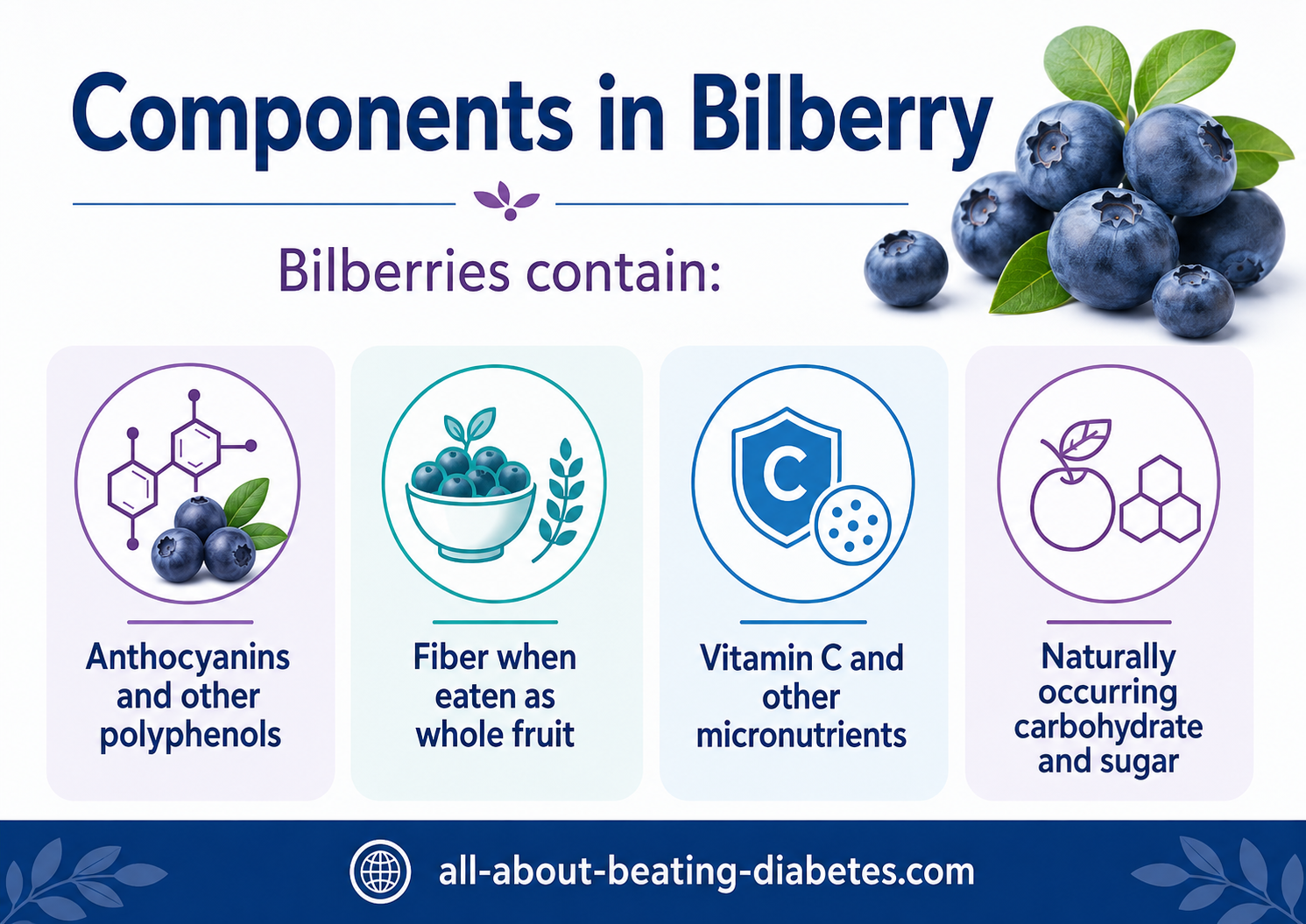
Bilberries contain:
- Anthocyanins and other polyphenols
- Fiber when eaten as whole fruit
- Vitamin C and other micronutrients
- Naturally occurring carbohydrate and sugar

Anthocyanins give bilberries their blue-purple color. These compounds can show antioxidant activity in laboratory studies, but laboratory effects do not automatically translate into meaningful treatment benefits in people.
Does Bilberry Lower Blood Sugar?
Bilberry has not been clearly shown to lower blood sugar reliably in people with diabetes.
A limited number of small human studies have examined bilberry alone or combined with blackcurrant. Some reported changes in fasting glucose, A1C, cholesterol, or insulin sensitivity, while others did not.
These studies have important limitations:
- Only a small number specifically studied bilberry.
- Some products combined bilberry with blackcurrant or other ingredients.
- Extracts and doses differed between studies.
- Participant groups were small or limited to particular populations.
- Many studies were short.
- There is no established long-term diabetes dose.
Research involving anthocyanins from multiple fruits has reported possible improvements in glucose and cholesterol measurements. However, this does not prove that a commercial bilberry capsule will provide the same result.
My clinical recommendation: Enjoy berries as part of a balanced diet, but do not use bilberry extract to replace metformin, insulin, another diabetes medicine, or the treatment plan recommended by your healthcare professional.
What Do Anthocyanins Do?
Anthocyanins are plant pigments found in bilberries, blueberries, blackberries, blackcurrants, cherries, red cabbage, and other red, blue, or purple foods.
Researchers are studying whether anthocyanin-rich foods influence:
- Glucose metabolism
- Inflammation
- Blood vessel function
- Blood pressure
- Cholesterol and triglycerides
Some systematic reviews report modest improvements in selected cardiometabolic measurements. The studies combine different foods, extracts, purified compounds, doses, and populations, so they cannot establish bilberry as a diabetes treatment.
I recommend obtaining a variety of beneficial plant compounds through a diverse diet rather than depending on one extract.
Can People With Diabetes Eat Whole Bilberries?
Yes. Whole bilberries can usually fit into a diabetes-friendly eating pattern. Like other fruit, they contain naturally occurring carbohydrate, so the portion still matters.
Whole berries provide fiber and require chewing. They are generally preferable to:
- Bilberry juice
- Sweetened bilberry syrup
- Bilberry jam
- Sweetened dried bilberries
- Pastries or desserts containing bilberry
These products may contain concentrated fruit sugar or substantial added sugar.
You might combine a measured portion of whole bilberries with:
- Plain yogurt
- Traditional oatmeal
- A small portion of nuts
- A balanced breakfast or snack
If you monitor after-meal glucose, you can compare your personal response to the portion you normally eat. Our guide to blood sugar levels by time of day explains why testing time matters.
Does Bilberry Help Diabetic Retinopathy?
Bilberry is sometimes promoted for vision, retinal circulation, and diabetic eye disease. The evidence is not strong enough to recommend bilberry for preventing or treating diabetic retinopathy.
The National Center for Complementary and Integrative Health states that bilberry has not been clearly shown to help any health condition. Research on night vision has also produced conflicting results, with the more rigorous studies failing to show benefit in healthy people.
Diabetic retinopathy can progress without noticeable symptoms. Do not delay a dilated retinal examination because your vision seems normal or because you are taking an eye supplement.
Evidence-based protection includes:
- Managing blood sugar safely
- Managing blood pressure and cholesterol
- Not smoking
- Having retinal examinations at the recommended frequency
- Receiving timely eye treatment when retinopathy is found
Learn more in our guide to diabetic eye problems.
Can Bilberry Improve Poor Circulation in the Legs?
Bilberry tea or extract has not been proven to treat blocked arteries, restore blood flow, or relieve diabetic leg pain reliably.
Leg pain, weakness, numbness, and difficulty walking may have several causes, including:
- Peripheral artery disease
- Diabetic neuropathy
- Spinal or joint disease
- Venous disease
- Anemia
- Heart or lung disease
- Medication side effects
- A foot wound or infection
If pain occurs while walking and improves with rest, this may be a symptom of peripheral artery disease. A clinician may need to examine foot pulses and perform vascular testing.
Seek urgent medical care for:
- A suddenly cold, pale, blue, or numb foot
- Sudden severe leg or foot pain
- A wound that is black, infected, or not healing
- New redness, heat, or swelling
- Foot pain at rest or during the night
- Loss of movement or sensation
Do not try to walk through severe pain or replace vascular treatment with herbal tea. Physical activity is valuable, but the safest type and intensity depend on the cause of the symptoms.
Can Bilberry Treat a Urinary Tract Infection?
No reliable evidence supports using bilberry to treat a urinary tract infection.
Cranberry has been studied more extensively and may help reduce recurrent UTIs in certain groups. Even cranberry does not treat an active bacterial infection and should not replace medical assessment or antibiotics when these are needed.
Contact a healthcare professional if you have:
- Burning or pain during urination
- Frequent or urgent urination
- Lower abdominal discomfort
- Cloudy, bloody, or unusually strong-smelling urine
Seek prompt medical care for fever, chills, vomiting, pain in the side or back, confusion, severe weakness, pregnancy, or rapidly rising glucose. People with diabetes may have a higher risk of complications from infection.
Bilberry Fruit, Extract, and Leaves Are Different
| Form | What to know |
|---|---|
| Whole bilberry fruit | Generally safe in normal food amounts; provides carbohydrate and fiber |
| Bilberry extract | Concentrated product with no established dose for diabetes; quality and anthocyanin content may vary |
| Bilberry leaves or leaf tea | May be unsafe in high doses or when used for long periods |
| Bilberry jam, syrup, or juice | May contain concentrated carbohydrate or added sugar; check the label and portion |
A standardized research extract is not necessarily equivalent to a supplement purchased online. Supplements may differ in purity, dose, additional ingredients, and manufacturing quality.
Bilberry Safety and Possible Interactions
Bilberry fruit is considered safe in amounts normally eaten as food. Bilberry fruit extracts have appeared well tolerated in short-term research, but this does not prove long-term safety or effectiveness for diabetes.
Before using a bilberry supplement, talk with your doctor or pharmacist if you:
- Use insulin or another glucose-lowering medicine
- Take several prescription medicines
- Have kidney or liver disease
- Have a bleeding disorder
- Are preparing for surgery
- Are pregnant or breastfeeding
- Have a known berry or plant allergy
If an extract has any glucose-lowering effect, combining it with diabetes treatment could potentially contribute to hypoglycemia. Monitor according to your treatment plan and do not reduce medication on your own.
Stop the supplement and seek advice if you develop a rash, swelling, breathing difficulty, severe digestive symptoms, unexpected bleeding, or unexplained low glucose.
A Safer Way to Obtain Berry Benefits
Rather than depending on one concentrated extract, I recommend including a variety of whole plant foods:
- Bilberries, blueberries, blackberries, or raspberries
- Other whole fruits in suitable portions
- Non-starchy vegetables
- Beans and lentils
- Nuts and seeds
- High-fiber grains when appropriate
This approach provides fiber, vitamins, minerals, and many different plant compounds. It also fits more naturally into a sustainable diabetic meal plan.
My bottom line
Whole bilberries can be enjoyed as food, but bilberry has not been proven to control diabetes, restore leg circulation, treat urinary infection, or prevent diabetic retinopathy. Use berries as one part of a balanced diet and rely on proven medical care for diabetes and its complications.
Frequently Asked Questions
How much bilberry should a person with diabetes take?
There is no established bilberry-extract dose for treating diabetes. If you eat whole bilberries, use a portion that fits your individual carbohydrate and meal plan.
Can bilberry replace blueberry?
Both can fit into a balanced diet, but they are different fruits and their nutrient and anthocyanin contents may differ. Neither is a substitute for diabetes treatment.
Does bilberry lower A1C?
A few small studies of bilberry combined with blackcurrant reported possible improvements, but the evidence does not establish that bilberry alone reliably lowers A1C.
Is bilberry good for eyesight?
Bilberry is widely marketed for vision, but it has not been clearly shown to improve diabetic retinopathy or night vision. Regular retinal screening is far more important.
Can I drink bilberry-leaf tea?
I do not recommend regular or long-term bilberry-leaf tea for diabetes. High doses or prolonged use of the leaves may be unsafe.
Related Questions
- Ask about diabetes herbs and supplements
- Ask about diabetes complications
- Ask about foods and diabetes
- Ask about blood sugar readings
Related Resources
- Diabetic eye problems
- Diabetic foot care
- Diabetic meal plan
- Low-glycemic diet
- Can diabetes be treated naturally?
References
- National Center for Complementary and Integrative Health: Bilberry—Usefulness and Safety
- Efficacy of Bilberry and Grape Seed Extract Interventions to Improve Glucose and Cholesterol Metabolism and Blood Pressure
- Effects of Anthocyanins on Cardiometabolic Health: A Systematic Review and Meta-Analysis
- Effect of Dietary Anthocyanins on Biomarkers of Type 2 Diabetes and Related Obesity
- American Diabetes Association: Retinopathy, Neuropathy, and Foot Care—Standards of Care in Diabetes—2026
This information is for general education and does not replace individual medical advice, diagnosis, or treatment.