- Home
- Natural Remedies for Diabetes
- Cinnamon and Blood Sugar Benefits and Safety
Cinnamon and Blood Sugar: Does It Work and Is It Safe
If you live with diabetes, it is understandable to want a simple answer to the question, “What blood sugar should I aim for?”
For many adults, there are well-established treatment targets. However, I always remind my patients that these are general goals, not one-size-fits-all rules. Your safest target depends on your age, type and duration of diabetes, medicines, risk of hypoglycemia, pregnancy status, kidney or heart disease, and overall health.
The goal is not to keep glucose at one perfect number all day. It is to remain within a safe range as consistently as possible while avoiding prolonged high blood sugar and unnecessary low blood sugar.
Quick Answer: Common Blood Glucose Targets
For many nonpregnant adults with diabetes, commonly used treatment goals are:
- Before meals: 80–130 mg/dL (4.4–7.2 mmol/L)
- Peak after meals: below 180 mg/dL (below 10.0 mmol/L), measured 1–2 hours after the beginning of the meal
- A1C: below 7% (below 53 mmol/mol), when this can be achieved safely
| Measurement | Common target | What it means |
|---|---|---|
| Before meals | 80–130 mg/dL (4.4–7.2 mmol/L) |
A common premeal target for many nonpregnant adults |
| Peak after meals | Below 180 mg/dL (below 10.0 mmol/L) |
Usually assessed 1–2 hours after the beginning of the meal |
| A1C | Below 7% (below 53 mmol/mol) |
A common longer-term goal when it can be reached safely |
What Does “Acceptable Blood Glucose” Mean?
An acceptable blood glucose level is not necessarily the same as a “normal” glucose level in someone without diabetes.
When we set a diabetes target, we balance two priorities: keeping glucose low enough to reduce the risk of long-term complications while avoiding hypoglycemia and treatment that is too aggressive for the individual patient.
A single blood glucose reading does not provide a complete picture of diabetes control. In clinical practice, I consider the broader pattern, including fasting and premeal glucose levels, post-meal readings when appropriate, A1C, episodes of hypoglycemia, symptoms, current medications, and, when available, continuous glucose monitoring (CGM) data. These measures should also be interpreted in the context of established blood glucose and A1C ranges for normal glucose, prediabetes, and diabetes.
Acceptable Blood Glucose Before Meals
For many nonpregnant adults with diabetes, a common target before meals is 80–130 mg/dL (4.4–7.2 mmol/L).
This gives us useful information about your baseline glucose before food begins to raise it. If most of your premeal readings are within your agreed target, that is encouraging, but they should still be interpreted together with your post-meal pattern, A1C, low-glucose episodes and overall treatment plan.
A reading of 80 mg/dL is not hypoglycemia. It is near the lower end of the usual premeal target. Hypoglycemia is generally defined as glucose below 70 mg/dL.
If fasting or premeal readings are repeatedly above your personal target, possible contributors include overnight glucose production, meal or medication timing, illness, poor sleep, stress and changes in physical activity. A pattern over several days is more informative than one isolated morning reading.
If morning glucose is your main concern, see our guide to fasting blood sugar levels.
Acceptable Blood Glucose After Meals
For many adults with diabetes, a common target is a peak post-meal glucose below 180 mg/dL (10.0 mmol/L).
When post-meal glucose is being assessed, it is generally measured 1–2 hours after the beginning of the meal. The timing matters because this period is intended to capture glucose near its post-meal peak.
One reading slightly above 180 mg/dL does not necessarily mean your treatment is failing. A larger meal, more carbohydrate than usual, illness, stress, poor sleep or reduced activity can all affect the result. More important questions are whether higher readings occur frequently, remain elevated for a long time, or appear alongside an A1C or CGM pattern showing excessive glucose exposure.
Because blood glucose changes throughout the day, the timing of a measurement matters, particularly when interpreting blood sugar levels after eating.
How Does A1C Fit With Daily Blood Sugar Targets?
Daily readings show what your blood sugar is doing at a particular moment. A1C provides a broader view of glucose exposure over the previous two to three months, with more recent weeks contributing more to the result.
For many nonpregnant adults with diabetes, a common A1C goal is below 7% (53 mmol/mol) when it can be achieved safely. Some people may benefit from a lower goal. Others need a less stringent goal because hypoglycemia, frailty, serious comorbidities, cognitive or functional limitations, or treatment burden makes tighter control less safe.
I would not interpret A1C in isolation. Two people can have the same A1C while experiencing very different patterns of highs and lows.
Learn more in A1C vs Blood Sugar, or use our HbA1c to Average Glucose Calculator.
What If I Use a Continuous Glucose Monitor?
A continuous glucose monitor, or CGM, helps us look beyond individual fingerstick readings. It shows how much time glucose spends within, above and below the target range.
| CGM metric | Common goal for many adults |
|---|---|
| Time in range: 70–180 mg/dL | More than 70% of the time |
| Time below 70 mg/dL | Less than 4% of the time |
| Time below 54 mg/dL | Less than 1% of the time |
| Time above 180 mg/dL | Less than 25% of the time |
CGM goals also need to be individualized. Some older adults with complex health problems, for example, may need more permissive goals to reduce the risk of hypoglycemia.
What About Bedtime Blood Sugar?
There is no single bedtime glucose target appropriate for every adult with diabetes. Bedtime goals depend on insulin use, risk of overnight hypoglycemia, age, other medical conditions, recent exercise, meal timing and the treatment plan you follow.
If you use insulin or medicines that can cause hypoglycemia, your clinician may give you a specific bedtime target. Follow that individualized plan rather than relying on a universal bedtime number from the internet.
What Is Considered Low Blood Sugar?
For people with diabetes, glucose below 70 mg/dL (3.9 mmol/L) is considered hypoglycemia and should be taken seriously. A level below 54 mg/dL (3.0 mmol/L) is more clinically significant.
Symptoms may include shakiness, sweating, hunger, palpitations, dizziness, weakness, irritability, confusion or difficulty concentrating. If you have a hypoglycemia treatment plan, follow it promptly. Frequent low readings require medical review because medication dose, meal timing or activity may need adjustment.
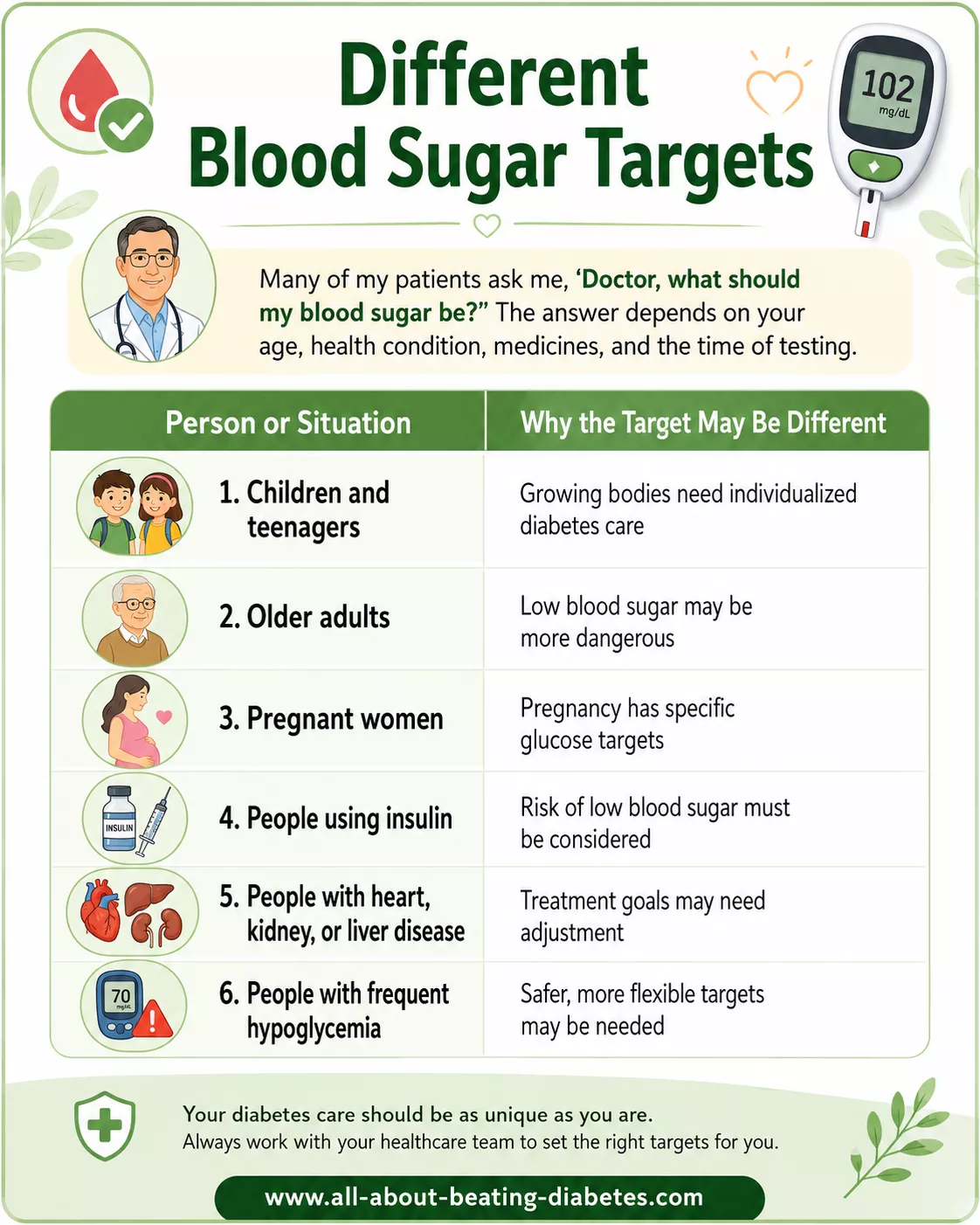
Why Your Personal Target May Be Different
I would not give exactly the same glucose goal to every patient. Your targets may need to be individualized if you:
- are pregnant or planning pregnancy;
- are a child or adolescent;
- are an older adult;
- have frequent or severe hypoglycemia;
- have impaired awareness of low blood sugar;
- have significant kidney, heart, liver or other medical disease;
- have cognitive or functional limitations;
- have lived with diabetes for many years; or
- use insulin or medicines that increase hypoglycemia risk.
An older adult who is otherwise healthy may still have relatively tight glucose goals. Someone with frailty, several serious illnesses or recurrent hypoglycemia may need more relaxed targets because preventing low blood sugar becomes the greater priority.
What Can Affect Your Blood Glucose Readings?
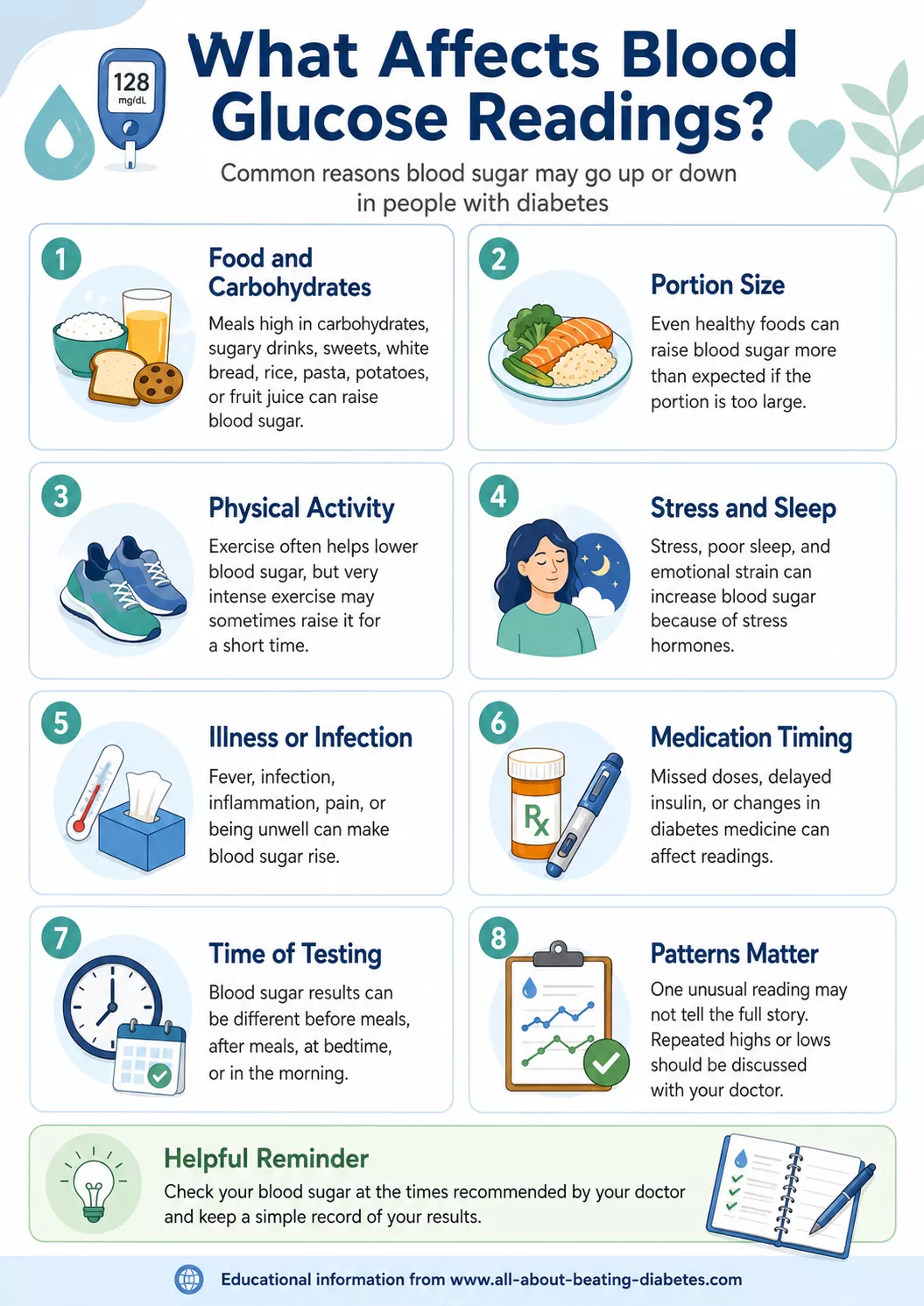
Even when your treatment plan has not changed, glucose can vary from day to day. Common influences include:
- meal size and carbohydrate content;
- physical activity;
- stress and sleep;
- infection, illness or pain;
- dehydration or alcohol;
- hormonal changes;
- medication timing;
- missed insulin or diabetes medicine; and
- corticosteroids and some other medicines.
This is why I encourage patients to look for patterns rather than reacting strongly to one unusual result.
How to Keep Blood Glucose Closer to Your Target
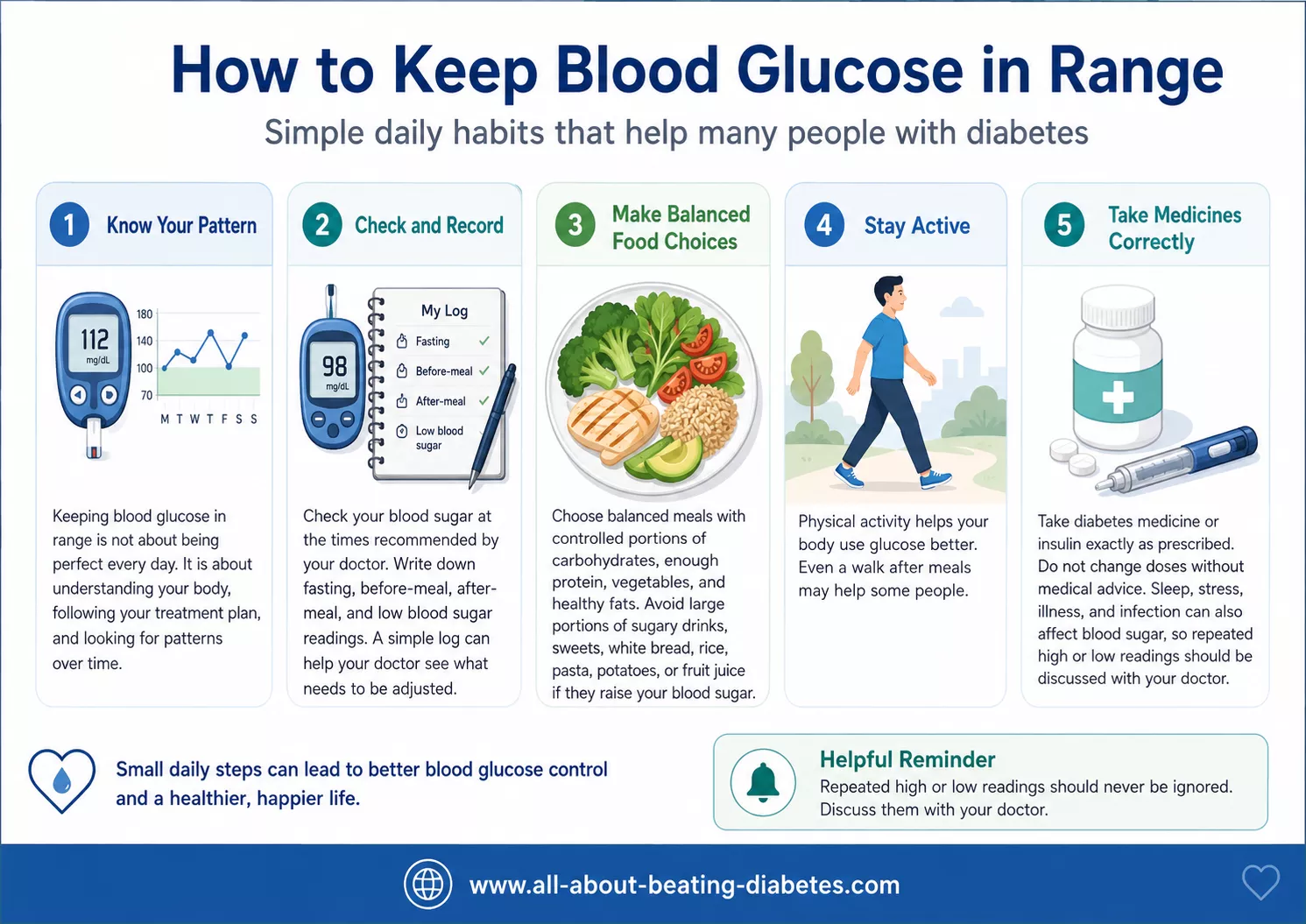
Keeping glucose in range does not require perfect numbers every day. The practical goal is to make the overall pattern safer and more consistent. Depending on your treatment plan, helpful steps may include:
- taking insulin or diabetes medicine exactly as prescribed;
- checking glucose at the times recommended by your healthcare team;
- keeping carbohydrate portions reasonably consistent when this is part of your plan;
- choosing meals with vegetables, protein, fiber and appropriate carbohydrate portions;
- being physically active regularly;
- reviewing repeated highs or lows instead of changing medication on your own;
- paying attention to sleep, illness, stress and hydration; and
- bringing your glucose log or CGM report to medical appointments.
Do not change insulin or medication doses because of one unusual result unless your healthcare professional has given you a specific adjustment plan.
Dr. Albana’s Perspective
When a patient asks whether a blood sugar number is “acceptable,” I first ask when it was measured and what target we agreed on for that person.
A premeal glucose of 125 mg/dL may be within the usual target for many adults with diabetes. The same number means something different if we are discussing a fasting laboratory test used to screen a person who has not been diagnosed with diabetes.
I also do not judge diabetes control from one good reading or one bad reading. I want to know whether most values are reasonably close to target, whether there are repeated highs, whether low glucose is occurring, and whether the A1C or CGM report tells the same story.
The best target is not the lowest number you can achieve. It is the range that offers meaningful long-term protection while remaining safe and realistic for your health and treatment.
When Should You Contact Your Doctor?
Contact your healthcare team if:
- glucose is repeatedly above your agreed target;
- you have repeated readings below 70 mg/dL;
- you experience nighttime hypoglycemia;
- your A1C is rising despite apparently reasonable daily readings;
- your CGM shows frequent highs or lows;
- you are ill and glucose becomes difficult to control;
- you are unsure whether medication or insulin needs adjustment; or
- your target may no longer be appropriate because of pregnancy, aging or a new medical condition.
Related Questions
Is 130 mg/dL acceptable for someone with diabetes?
It depends on when it was measured. For many nonpregnant adults, 130 mg/dL is at the upper end of the common premeal target. After a meal, it may also be within an acceptable range, but your individual target may differ.
Is 180 mg/dL after eating acceptable?
For many adults with diabetes, the common goal is a peak post-meal glucose below 180 mg/dL, assessed 1–2 hours after the beginning of the meal. Frequent readings at or above this level should be reviewed as a pattern.
Is 70 mg/dL acceptable?
Seventy mg/dL is the threshold at which we become concerned about hypoglycemia. A reading below 70 mg/dL should be treated according to your diabetes plan, and repeated lows should be discussed with your healthcare team.
Should everyone with diabetes have the same glucose target?
No. Age, pregnancy, medications, hypoglycemia risk, kidney or heart disease, functional status and other health conditions can all affect the safest goal.
What should my blood sugar be at bedtime?
There is no universal bedtime target for every adult with diabetes. Your bedtime goal should reflect your treatment plan, especially if you use insulin or are at risk of overnight hypoglycemia.
Is A1C below 7% right for everyone?
No. Below 7% is a common goal for many nonpregnant adults, but some people may benefit from a lower goal and others need a less stringent one for safety.
Related Tools and Calculators
Related Resources
Final Key Message
For many nonpregnant adults with diabetes, common treatment goals are 80–130 mg/dL before meals, below 180 mg/dL at the peak after meals, and A1C below 7% when these goals can be achieved safely.
If you use CGM, spending more than 70% of the time between 70 and 180 mg/dL is a common goal for many adults, while time below 70 mg/dL should remain limited.
Most importantly, your target should fit you. A safe plan balances glucose control with your risk of hypoglycemia, medications, age, other medical conditions and daily life. I would rather see a patient follow a realistic, individualized target safely and consistently than chase a “perfect” number that creates unnecessary risk.
References
- American Diabetes Association Professional Practice Committee. Glycemic Goals, Hypoglycemia, and Hyperglycemic Crises: Standards of Care in Diabetes—2026. Diabetes Care. 2026;49(Suppl. 1).
- American Diabetes Association Professional Practice Committee. Older Adults: Standards of Care in Diabetes—2026. Diabetes Care. 2026;49(Suppl. 1).
- American Diabetes Association. Checking Your Blood Sugar.
- National Institute of Diabetes and Digestive and Kidney Diseases. Managing Diabetes. National Institutes of Health.
Medical disclaimer: This information is for general education and does not replace professional medical advice, diagnosis or treatment. Follow the glucose targets and treatment plan recommended by your healthcare professional. Do not change insulin or diabetes medication doses without appropriate medical guidance.
Written by: Dr. Albana Greca Sejdini, MD, MMedSc
Medically reviewed by: Dr. Ruden Cakoni, MD, Endocrinologist
Last medically reviewed: July 2026
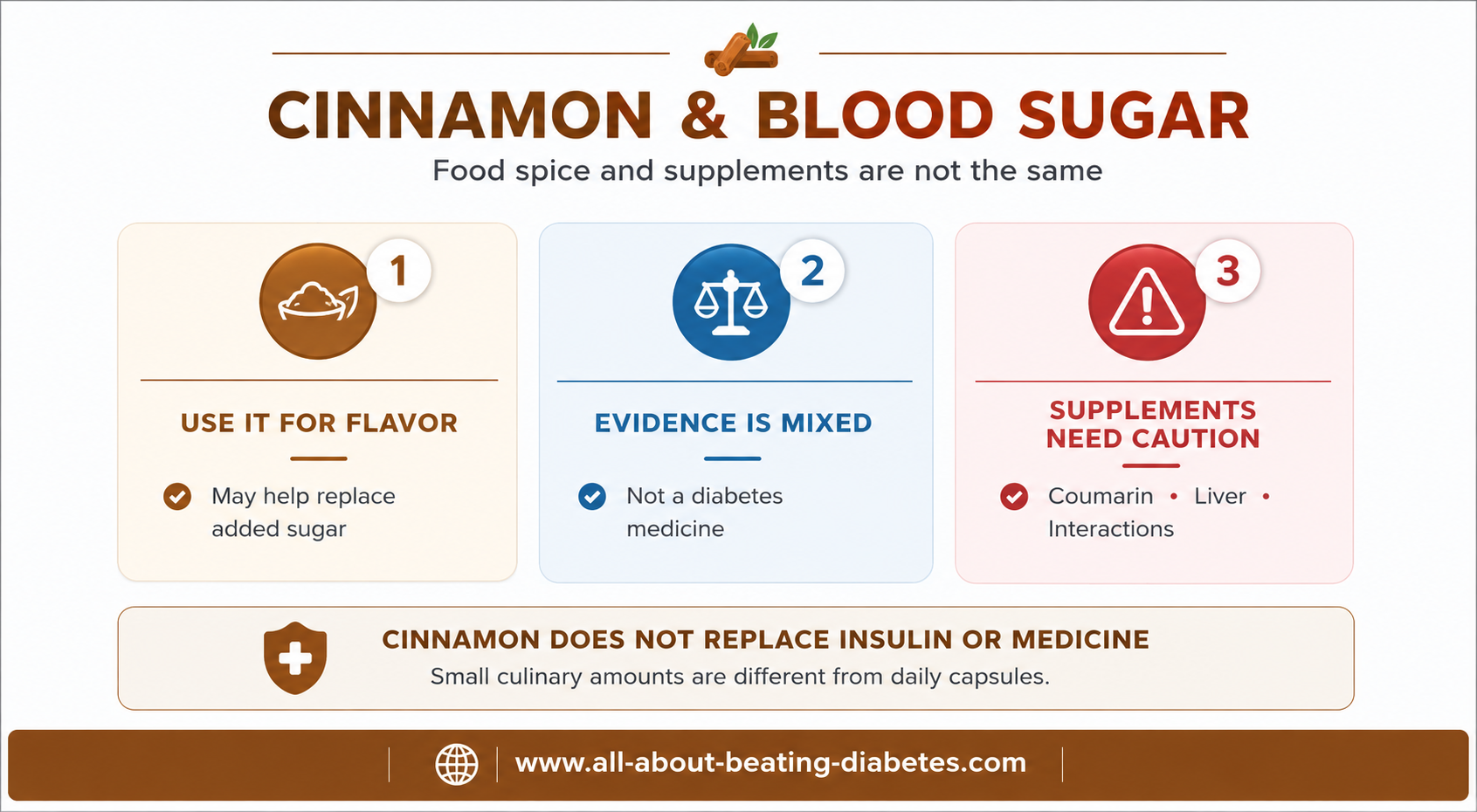
Cinnamon is a flavorful spice that can help reduce the need for sugar in oatmeal, yogurt, fruit, coffee, tea, and savory dishes. It has also been studied as a supplement for fasting glucose, HbA1c, insulin resistance, cholesterol, and weight. The findings are inconsistent, and cinnamon is not an established diabetes treatment.
Can Cinnamon Really Lower Blood Sugar?
Cinnamon is not a dependable treatment for high blood sugar. Some randomized trials and meta-analyses report small average improvements in fasting glucose, HbA1c, or insulin-resistance markers. Others find no meaningful effect.
A 2024 meta-analysis of 24 randomized trials reported statistically significant improvements in fasting glucose, post-meal glucose, HbA1c, and insulin-resistance estimates. However, statistical significance does not automatically mean that the change is large enough to alter treatment or prevent complications.
The National Center for Complementary and Integrative Health concludes that it remains unclear whether cinnamon supplementation is helpful for diabetes or weight loss. The ADA does not recommend herbs or supplements for glycemic benefit when effectiveness and safety have not been established adequately.


Why Do Cinnamon Studies Reach Different Conclusions?
Trials have not tested one standardized cinnamon product. Important differences include:
- Cassia, Ceylon, or an unidentified cinnamon species;
- powder, capsule, water extract, or another preparation;
- daily amounts ranging from small food-like doses to several grams;
- different coumarin and active-compound concentrations;
- treatment lasting a few weeks or several months;
- participants with prediabetes, type 2 diabetes, different starting HbA1c levels, or different medicines;
- small sample sizes and variable study quality;
- different dietary and physical-activity patterns.
A pooled result describes an average across studies. It cannot predict whether an individual patient will respond, which product produced the effect, whether the benefit will continue, or whether long-term complications will be reduced.
For the complete research discussion, read Cinnamon and Diabetes: Benefits, Safety, and Evidence.
What Do the Proposed Mechanisms Mean?
Cell and animal experiments have investigated whether cinnamon compounds may affect:
- insulin-receptor signaling;
- glucose transport into cells;
- carbohydrate-digesting enzymes;
- intestinal glucose absorption;
- liver glucose production;
- gastric emptying;
- inflammation and oxidative stress.
Older reports described water-soluble cinnamon polyphenols as having “insulin-like” activity and sometimes used names such as MHCP. These laboratory findings do not establish that cinnamon mimics injected insulin in the human body or that it makes insulin receptors work at a clinically predictable level.
The claim that cinnamon stimulates the pancreas to produce insulin is also not established as a treatment effect in people. Human evidence does not justify using cinnamon to restore beta-cell function or replace medication.
Does cinnamon slow stomach emptying?
Small human studies have produced inconsistent findings depending on the meal and cinnamon dose. One study found that 3 grams changed insulin and GLP-1 responses without significantly lowering blood glucose. Another small study reported delayed gastric emptying and a lower post-meal glucose response.
This is not strong enough to recommend cinnamon as a treatment for post-meal hyperglycemia. Delayed gastric emptying would also not automatically be desirable in someone with diabetic gastroparesis.
Cassia Cinnamon vs. Ceylon Cinnamon
| Feature | Cassia-type cinnamon | Ceylon cinnamon |
|---|---|---|
| Common names | Cassia, Chinese, Indonesian/Korintje, or Vietnamese/Saigon cinnamon | Ceylon or “true” cinnamon |
| Botanical examples | C. cassia, C. burmannii, or C. loureiroi | C. verum |
| Typical flavor | Stronger, hotter, and commonly sold | Milder and more delicate |
| Stick appearance | Usually thicker, harder bark with fewer curled layers | Usually thin, fragile bark with multiple rolled layers |
| Coumarin | Often substantially higher, but highly variable | Usually much lower, but not guaranteed to be zero |
Color, flavor, and hardness may offer clues but cannot verify the species of ground cinnamon. Read the package for the botanical name. “Sweet cinnamon” is not a reliable scientific identification.
Ceylon cinnamon is generally the lower-coumarin choice for frequent culinary use. That does not prove that a Ceylon supplement lowers glucose or that every Ceylon product is safe, pure, or accurately labeled.
Coumarin and Liver Safety
Coumarin is a naturally occurring plant compound found in varying amounts in cinnamon. High or prolonged intake can harm the liver in susceptible people.
The European tolerable daily intake for coumarin is:
The German Federal Institute for Risk Assessment states that an adult weighing 60 kg may reach this limit with approximately 2 grams of Cassia cinnamon containing an average coumarin concentration. Actual products vary, so this is not a precise safe-dose calculation for a package in your kitchen.
The old percentages of 5% coumarin in Cassia and 0.004% in Ceylon should not be used as fixed values. Coumarin content varies widely by species, source, batch, processing, and testing method.
Germany has not generally prohibited importing or using Cassia cinnamon. German and European authorities regulate coumarin in certain foods and advise moderation when Cassia cinnamon is consumed regularly.
Cinnamon in Food Is Different From a Supplement
| Culinary cinnamon | Capsule, extract, or “blood sugar blend” |
|---|---|
| Used in small amounts for flavor | May provide several grams or a concentrated extract daily |
| Can help replace sugar or sweet syrups | Marketed as a therapeutic product despite uncertain benefit |
| Usually part of a meal | May be taken fasting or with several other active ingredients |
| Lower exposure in ordinary use | Greater concern about coumarin, contamination, side effects, and interactions |
A supplement label may say “cinnamon bark,” “cinnamon complex,” or “proprietary blend” without clearly identifying the species or coumarin concentration. Some products combine cinnamon with bitter melon, fenugreek, chromium, berberine, gymnema, or other ingredients.
Do not combine several purported glucose-lowering supplements to increase the effect. The combination has not been proven superior and makes adverse effects, hypoglycemia, interactions, and liver problems harder to identify.
Is There a Proven Cinnamon Dose for Diabetes?
No. Studies have used different powders, extracts, species, and daily quantities. This prevents one evidence-based therapeutic dose from being recommended.
Amounts used in studies are not automatically safe for long-term self-treatment. A dose may have:
- uncertain coumarin exposure;
- unknown species or product quality;
- different absorption from ordinary food;
- greater risk with liver disease or interacting medicines;
- no proven ability to prevent diabetes complications.
Using a small amount as a spice is different from swallowing teaspoons or capsules every day. Do not interpret the BfR example of 2 grams of average Cassia cinnamon as a recommended dose—it illustrates how easily a 60-kg adult might reach the coumarin tolerable intake.
How to Use Cinnamon in a Diabetes-Friendly Menu
Cinnamon can add flavor without added sugar. Practical uses include:
- sprinkling a small amount on plain oatmeal or other unsweetened cereal;
- mixing it into plain yogurt with berries;
- adding it to an apple or pear dish without sugar syrup;
- using it in coffee or tea instead of flavored sugar;
- adding it to lentil, bean, tomato, pumpkin, or meat dishes where culturally appropriate;
- using it in a lower-sugar baking recipe.
Cinnamon does not neutralize carbohydrate. Oatmeal, fruit, milk, baked goods, honey, and sweetened drinks still contribute to the meal’s carbohydrate and calorie total.
Never swallow dry cinnamon powder. It can be inhaled into the lungs, cause choking, irritate the airway, and lead to serious injury.
Cinnamon Tea and Added Sweeteners
Cinnamon tea can be prepared for flavor, but it has not been shown to provide a standardized glucose-lowering dose.
A simple preparation is:
- Use a small cinnamon stick or a modest culinary amount of ground cinnamon.
- Add hot water and allow it to steep.
- Strain ground spice when possible.
- Drink it without sugar or syrup.
Honey is still added sugar. One teaspoon contains carbohydrate and can raise glucose. Calling honey “natural” does not make it glucose-free.
Repeated daily tea made from large amounts of Cassia cinnamon can increase coumarin exposure. Ceylon cinnamon generally contains less coumarin, but the tea still should not replace diabetes treatment.
Possible Cinnamon Side Effects
Cinnamon used in food is usually well tolerated. Larger amounts, concentrated products, essential oil, or prolonged use may cause:
- mouth or throat irritation;
- mouth sores or contact allergy, particularly from cinnamaldehyde flavoring;
- nausea, stomach discomfort, constipation, or diarrhea;
- skin rash or allergic reaction;
- coughing or airway injury if powder is inhaled;
- liver injury from substantial coumarin exposure in susceptible people.
Cinnamon essential oil is highly concentrated and can irritate the mouth, skin, stomach, and airway. It should not be swallowed as a diabetes remedy.
Pregnant or breastfeeding patients, children, people with liver disease, and anyone preparing for surgery should avoid medicinal-dose cinnamon unless a qualified clinician has reviewed the specific product.
Cinnamon and Medicine Interactions
Possible concerns include:
- insulin, sulfonylureas, and meglitinides: a supplement with glucose-lowering activity could make lows more difficult to predict;
- warfarin and other anticoagulants: high-dose products or products with substantial coumarin may create safety concerns, although food coumarin is not the same medicine as warfarin;
- medicines that can affect the liver: concentrated Cassia products may add to liver risk;
- multiple herbs and supplements: combining products makes interactions and adverse effects harder to identify;
- planned surgery: glucose management, bleeding risk, and supplement discontinuation should be reviewed before the procedure.
Brewed cinnamon tea or a small spice amount is less concentrated than a supplement, but patients should still disclose regular use when liver disease, anticoagulation, pregnancy, or complex treatment is present.
How to Check Whether Cinnamon Changes Your Glucose
A home comparison cannot prove medical effectiveness, but it can show whether a specific meal pattern is changing.
- Use a small culinary amount, not a capsule or multi-ingredient blend.
- Keep the meal and portion similar on comparison days.
- Record whether the cinnamon replaced sugar; that substitution may explain an improvement.
- Check glucose at the times in your care plan, such as before eating and one to two hours after the first bite.
- Record insulin, medicine, activity, sleep, illness, and stress.
- Repeat the meal before drawing a conclusion.
- Do not change treatment independently.
A better glucose result after cinnamon may reflect less added sugar, a smaller portion, more activity, normal meter variation, or a different starting glucose—not necessarily a pharmacologic effect.
Use the blood sugar log sheet and review after-meal blood sugar interpretation.
Can Cinnamon Prevent Diabetes Complications?
No clinical trial has established cinnamon as a way to prevent heart attack, stroke, kidney disease, retinopathy, neuropathy, or diabetic foot disease.
Complication prevention depends on:
- individualized glucose management;
- blood-pressure and cholesterol treatment;
- kidney and eye screening;
- foot care;
- smoking cessation;
- physical activity and appropriate nutrition;
- organ-protective diabetes medicines when indicated.
Cinnamon can be part of enjoyable food. It should not distract from treatments with proven clinical benefits.
Most Asked Questions
How quickly does cinnamon lower blood sugar?
There is no predictable time. Cinnamon is not a rescue treatment for a high glucose reading, and one serving should not be expected to produce a reliable change.
Which cinnamon is best for diabetes?
No species has been proven best for glucose control. Ceylon cinnamon is generally preferred for frequent culinary use because it usually contains much less coumarin than Cassia.
How much cinnamon should I take every day?
There is no guideline-approved diabetes dose. Small food amounts are different from medicinal daily dosing. Do not use the amounts in research trials or supplement marketing as personal instructions.
Can cinnamon lower HbA1c?
Some pooled analyses report a small average reduction, while other evidence is inconclusive. The effect is not predictable enough to replace standard treatment.
Can cinnamon stimulate insulin production?
Laboratory research has explored pancreatic and insulin-signaling effects, but a reliable increase in human insulin production has not been established as a treatment.
Can cinnamon cause hypoglycemia?
Small food amounts are not a common cause. Concentrated products combined with insulin, sulfonylureas, meglitinides, fasting, or several supplements may make glucose changes harder to predict.
Is cinnamon with honey good for diabetes?
Honey adds sugar and carbohydrate. Cinnamon does not cancel the glucose effect of honey.
Can I take cinnamon with bitter melon?
The combination is not proven superior and may add side effects or glucose-lowering uncertainty. Review both products and your medicines with a clinician or pharmacist.
Related Questions
- Can Bitter Melon and Cinnamon Supplements Be Taken Together?
- What Does Blood Sugar of 196 mg/dL Two Hours After Food Mean?
- How Can I Manage High Post-Meal Blood Sugar?
Related Resources
- Cinnamon and Diabetes: Benefits, Safety, and Evidence
- Diabetic Herbs: Evidence, Interactions, and Safety
- Foods and Drinks That Affect Blood Sugar
- Diabetes Medications: Benefits and Side Effects
- Is My Blood Sugar Too High or Too Low?
- Blood Sugar Log Sheet
Medical disclaimer: This page provides general education and does not recommend a cinnamon supplement, therapeutic dose, or medication change. Do not replace insulin or diabetes medicine with cinnamon, herbs, or supplements. Seek urgent care for severe high or low glucose, ketones, vomiting, deep breathing, confusion, seizure, unconsciousness, or another emergency.
References
- American Diabetes Association: Facilitating Positive Health Behaviors and Well-being—Standards of Care in Diabetes 2026
- National Center for Complementary and Integrative Health: Cinnamon—Usefulness and Safety
- National Center for Complementary and Integrative Health: Type 2 Diabetes and Dietary Supplements
- Moridpour and colleagues: Cinnamon Supplementation and Glycemic Control—Systematic Review and Meta-analysis
- German Federal Institute for Risk Assessment: FAQ on Coumarin in Cinnamon
- European Food Safety Authority: Coumarin in Flavourings and Food Ingredients
- Hlebowicz and colleagues: Cinnamon, Gastric Emptying, Satiety, and Postprandial Responses
- Markey and colleagues: Cinnamon, Gastric Emptying, and Postprandial Glycemia