- Home
- Diabetes Information for Patients Types Symptoms Tests and Treatment
- Diet for Insulin Resistance and Prediabetes
Diet for Insulin Resistance: Best Foods, Meal Plan, and Foods to Limit
If you have insulin resistance, following a balanced, nutrient-rich eating pattern can help improve insulin sensitivity, support healthier blood sugar levels, and reduce your risk of developing type 2 diabetes.
Written by Dr. Albana Greca, MD, MMedSc, Family Physician
Medically reviewed by Dr. Ruden Cakoni, MD, Endocrinologist
Last reviewed: July 2026
Quick Answer
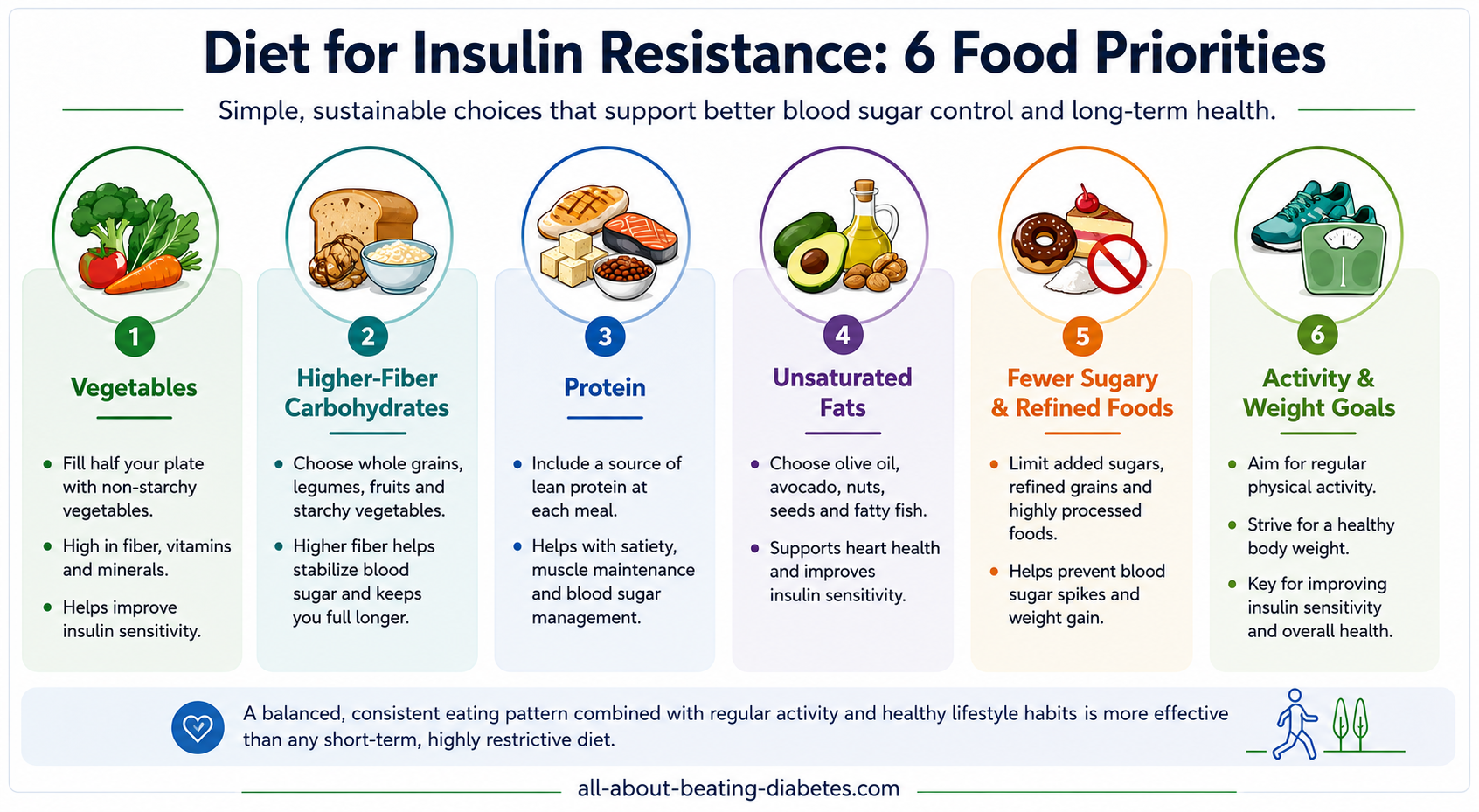
There is no single best diet for insulin resistance. A practical eating pattern emphasizes non-starchy vegetables, higher-fiber carbohydrates, lean or plant-based protein, mostly unsaturated fats, water or unsweetened drinks, and fewer sugary drinks and highly processed foods.
When weight loss is appropriate, losing about 5–7% of starting weight can meaningfully reduce the risk of progressing from prediabetes to type 2 diabetes. Food changes work best together with regular physical activity, adequate sleep, smoking cessation, and medical follow-up. Diet does not replace insulin or prescribed medicine when those treatments are needed.
Insulin resistance means that muscle, liver, and fat cells do not respond to insulin as effectively as they should. The pancreas may initially compensate by producing more insulin. Over time, glucose can rise and lead to prediabetes or type 2 diabetes.
Food choices matter, but insulin resistance is not caused by one food and cannot be “cured” by one diet. Genetics, body-fat distribution, physical activity, sleep, smoking, medicines, hormonal conditions, age, and other health factors also contribute. The goal is to build a realistic eating pattern that supports metabolic health and can be maintained over time.
What Is the Best Diet for Insulin Resistance?
No single eating pattern has been proven best for every person. Several approaches can improve food quality, calorie balance, weight, glucose, blood pressure, and cholesterol when they are followed consistently.
Mediterranean-style eating
A Mediterranean-style pattern emphasizes vegetables, fruit, beans, lentils, whole grains, nuts, seeds, olive oil, fish, and minimally processed foods. It can be adapted to different cultures and is often a strong choice for people who also need cardiovascular risk reduction.
Lower-carbohydrate eating
A lower-carbohydrate plan may reduce after-meal glucose and support weight loss for some people. “Lower carbohydrate” does not have to mean ketogenic or carbohydrate-free. The plan should still provide vegetables, fiber, adequate protein, and essential nutrients.
People using insulin, sulfonylureas, or meglitinides may need medication adjustment before making a large carbohydrate reduction because hypoglycemia can occur.
DASH-style eating
The DASH pattern emphasizes vegetables, fruits, whole grains, legumes, low-fat dairy or suitable alternatives, lean protein, nuts, and lower sodium intake. It may be especially useful when insulin resistance occurs with high blood pressure.
Vegetarian or vegan eating
A well-planned vegetarian or vegan diet can support insulin sensitivity and cardiovascular health. Quality matters. A diet based mainly on white bread, refined pasta, fries, sweetened plant drinks, and vegan desserts is still highly processed.
People following vegan diets should plan reliable sources of vitamin B12, protein, calcium, iron, iodine, omega-3 fats, and vitamin D.
Paleo and ketogenic diets
Paleo-style and ketogenic diets can reduce carbohydrate intake and may improve short-term glucose or weight in some people. However, they can be difficult to sustain and may restrict legumes, whole grains, fruit, or dairy without clear necessity.
Very-low-carbohydrate diets require extra caution during pregnancy, in children, with eating disorders, kidney disease, liver disease, pancreatic disease, or when using insulin or SGLT2 inhibitors. An SGLT2 inhibitor can increase the risk of ketoacidosis even when glucose is not extremely high.
Practical conclusion: The most effective diet is usually the safest nutrient-dense pattern that helps you reach your goals and that you can continue—not the most restrictive plan.
Use the Plate Method for Insulin Resistance
A simple way to organize lunch or dinner is to use a 9-inch plate:
- Half: non-starchy vegetables
- One quarter: lean or plant-based protein
- One quarter: higher-fiber carbohydrate
- On the side: water or an unsweetened drink
This approach helps control portions without requiring every person to count calories or carbohydrates. It is a starting point, not a rigid prescription. Athletes, pregnant people, children, underweight adults, and people taking insulin may need different portions.
For more detail, see our diabetic meal plan and plate-method guide.
Best Foods to Prioritize
Non-starchy vegetables
These foods provide fiber, vitamins, minerals, and volume with relatively little carbohydrate. Examples include:
- Leafy greens
- Broccoli and cauliflower
- Peppers
- Mushrooms
- Cabbage
- Green beans
- Tomatoes
- Cucumber
- Zucchini and eggplant
Fresh, frozen, and low-sodium canned vegetables can all fit. Choose methods such as roasting, steaming, grilling, or sautéing with a measured amount of oil.
Higher-fiber carbohydrates
Carbohydrates are not automatically harmful. The type, amount, and meal context matter. Useful options include:
- Beans, lentils, and chickpeas
- Oats and barley
- Brown rice, quinoa, and other whole grains
- Whole-grain bread or pasta
- Potatoes, sweet potatoes, corn, and peas in measured portions
- Whole fruit
- Plain milk or yogurt
Fiber can support fullness, bowel health, cholesterol, and steadier glucose patterns. Increase fiber gradually and drink enough fluid when medically appropriate.
Use our carbohydrate counter calculator when you need help estimating a mixed meal.
Whole fruit
Whole fruit can fit into an insulin-resistance diet. Berries, apples, pears, oranges, peaches, plums, and other fruits provide fiber and nutrients. Portion size still matters because fruit contains carbohydrate.
Fruit juice is less filling and raises glucose more quickly than whole fruit. It is usually better reserved for treating hypoglycemia or used in a small measured amount.
Protein foods
Protein can improve fullness and help preserve muscle during weight loss. Options include:
- Fish and seafood
- Chicken and turkey
- Eggs
- Tofu and tempeh
- Plain Greek yogurt or cottage cheese
- Beans, lentils, and chickpeas
- Lean meat in moderate portions
Protein does not need to dominate the plate. Very high-protein diets may be unsuitable for people with chronic kidney disease.
Mostly unsaturated fats
Choose olive oil, nuts, seeds, avocado, and fish more often. These foods can support cardiovascular health, but they are calorie-dense, so portions matter when weight loss is a goal.
The original page listed coconut oil as a healthy fat. Coconut oil is high in saturated fat and should not be presented as equivalent to olive oil, nuts, seeds, or oily fish.
Water and unsweetened drinks
Water, sparkling water, unsweetened tea, and unsweetened coffee are practical choices. Replacing sugary drinks is often one of the highest-impact dietary changes.
Foods and Drinks to Limit
“Limit” does not always mean “never.” Frequency, amount, and the rest of the meal matter.
Sugary drinks
- Regular soda
- Sweet tea
- Energy drinks
- Sweetened coffee drinks
- Sports drinks
- Large amounts of fruit juice
Liquid sugar is rapidly absorbed and provides little fullness.
Refined and highly processed carbohydrates
- White bread and refined pastries
- Candy and desserts
- Sweetened cereal
- Large portions of white rice or refined pasta
- Chips and many packaged snacks
These foods can still be eaten occasionally, but smaller portions and meal balance are important.
Trans fat and excess saturated fat
Avoid foods containing partially hydrogenated oils where they are still available. Limit large amounts of butter, cream, fatty meat, processed meat, coconut oil, and palm oil. Replace them more often with olive oil, nuts, seeds, fish, or avocado.
Highly processed meat
Bacon, sausage, salami, hot dogs, and similar products are often high in sodium and saturated fat. Choose less-processed protein sources more often.
Alcohol
Alcohol does not improve insulin resistance and can add calories, raise triglycerides, worsen sleep, and interact with medicine. It may also cause delayed hypoglycemia in people using insulin or insulin-releasing medicines.
People who do not drink should not start for metabolic benefit. Those who drink should discuss safe limits with their clinician, especially with liver disease, high triglycerides, pregnancy, pancreatitis, or hypoglycemia risk.
How to Build Breakfast, Lunch, and Dinner
| Meal | Balanced Example | Why It Helps |
|---|---|---|
| Breakfast | Plain Greek yogurt, berries, chia seeds, and a measured portion of oats | Combines fiber-rich carbohydrate with protein and healthy fat |
| Lunch | Large salad, grilled chicken or tofu, one-half cup beans, olive oil, and lemon | Uses vegetables for volume and beans for fiber |
| Dinner | Roasted vegetables, fish or lentil patties, and a small potato or measured whole-grain portion | Follows the plate method with a defined carbohydrate portion |
| Optional snack | Small apple with nuts, or raw vegetables with hummus | Pairs carbohydrate with protein or unsaturated fat |
Sample One-Day Insulin Resistance Meal Plan
This is an educational example, not a personal prescription. Portions should be adjusted for body size, activity, hunger, medicines, weight goals, pregnancy, kidney function, and glucose patterns.
Breakfast
Two eggs with spinach and tomatoes, one slice of whole-grain toast, and unsweetened coffee or tea.
Lunch
Lentil and vegetable soup, a side salad with olive oil and lemon, and a small piece of whole fruit.
Optional snack
Plain yogurt with cinnamon, or a small handful of nuts with vegetables.
Dinner
Grilled fish or tofu, roasted broccoli and peppers, and one-half to three-quarters cup cooked brown rice or beans.
Dessert option
Berries with plain yogurt, or a small planned portion of another dessert within the day’s carbohydrate and calorie plan.
Does Meal Timing Matter?
Meal timing can matter, but there is no requirement to eat every two or three hours. The best schedule depends on appetite, work, sleep, activity, and medication.
Skipping meals can cause hypoglycemia when insulin, sulfonylureas, or meglitinides are active. Eating late at night may worsen morning glucose for some people, while others tolerate it without difficulty. Use repeated glucose patterns rather than one isolated reading.
Our guide to blood sugar after eating can help you interpret how meal size, carbohydrate, medicine timing, and activity affect glucose.
Do You Need Snacks?
No. Snacks are optional unless they are needed for medication safety, exercise, hunger, pregnancy, growth, or nutrition. Frequent grazing can make calorie and carbohydrate control more difficult.
When a snack is useful, choose a modest portion and include protein, fiber, or unsaturated fat. Examples include:
- Whole fruit with nuts
- Vegetables with hummus
- Plain yogurt with berries
- Whole-grain crackers with tuna
- A boiled egg with vegetables
Weight Loss and Insulin Sensitivity
If you have overweight or obesity, modest sustained weight loss can improve insulin sensitivity and reduce the risk of type 2 diabetes. A common evidence-based goal for people with prediabetes is to lose approximately 5–7% of starting weight.
For a person weighing 100 kg, 5–7% equals approximately 5–7 kg. For a person weighing 200 lb, it equals approximately 10–14 lb.
Weight loss is not the only goal. Some people improve glucose, blood pressure, fitness, sleep, and waist size even when the scale changes slowly. Avoid extreme diets, detoxes, or unregulated supplements.
A sustainable calorie-reduction strategy
- Replace sugary drinks with water.
- Fill half the plate with vegetables.
- Measure oils, nuts, cheese, and sauces.
- Reduce restaurant and takeaway portions.
- Choose minimally processed foods more often.
- Use a smaller plate when portions have been large.
- Plan meals before becoming extremely hungry.
Diet Works Better With Physical Activity
Muscle activity helps the body use glucose and improves insulin sensitivity. For most adults, a useful long-term goal is at least 150 minutes of moderate-intensity activity per week, such as brisk walking, cycling, swimming, or dancing.
Resistance training approximately two days per week can help preserve or build muscle. Breaking up long periods of sitting may also help.
Start gradually if you are inactive. Ask for medical guidance before major exercise changes if you have chest symptoms, advanced kidney disease, severe neuropathy, active foot ulcers, proliferative retinopathy, pregnancy complications, or frequent hypoglycemia.
Sleep, Stress, and Smoking
Diet is only one part of insulin-resistance care. Short or irregular sleep, sleep apnea, chronic stress, smoking, and prolonged inactivity can make metabolic management more difficult.
- Aim for a regular sleep schedule.
- Ask about sleep apnea if you snore loudly, stop breathing during sleep, or remain very sleepy during the day.
- Use practical stress-management strategies such as walking, breathing exercises, counseling, or social support.
- Stop smoking and avoid vaping.
How Is Insulin Resistance Diagnosed?
Insulin resistance itself is not usually diagnosed with a routine direct test. HOMA-IR, fasting insulin, and specialized insulin-sensitivity tests are used mainly in research or selected clinical situations.
Clinicians usually evaluate the consequences and risk factors by reviewing:
- Fasting plasma glucose
- HbA1c
- Oral glucose tolerance testing when needed
- Blood pressure
- Waist size and weight
- Triglycerides and HDL cholesterol
- Fatty liver, PCOS, sleep apnea, and other associated conditions
| Test | Prediabetes Range | Diabetes Range |
|---|---|---|
| HbA1c | 5.7–6.4% | 6.5% or higher |
| Fasting plasma glucose | 100–125 mg/dL | 126 mg/dL or higher |
| 2-hour oral glucose tolerance test | 140–199 mg/dL | 200 mg/dL or higher |
Diagnosis usually requires confirmation unless there are clear symptoms and unequivocal hyperglycemia. Home glucose meters and continuous glucose monitors are not used by themselves to diagnose diabetes.
When Diet Alone Is Not Enough
Healthy eating and activity are foundational, but medicine may still be appropriate. Metformin can reduce progression to type 2 diabetes in selected high-risk people with prediabetes, particularly younger adults with obesity and women with previous gestational diabetes.
People who already have type 2 diabetes may need medication for glucose control, heart or kidney protection, or weight management. Needing medicine is not a failure.
Diet can never replace insulin in type 1 diabetes. Do not reduce or stop medicine because glucose improves without discussing the plan with the prescribing clinician.
When the Diet Needs Individual Modification
Pregnancy
Pregnant people should not follow ketogenic or weight-loss diets without specialist supervision. Pregnancy has minimum carbohydrate, protein, fiber, energy, and micronutrient needs. Gestational diabetes meal timing and carbohydrate distribution should be planned with the obstetric diabetes team.
Chronic kidney disease
Protein, sodium, potassium, phosphorus, and fluid needs may change. A high-protein diet, potassium-containing salt substitutes, or supplement powders may be unsafe. Review our diabetes kidney disease guide.
Polycystic ovary syndrome
Insulin resistance is common in PCOS. Sustainable weight management, physical activity, and a nutrient-dense eating pattern may help. Some people also need metformin, fertility treatment, or other medication.
Eating disorders or disordered eating
Highly restrictive diets, fasting, calorie tracking, or frequent weighing may worsen an eating disorder. Use a diabetes-informed mental-health professional and registered dietitian.
Children and adolescents
Children need enough energy and nutrients for growth. Do not place a child on a restrictive weight-loss or low-carbohydrate diet without pediatric clinical supervision.
Older adults
Aggressive restriction can worsen frailty, muscle loss, and malnutrition. Protein and calorie needs should be balanced with glucose, kidney function, chewing ability, and appetite.
Simple Shopping List
| Category | Practical Options |
|---|---|
| Vegetables | Leafy greens, broccoli, peppers, tomatoes, cabbage, mushrooms, zucchini, frozen vegetables |
| Higher-fiber carbohydrates | Oats, beans, lentils, brown rice, quinoa, whole-grain bread, fruit, potatoes |
| Protein | Fish, eggs, chicken, tofu, plain yogurt, cottage cheese, beans, lentils |
| Unsaturated fats | Olive oil, nuts, seeds, avocado, oily fish |
| Drinks and flavor | Water, unsweetened tea, coffee, herbs, spices, garlic, lemon, vinegar |
Doctor’s Note
When I discuss insulin resistance with a patient, I do not begin by banning carbohydrates. I look at the whole pattern: sugary drinks, portions, fiber, protein, activity, sleep, waist size, medicines, and the patient’s actual glucose results. The most useful plan is one that produces measurable improvement without creating fear, malnutrition, or an unsustainable routine.
Most Asked Questions
Can insulin resistance be reversed?
Insulin sensitivity can improve substantially with weight management, activity, better sleep, treatment of associated conditions, and medication when appropriate. “Reversed” should not imply permanent immunity from future insulin resistance or diabetes.
Should I stop eating carbohydrates?
No. Most people can include measured portions of beans, whole grains, fruit, dairy, and starchy vegetables. The amount and quality should match individual needs and glucose patterns.
Is a low-carbohydrate diet best?
It can work well for some people, but it is not the only effective approach. Mediterranean, DASH, vegetarian, and other calorie-appropriate patterns can also improve metabolic health.
Which fruit is best for insulin resistance?
No single fruit is required. Whole fruit in a measured portion is generally preferable to juice. Berries, apples, pears, oranges, peaches, and similar fruits can all fit.
Can I eat rice or bread?
Yes. Choose an appropriate portion, pair it with vegetables and protein, and review repeated glucose responses. Whole-grain or less-refined options may provide more fiber.
Does fasting improve insulin resistance?
Some time-restricted eating approaches may help selected adults reduce calories or weight, but fasting is not necessary and can be unsafe with insulin, sulfonylureas, pregnancy, eating disorders, frailty, or certain medical conditions.
How quickly can diet improve insulin resistance?
Glucose patterns may change within days, while weight, HbA1c, liver fat, and long-term risk change over weeks to months. Sustainable habits and repeated medical testing are more important than a rapid temporary result.
Educational safety note: This page does not prescribe calories, carbohydrate, fasting, weight loss, or medication changes for an individual. Ask your healthcare team before making a major diet change if you use insulin or medicines that can cause hypoglycemia, are pregnant, have kidney or liver disease, or have a history of disordered eating.
Related Questions
- Can Blood Sugar Return to Normal With Continued Weight Loss?
- Are Herbs Safe for Prediabetes and Insulin Resistance?
- What Does One Food Portion Mean?
- How Can I Build a Vegetarian Diabetes Meal Plan?
Related Resources
- What Is Insulin Resistance?
- Insulin Resistance Treatment
- Diabetic Meal Plan and Plate Method
- Best Foods for Diabetes
- Carbohydrates and Glycemic Index
- Normal Fasting Blood Sugar Levels
- Diabetes Calculators and Risk Tools
References
- American Diabetes Association. Facilitating Positive Health Behaviors and Well-being: Standards of Care in Diabetes—2026.
- American Diabetes Association. Prevention or Delay of Diabetes and Associated Comorbidities—2026.
- NIDDK. Insulin Resistance and Prediabetes.
- NIDDK. Healthy Living With Diabetes.
- Centers for Disease Control and Prevention. Choosing Healthy Carbohydrates.
- Centers for Disease Control and Prevention. Fiber and Diabetes.