- Home
- blood sugar levels
- convert mmol/l to mg/dl
Blood Sugar Converter: Convert mmol/L to mg/dL and mg/dL to mmol/L
If you live with diabetes, it is understandable to want a simple answer to the question, “What blood sugar should I aim for?”
For many adults, there are well-established treatment targets. However, I always remind my patients that these are general goals, not one-size-fits-all rules. Your safest target depends on your age, type and duration of diabetes, medicines, risk of hypoglycemia, pregnancy status, kidney or heart disease, and overall health.
The goal is not to keep glucose at one perfect number all day. It is to remain within a safe range as consistently as possible while avoiding prolonged high blood sugar and unnecessary low blood sugar.
Quick Answer: Common Blood Glucose Targets
For many nonpregnant adults with diabetes, commonly used treatment goals are:
- Before meals: 80–130 mg/dL (4.4–7.2 mmol/L)
- Peak after meals: below 180 mg/dL (below 10.0 mmol/L), measured 1–2 hours after the beginning of the meal
- A1C: below 7% (below 53 mmol/mol), when this can be achieved safely
| Measurement | Common target | What it means |
|---|---|---|
| Before meals | 80–130 mg/dL (4.4–7.2 mmol/L) |
A common premeal target for many nonpregnant adults |
| Peak after meals | Below 180 mg/dL (below 10.0 mmol/L) |
Usually assessed 1–2 hours after the beginning of the meal |
| A1C | Below 7% (below 53 mmol/mol) |
A common longer-term goal when it can be reached safely |
What Does “Acceptable Blood Glucose” Mean?
An acceptable blood glucose level is not necessarily the same as a “normal” glucose level in someone without diabetes.
When we set a diabetes target, we balance two priorities: keeping glucose low enough to reduce the risk of long-term complications while avoiding hypoglycemia and treatment that is too aggressive for the individual patient.
A single blood glucose reading does not provide a complete picture of diabetes control. In clinical practice, I consider the broader pattern, including fasting and premeal glucose levels, post-meal readings when appropriate, A1C, episodes of hypoglycemia, symptoms, current medications, and, when available, continuous glucose monitoring (CGM) data. These measures should also be interpreted in the context of established blood glucose and A1C ranges for normal glucose, prediabetes, and diabetes.
Acceptable Blood Glucose Before Meals
For many nonpregnant adults with diabetes, a common target before meals is 80–130 mg/dL (4.4–7.2 mmol/L).
This gives us useful information about your baseline glucose before food begins to raise it. If most of your premeal readings are within your agreed target, that is encouraging, but they should still be interpreted together with your post-meal pattern, A1C, low-glucose episodes and overall treatment plan.
A reading of 80 mg/dL is not hypoglycemia. It is near the lower end of the usual premeal target. Hypoglycemia is generally defined as glucose below 70 mg/dL.
If fasting or premeal readings are repeatedly above your personal target, possible contributors include overnight glucose production, meal or medication timing, illness, poor sleep, stress and changes in physical activity. A pattern over several days is more informative than one isolated morning reading.
If morning glucose is your main concern, see our guide to fasting blood sugar levels.
Acceptable Blood Glucose After Meals
For many adults with diabetes, a common target is a peak post-meal glucose below 180 mg/dL (10.0 mmol/L).
When post-meal glucose is being assessed, it is generally measured 1–2 hours after the beginning of the meal. The timing matters because this period is intended to capture glucose near its post-meal peak.
One reading slightly above 180 mg/dL does not necessarily mean your treatment is failing. A larger meal, more carbohydrate than usual, illness, stress, poor sleep or reduced activity can all affect the result. More important questions are whether higher readings occur frequently, remain elevated for a long time, or appear alongside an A1C or CGM pattern showing excessive glucose exposure.
Because blood glucose changes throughout the day, the timing of a measurement matters, particularly when interpreting blood sugar levels after eating.
How Does A1C Fit With Daily Blood Sugar Targets?
Daily readings show what your blood sugar is doing at a particular moment. A1C provides a broader view of glucose exposure over the previous two to three months, with more recent weeks contributing more to the result.
For many nonpregnant adults with diabetes, a common A1C goal is below 7% (53 mmol/mol) when it can be achieved safely. Some people may benefit from a lower goal. Others need a less stringent goal because hypoglycemia, frailty, serious comorbidities, cognitive or functional limitations, or treatment burden makes tighter control less safe.
I would not interpret A1C in isolation. Two people can have the same A1C while experiencing very different patterns of highs and lows.
Learn more in A1C vs Blood Sugar, or use our HbA1c to Average Glucose Calculator.
What If I Use a Continuous Glucose Monitor?
A continuous glucose monitor, or CGM, helps us look beyond individual fingerstick readings. It shows how much time glucose spends within, above and below the target range.
| CGM metric | Common goal for many adults |
|---|---|
| Time in range: 70–180 mg/dL | More than 70% of the time |
| Time below 70 mg/dL | Less than 4% of the time |
| Time below 54 mg/dL | Less than 1% of the time |
| Time above 180 mg/dL | Less than 25% of the time |
CGM goals also need to be individualized. Some older adults with complex health problems, for example, may need more permissive goals to reduce the risk of hypoglycemia.
What About Bedtime Blood Sugar?
There is no single bedtime glucose target appropriate for every adult with diabetes. Bedtime goals depend on insulin use, risk of overnight hypoglycemia, age, other medical conditions, recent exercise, meal timing and the treatment plan you follow.
If you use insulin or medicines that can cause hypoglycemia, your clinician may give you a specific bedtime target. Follow that individualized plan rather than relying on a universal bedtime number from the internet.
What Is Considered Low Blood Sugar?
For people with diabetes, glucose below 70 mg/dL (3.9 mmol/L) is considered hypoglycemia and should be taken seriously. A level below 54 mg/dL (3.0 mmol/L) is more clinically significant.
Symptoms may include shakiness, sweating, hunger, palpitations, dizziness, weakness, irritability, confusion or difficulty concentrating. If you have a hypoglycemia treatment plan, follow it promptly. Frequent low readings require medical review because medication dose, meal timing or activity may need adjustment.
Why Your Personal Target May Be Different
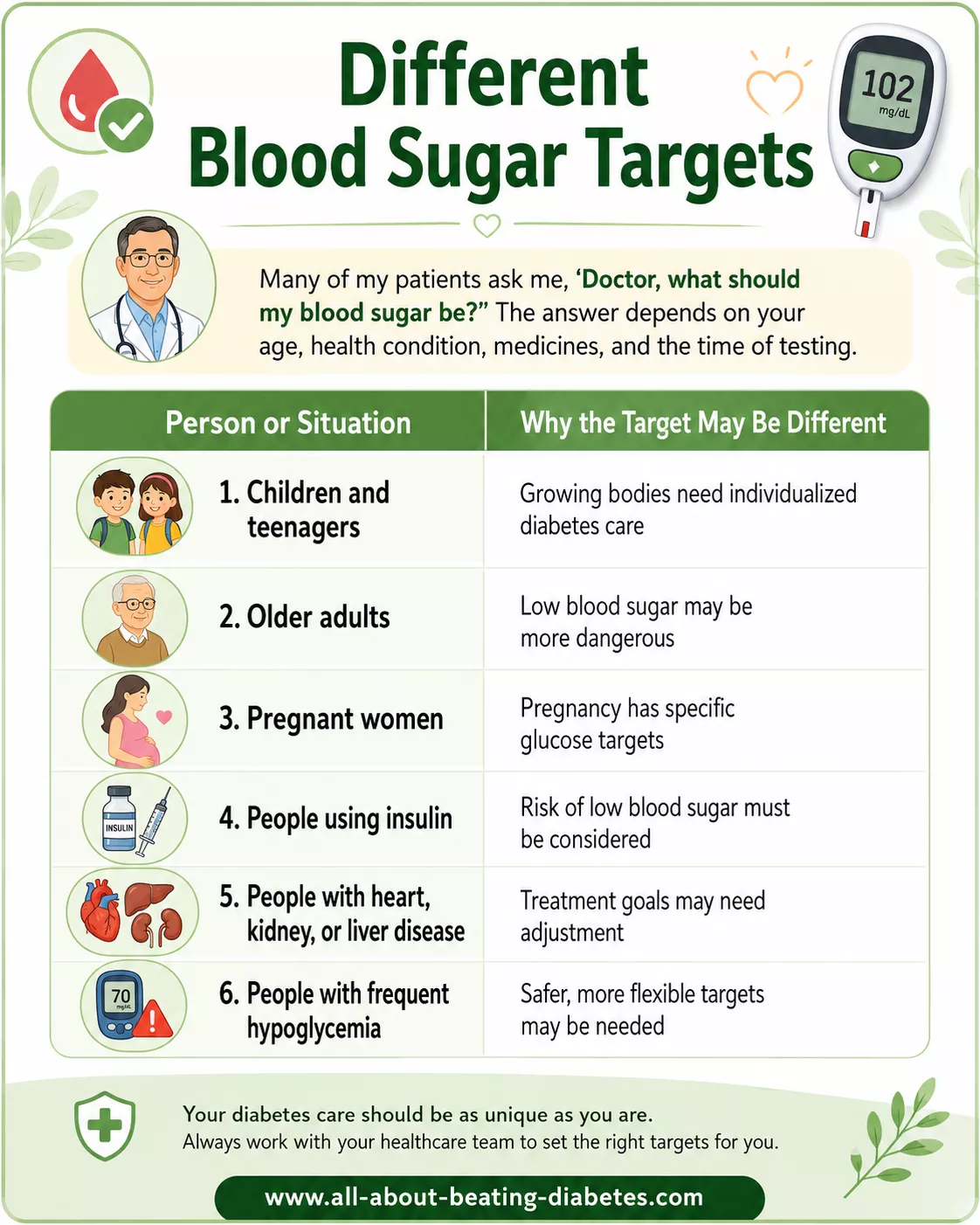
I would not give exactly the same glucose goal to every patient. Your targets may need to be individualized if you:
- are pregnant or planning pregnancy;
- are a child or adolescent;
- are an older adult;
- have frequent or severe hypoglycemia;
- have impaired awareness of low blood sugar;
- have significant kidney, heart, liver or other medical disease;
- have cognitive or functional limitations;
- have lived with diabetes for many years; or
- use insulin or medicines that increase hypoglycemia risk.
An older adult who is otherwise healthy may still have relatively tight glucose goals. Someone with frailty, several serious illnesses or recurrent hypoglycemia may need more relaxed targets because preventing low blood sugar becomes the greater priority.
What Can Affect Your Blood Glucose Readings?
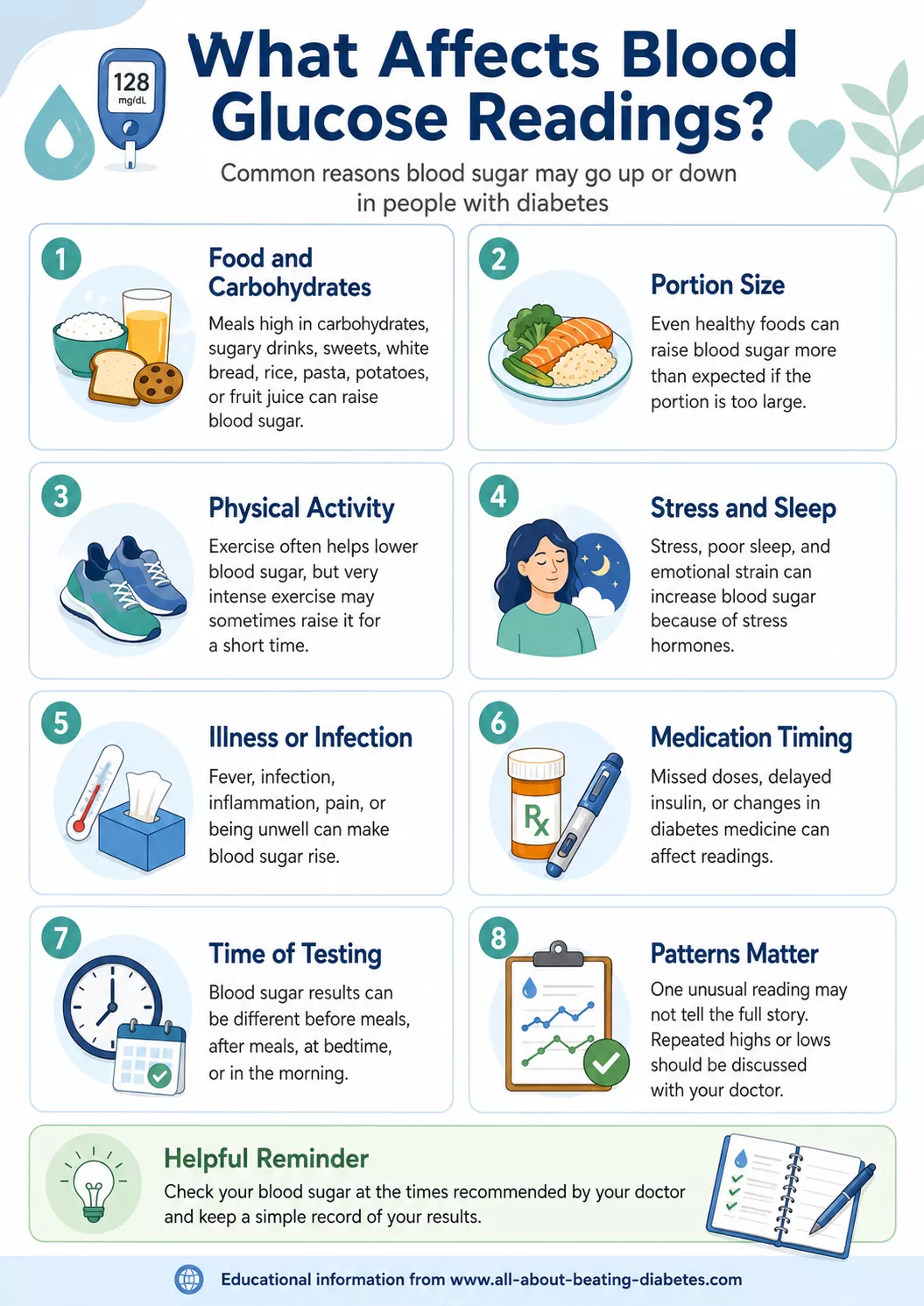
Even when your treatment plan has not changed, glucose can vary from day to day. Common influences include:
- meal size and carbohydrate content;
- physical activity;
- stress and sleep;
- infection, illness or pain;
- dehydration or alcohol;
- hormonal changes;
- medication timing;
- missed insulin or diabetes medicine; and
- corticosteroids and some other medicines.
This is why I encourage patients to look for patterns rather than reacting strongly to one unusual result.
How to Keep Blood Glucose Closer to Your Target
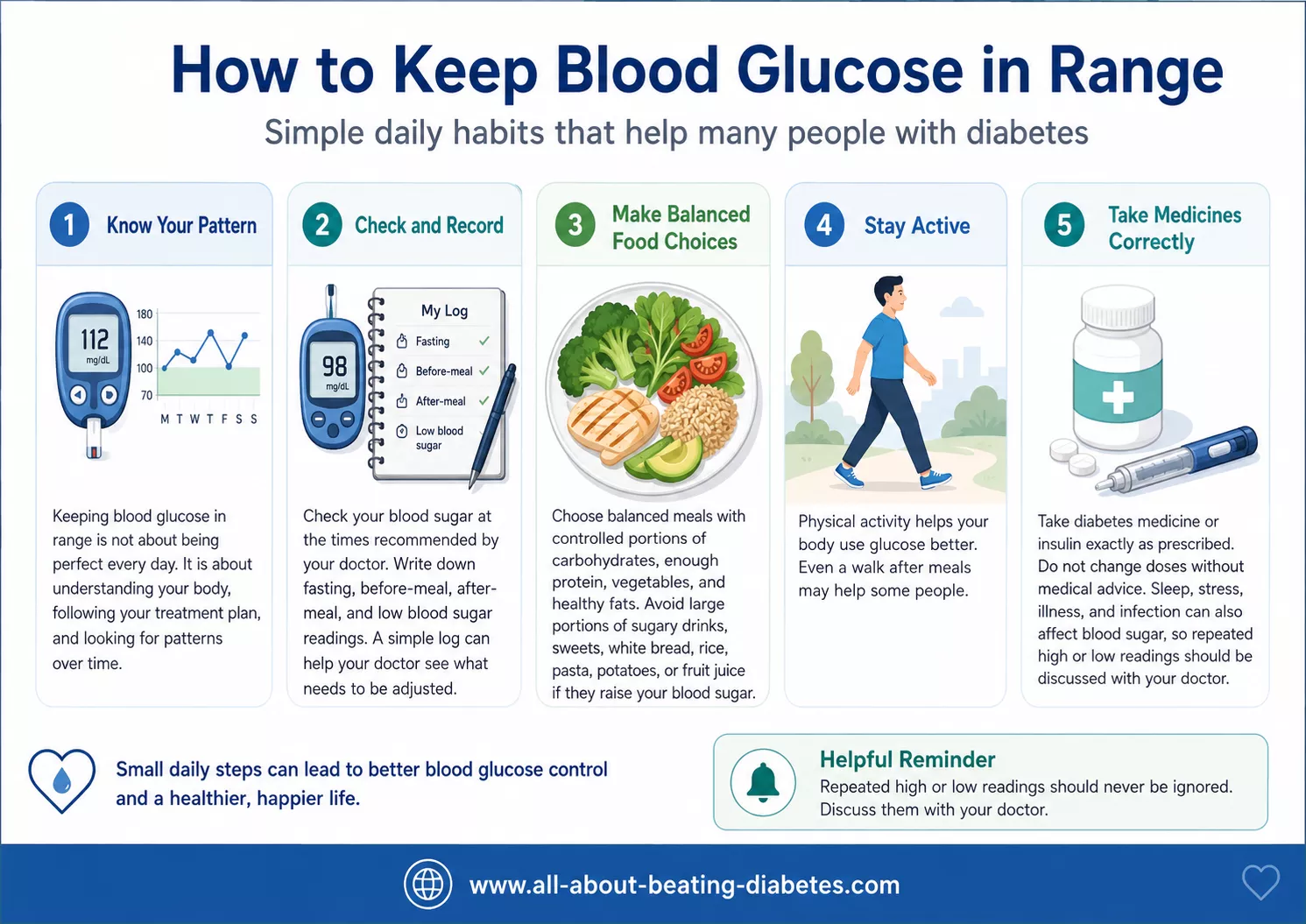
Keeping glucose in range does not require perfect numbers every day. The practical goal is to make the overall pattern safer and more consistent. Depending on your treatment plan, helpful steps may include:
- taking insulin or diabetes medicine exactly as prescribed;
- checking glucose at the times recommended by your healthcare team;
- keeping carbohydrate portions reasonably consistent when this is part of your plan;
- choosing meals with vegetables, protein, fiber and appropriate carbohydrate portions;
- being physically active regularly;
- reviewing repeated highs or lows instead of changing medication on your own;
- paying attention to sleep, illness, stress and hydration; and
- bringing your glucose log or CGM report to medical appointments.
Do not change insulin or medication doses because of one unusual result unless your healthcare professional has given you a specific adjustment plan.
Dr. Albana’s Perspective
When a patient asks whether a blood sugar number is “acceptable,” I first ask when it was measured and what target we agreed on for that person.
A premeal glucose of 125 mg/dL may be within the usual target for many adults with diabetes. The same number means something different if we are discussing a fasting laboratory test used to screen a person who has not been diagnosed with diabetes.
I also do not judge diabetes control from one good reading or one bad reading. I want to know whether most values are reasonably close to target, whether there are repeated highs, whether low glucose is occurring, and whether the A1C or CGM report tells the same story.
The best target is not the lowest number you can achieve. It is the range that offers meaningful long-term protection while remaining safe and realistic for your health and treatment.
When Should You Contact Your Doctor?
Contact your healthcare team if:
- glucose is repeatedly above your agreed target;
- you have repeated readings below 70 mg/dL;
- you experience nighttime hypoglycemia;
- your A1C is rising despite apparently reasonable daily readings;
- your CGM shows frequent highs or lows;
- you are ill and glucose becomes difficult to control;
- you are unsure whether medication or insulin needs adjustment; or
- your target may no longer be appropriate because of pregnancy, aging or a new medical condition.
Related Questions
Is 130 mg/dL acceptable for someone with diabetes?
It depends on when it was measured. For many nonpregnant adults, 130 mg/dL is at the upper end of the common premeal target. After a meal, it may also be within an acceptable range, but your individual target may differ.
Is 180 mg/dL after eating acceptable?
For many adults with diabetes, the common goal is a peak post-meal glucose below 180 mg/dL, assessed 1–2 hours after the beginning of the meal. Frequent readings at or above this level should be reviewed as a pattern.
Is 70 mg/dL acceptable?
Seventy mg/dL is the threshold at which we become concerned about hypoglycemia. A reading below 70 mg/dL should be treated according to your diabetes plan, and repeated lows should be discussed with your healthcare team.
Should everyone with diabetes have the same glucose target?
No. Age, pregnancy, medications, hypoglycemia risk, kidney or heart disease, functional status and other health conditions can all affect the safest goal.
What should my blood sugar be at bedtime?
There is no universal bedtime target for every adult with diabetes. Your bedtime goal should reflect your treatment plan, especially if you use insulin or are at risk of overnight hypoglycemia.
Is A1C below 7% right for everyone?
No. Below 7% is a common goal for many nonpregnant adults, but some people may benefit from a lower goal and others need a less stringent one for safety.
Related Tools and Calculators
Related Resources
Final Key Message
For many nonpregnant adults with diabetes, common treatment goals are 80–130 mg/dL before meals, below 180 mg/dL at the peak after meals, and A1C below 7% when these goals can be achieved safely.
If you use CGM, spending more than 70% of the time between 70 and 180 mg/dL is a common goal for many adults, while time below 70 mg/dL should remain limited.
Most importantly, your target should fit you. A safe plan balances glucose control with your risk of hypoglycemia, medications, age, other medical conditions and daily life. I would rather see a patient follow a realistic, individualized target safely and consistently than chase a “perfect” number that creates unnecessary risk.
References
- American Diabetes Association Professional Practice Committee. Glycemic Goals, Hypoglycemia, and Hyperglycemic Crises: Standards of Care in Diabetes—2026. Diabetes Care. 2026;49(Suppl. 1).
- American Diabetes Association Professional Practice Committee. Older Adults: Standards of Care in Diabetes—2026. Diabetes Care. 2026;49(Suppl. 1).
- American Diabetes Association. Checking Your Blood Sugar.
- National Institute of Diabetes and Digestive and Kidney Diseases. Managing Diabetes. National Institutes of Health.
Medical disclaimer: This information is for general education and does not replace professional medical advice, diagnosis or treatment. Follow the glucose targets and treatment plan recommended by your healthcare professional. Do not change insulin or diabetes medication doses without appropriate medical guidance.
Written by Dr. Albana Greca, MD, MMedSc
Medically Reviewed by Dr. Ruden Cakoni, MD, Endocrinologist
Last updated: June 2026
Blood sugar results may be shown in two different units: mg/dL or mmol/L. This blood sugar converter helps you quickly convert glucose from mmol/L to mg/dL or from mg/dL to mmol/L.
After converting your number, remember that interpretation depends on when the test was taken, your symptoms, medications, pregnancy status, and your personal diabetes care plan.
Important medical note:
This page is for education only. It cannot diagnose diabetes, replace your doctor’s advice, or tell you what treatment to use. If your blood sugar is very high, very low, or you have concerning symptoms, seek medical advice promptly.
Questions about blood sugar ranges, charts, fasting levels, after-meal levels, and what your numbers may mean?
Have a question about blood sugar levels or diabetes charts?
This is the place to ask general questions about fasting blood sugar, after-meal blood sugar, HbA1c, normal ranges, high readings, low readings, and how to understand diabetes test results.
Your question may be reviewed and answered by Dr. Albana Greca, MD for educational purposes.
Please do not include private medical details, personal identification numbers, or urgent emergency symptoms.
What Other Visitors Have Asked
Click below to see Questions from other visitors to this page...
Is blood sugar 119 normal for an 11-year-old child 
.c2{font:18px/1.48 Arial,sans-serif;color:#24323d;max-width:920px;margin:10px auto;text-align:justify}.c2 h2,.c2 h3{color:#14536b;text-align:left;margin:20px …
Blood Sugar Converter
Use the calculator below to convert your blood sugar result.
Convert mmol/L to mg/dL: mg/dL = mmol/L × 18
Convert mg/dL to mmol/L: mmol/L = mg/dL ÷ 18
Example:
7.0 mmol/L × 18 = 126 mg/dL
126 mg/dL ÷ 18 = 7.0 mmol/L
Blood Sugar Converter
Convert blood sugar from mg/dL to mmol/L or from mmol/L to mg/dL.
Formula: mmol/L = mg/dL ÷ 18. mg/dL = mmol/L × 18.
Educational only — this tool converts units but does not diagnose diabetes or replace medical advice.
Quick Conversion Table
Common Blood Sugar Conversions
Use this quick chart to convert blood sugar values between mmol/L and mg/dL.
These numbers are approximate because most blood sugar conversions are rounded. To convert mmol/L to mg/dL, multiply by 18. To convert mg/dL to mmol/L, divide by 18.
www.all-about-beating-diabetes.com
These numbers are approximate because most glucose conversions are rounded. For a quick estimate, multiply mmol/L by 18 to get mg/dL. Divide mg/dL by 18 to get mmol/L.
Why Are Blood Sugar Results Shown in Different Units?
Different countries use different measurement systems for blood sugar.
In the United States, blood sugar is usually reported as mg/dL.
In many other countries, including the United Kingdom, Canada, Australia, and many European countries, blood sugar is often reported as mmol/L.
Both units measure the same thing: the amount of glucose in your blood. The number looks different because the unit is different.
What Does My Converted Blood Sugar Number Mean?
A converted blood sugar number is only the first step. The meaning depends on timing.
Ask yourself:
- Was this a fasting blood sugar?
- Was it before a meal?
- Was it 1 to 2 hours after eating?
- Was it a random blood sugar?
- Was I sick, stressed, or taking medication?
- Am I pregnant?
- Do I already have diabetes?
- Am I using insulin or medicines that can cause low blood sugar?
The same number may mean different things in different situations.
For a more detailed guide by fasting, before meals, after meals, bedtime, and overnight readings, see: Blood Sugar Levels by Time of Day.
After converting your result, you may want to check whether your number is normal, low, or high. See: Is My Blood Sugar Normal? Blood Sugar Numbers Explained.
Fasting Blood Sugar: General Guide
Fasting blood sugar is usually checked after you have not eaten or drunk anything with calories for at least 8 hours. This test shows your baseline blood glucose level, before food affects the result, and is commonly used to help screen for prediabetes, diabetes, or how well blood sugar is being managed.
| Topic | Patient-Friendly Explanation |
|---|---|
| Fasting Blood Sugar | Fasting blood sugar is usually checked after you have not eaten or drunk anything with calories for at least 8 hours. |
| Why It Matters | This test shows your baseline blood glucose level before food affects the result. |
| Common Use | It is commonly used to help screen for prediabetes, diabetes, or to understand how well blood sugar is being managed. |
| www.all-about-beating-diabetes.com | |
To understand fasting numbers in more detail, see: Normal Fasting Blood Sugar Levels.
If you use insulin or medicines that can cause low blood sugar, ask your healthcare provider what to do when your blood sugar is low.
Seek urgent medical help if the person is confused, unconscious, having a seizure, unable to swallow safely, or not improving after treatment.
After-Meal Blood Sugar: General Guide
Blood sugar usually rises after eating. For many nonpregnant adults with diabetes, a common target is less than 180 mg/dL, or less than 10.0 mmol/L, about 1 to 2 hours after the start of a meal.
However, targets are not the same for everyone. Your doctor may recommend a different goal depending on your age, medications, pregnancy status, diabetes type, risk of low blood sugar, heart disease, kidney disease, or other medical conditions.
Low Blood Sugar: When to Be Careful
A blood sugar below 70 mg/dL, or below 3.9 mmol/L, is generally considered low blood sugar in people with diabetes.
Low blood sugar may cause:
- Shaking
- Sweating
- Fast heartbeat
- Hunger
- Anxiety
- Weakness
- Dizziness
- Confusion
- Blurred vision
High Blood Sugar: When to Get Medical Help
High blood sugar can happen because of food, illness, infection, stress, missed medication, not enough insulin, dehydration, or other medical problems.
Contact your doctor if your blood sugar is repeatedly high or higher than your personal target range.
Seek urgent medical care if high blood sugar is associated with:
- Vomiting
- Severe weakness
- Confusion
- Dehydration
- Rapid breathing
- Abdominal pain
- Fruity-smelling breath
- Moderate or large ketones
- Blood sugar staying very high despite your usual correction plan
If you have type 1 diabetes, are pregnant, or use insulin, ask your healthcare team when to check ketones and when to seek urgent care.
Important safety note
This calculator is for education only. It converts blood sugar units, but it does not diagnose diabetes, confirm whether your diabetes is controlled, or replace medical advice.
A blood sugar number should be interpreted based on:
- whether the test was fasting, before a meal, after a meal, or random;
- whether it came from a laboratory, glucose meter, or continuous glucose monitor;
- your symptoms;
- your diabetes history;
- pregnancy, illness, medications, and your personal treatment plan.
Speak with your doctor if your readings are repeatedly high, unusually low, or very different from your usual pattern.
What People Are Mostly Asking About Blood Sugar Conversion
How do I convert mmol/L to mg/dL?
How do I convert mmol/L to mg/dL?
To convert blood glucose from mmol/L to mg/dL, multiply the mmol/L value by 18.
Example:
6.0 mmol/L × 18 = 108 mg/dL
How do I convert mg/dL to mmol/L?
How do I convert mg/dL to mmol/L?
To convert blood glucose from mg/dL to mmol/L, divide the mg/dL value by 18.
Example:
180 mg/dL ÷ 18 = 10.0 mmol/L
Is 7.0 mmol/L the same as 126 mg/dL?
Is 7.0 mmol/L the same as 126 mg/dL?
Yes. 7.0 mmol/L is approximately equal to 126 mg/dL. This number is important because 7.0 mmol/L, or 126 mg/dL, is in the diabetes range when measured as fasting blood sugar, but diagnosis should be confirmed by a healthcare professional.
If your fasting blood sugar is between 127 and 200 mg/dL, read this detailed guide: Fasting Blood Sugar Level 127–200 mg/dL.
Is 10.0 mmol/L high blood sugar?
Is 10.0 mmol/L high blood sugar?
10.0 mmol/L equals about 180 mg/dL.
Whether it is high depends on timing. For many nonpregnant adults with diabetes, less than 180 mg/dL about 1 to 2 hours after the start of a meal is a common target. But if 10.0 mmol/L is a fasting number, it is high and should be discussed with a doctor.
What is 5.6 mmol/L in mg/dL?
What is 5.6 mmol/L in mg/dL?
5.6 mmol/L is about 101 mg/dL.
If this is a fasting blood sugar, it falls near the beginning of the prediabetes range. One reading alone is not enough for diagnosis, but it is a reason to follow up with your doctor, especially if it happens more than once.
What is 6.1 mmol/L in mg/dL?
What is 6.1 mmol/L in mg/dL?
6.1 mmol/L is about 110 mg/dL.
If this is a fasting blood sugar, it is in the prediabetes range. Your doctor may recommend repeating the test, checking A1C, reviewing your weight, diet, activity level, sleep, medications, and family history.
What is 11.1 mmol/L in mg/dL?
What is 11.1 mmol/L in mg/dL?
11.1 mmol/L is about 200 mg/dL.
This number may be significant, especially if it is a random blood sugar with symptoms or a 2-hour oral glucose tolerance test result. Speak with a healthcare professional for proper interpretation.
Can this converter diagnose diabetes?
Can this converter diagnose diabetes?
No. This converter only changes blood glucose values from one unit of measurement to another. It does not diagnose diabetes, prediabetes, gestational diabetes, hypoglycemia, or any other blood sugar disorder.
Diagnosis depends on proper medical testing, such as fasting plasma glucose, A1C, oral glucose tolerance test, or random plasma glucose in the right clinical situation.
Which unit is better, mg/dL or mmol/L?
Which unit is better, mg/dL or mmol/L?
Neither unit is better than the other. mg/dL and mmol/L are simply different systems for reporting blood glucose. The most important points are understanding what your result means, when the test was taken, and how the number compares with your personal blood sugar target recommended by your healthcare professional.
Why does my meter show mmol/L but my article shows mg/dL?
Why does my meter show mmol/L but my article shows mg/dL?
Your glucose meter may be set to the blood glucose unit commonly used in your country. Many websites in the United States report blood sugar in mg/dL, while many international meters and resources use mmol/L. This converter helps you compare results accurately by changing the number into the unit you need.
Should I change my medication based on this conversion?
Should I change my medication based on this conversion?
No. Do not adjust insulin, diabetes tablets, or any other medication based only on a converted number from this page. Medication decisions should be guided by your overall pattern of blood sugar readings, symptoms, medical history, risk of low blood sugar, and the treatment plan recommended by your healthcare professional.
Final Take-Home Notes
When I explain blood sugar numbers to patients, I always remind them that one number is only one piece of the picture.
A fasting number, an after-meal number, and an A1C result each tell us something different. The goal is not only to convert the number correctly, but to understand what it means for your health and what safe next step is appropriate.
If your blood sugar is often outside your target range, do not panic, but do not ignore it. Write down your readings, note when you tested, what you ate, your medications, activity, sleep, illness, and symptoms. This makes it much easier for your doctor to help you safely.
A single blood sugar reading shows one moment in time. HbA1c gives a broader picture of your average blood sugar over about 2 to 3 months. Try the HbA1c to Average Blood Sugar Calculator.
Helpful next pages
- Blood Sugar Levels by Time of Day
- Is My Blood Sugar Normal? Blood Sugar Numbers Explained
- Dangerous Blood Sugar Levels
- Hemoglobin A1C Blood Sugar Level
- HbA1c to Average Glucose Calculator
- Diabetes Tests Explained: Fasting Glucose, A1C, OGTT, Urine Tests
Save This Blood Sugar Converter
If your glucose meter, lab report, or diabetes app uses a different unit than you are used to, this converter can help you understand your number quickly. Save this page, share it with someone who checks blood sugar, or pin the conversion chart for later.
Educational only — not personal medical advice. For diagnosis or treatment decisions, always speak with your doctor.
References
- American Diabetes Association. Glucose calculator and diabetes education resources.
- Centers for Disease Control and Prevention. Diabetes testing and blood sugar ranges.
- American Diabetes Association. Standards of Care in Diabetes — Glycemic Targets.