- Home
- blood sugar levels
- Gestational Diabetes Test During Pregnancy Timing and Results
Gestational Diabetes Test: Screening, OGTT Results, and What to Expect
If you live with diabetes, it is understandable to want a simple answer to the question, “What blood sugar should I aim for?”
For many adults, there are well-established treatment targets. However, I always remind my patients that these are general goals, not one-size-fits-all rules. Your safest target depends on your age, type and duration of diabetes, medicines, risk of hypoglycemia, pregnancy status, kidney or heart disease, and overall health.
The goal is not to keep glucose at one perfect number all day. It is to remain within a safe range as consistently as possible while avoiding prolonged high blood sugar and unnecessary low blood sugar.
Quick Answer: Common Blood Glucose Targets
For many nonpregnant adults with diabetes, commonly used treatment goals are:
- Before meals: 80–130 mg/dL (4.4–7.2 mmol/L)
- Peak after meals: below 180 mg/dL (below 10.0 mmol/L), measured 1–2 hours after the beginning of the meal
- A1C: below 7% (below 53 mmol/mol), when this can be achieved safely
| Measurement | Common target | What it means |
|---|---|---|
| Before meals | 80–130 mg/dL (4.4–7.2 mmol/L) |
A common premeal target for many nonpregnant adults |
| Peak after meals | Below 180 mg/dL (below 10.0 mmol/L) |
Usually assessed 1–2 hours after the beginning of the meal |
| A1C | Below 7% (below 53 mmol/mol) |
A common longer-term goal when it can be reached safely |
What Does “Acceptable Blood Glucose” Mean?
An acceptable blood glucose level is not necessarily the same as a “normal” glucose level in someone without diabetes.
When we set a diabetes target, we balance two priorities: keeping glucose low enough to reduce the risk of long-term complications while avoiding hypoglycemia and treatment that is too aggressive for the individual patient.
A single blood glucose reading does not provide a complete picture of diabetes control. In clinical practice, I consider the broader pattern, including fasting and premeal glucose levels, post-meal readings when appropriate, A1C, episodes of hypoglycemia, symptoms, current medications, and, when available, continuous glucose monitoring (CGM) data. These measures should also be interpreted in the context of established blood glucose and A1C ranges for normal glucose, prediabetes, and diabetes.
Acceptable Blood Glucose Before Meals
For many nonpregnant adults with diabetes, a common target before meals is 80–130 mg/dL (4.4–7.2 mmol/L).
This gives us useful information about your baseline glucose before food begins to raise it. If most of your premeal readings are within your agreed target, that is encouraging, but they should still be interpreted together with your post-meal pattern, A1C, low-glucose episodes and overall treatment plan.
A reading of 80 mg/dL is not hypoglycemia. It is near the lower end of the usual premeal target. Hypoglycemia is generally defined as glucose below 70 mg/dL.
If fasting or premeal readings are repeatedly above your personal target, possible contributors include overnight glucose production, meal or medication timing, illness, poor sleep, stress and changes in physical activity. A pattern over several days is more informative than one isolated morning reading.
If morning glucose is your main concern, see our guide to fasting blood sugar levels.
Acceptable Blood Glucose After Meals
For many adults with diabetes, a common target is a peak post-meal glucose below 180 mg/dL (10.0 mmol/L).
When post-meal glucose is being assessed, it is generally measured 1–2 hours after the beginning of the meal. The timing matters because this period is intended to capture glucose near its post-meal peak.
One reading slightly above 180 mg/dL does not necessarily mean your treatment is failing. A larger meal, more carbohydrate than usual, illness, stress, poor sleep or reduced activity can all affect the result. More important questions are whether higher readings occur frequently, remain elevated for a long time, or appear alongside an A1C or CGM pattern showing excessive glucose exposure.
Because blood glucose changes throughout the day, the timing of a measurement matters, particularly when interpreting blood sugar levels after eating.
How Does A1C Fit With Daily Blood Sugar Targets?
Daily readings show what your blood sugar is doing at a particular moment. A1C provides a broader view of glucose exposure over the previous two to three months, with more recent weeks contributing more to the result.
For many nonpregnant adults with diabetes, a common A1C goal is below 7% (53 mmol/mol) when it can be achieved safely. Some people may benefit from a lower goal. Others need a less stringent goal because hypoglycemia, frailty, serious comorbidities, cognitive or functional limitations, or treatment burden makes tighter control less safe.
I would not interpret A1C in isolation. Two people can have the same A1C while experiencing very different patterns of highs and lows.
Learn more in A1C vs Blood Sugar, or use our HbA1c to Average Glucose Calculator.
What If I Use a Continuous Glucose Monitor?
A continuous glucose monitor, or CGM, helps us look beyond individual fingerstick readings. It shows how much time glucose spends within, above and below the target range.
| CGM metric | Common goal for many adults |
|---|---|
| Time in range: 70–180 mg/dL | More than 70% of the time |
| Time below 70 mg/dL | Less than 4% of the time |
| Time below 54 mg/dL | Less than 1% of the time |
| Time above 180 mg/dL | Less than 25% of the time |
CGM goals also need to be individualized. Some older adults with complex health problems, for example, may need more permissive goals to reduce the risk of hypoglycemia.
What About Bedtime Blood Sugar?
There is no single bedtime glucose target appropriate for every adult with diabetes. Bedtime goals depend on insulin use, risk of overnight hypoglycemia, age, other medical conditions, recent exercise, meal timing and the treatment plan you follow.
If you use insulin or medicines that can cause hypoglycemia, your clinician may give you a specific bedtime target. Follow that individualized plan rather than relying on a universal bedtime number from the internet.
What Is Considered Low Blood Sugar?
For people with diabetes, glucose below 70 mg/dL (3.9 mmol/L) is considered hypoglycemia and should be taken seriously. A level below 54 mg/dL (3.0 mmol/L) is more clinically significant.
Symptoms may include shakiness, sweating, hunger, palpitations, dizziness, weakness, irritability, confusion or difficulty concentrating. If you have a hypoglycemia treatment plan, follow it promptly. Frequent low readings require medical review because medication dose, meal timing or activity may need adjustment.
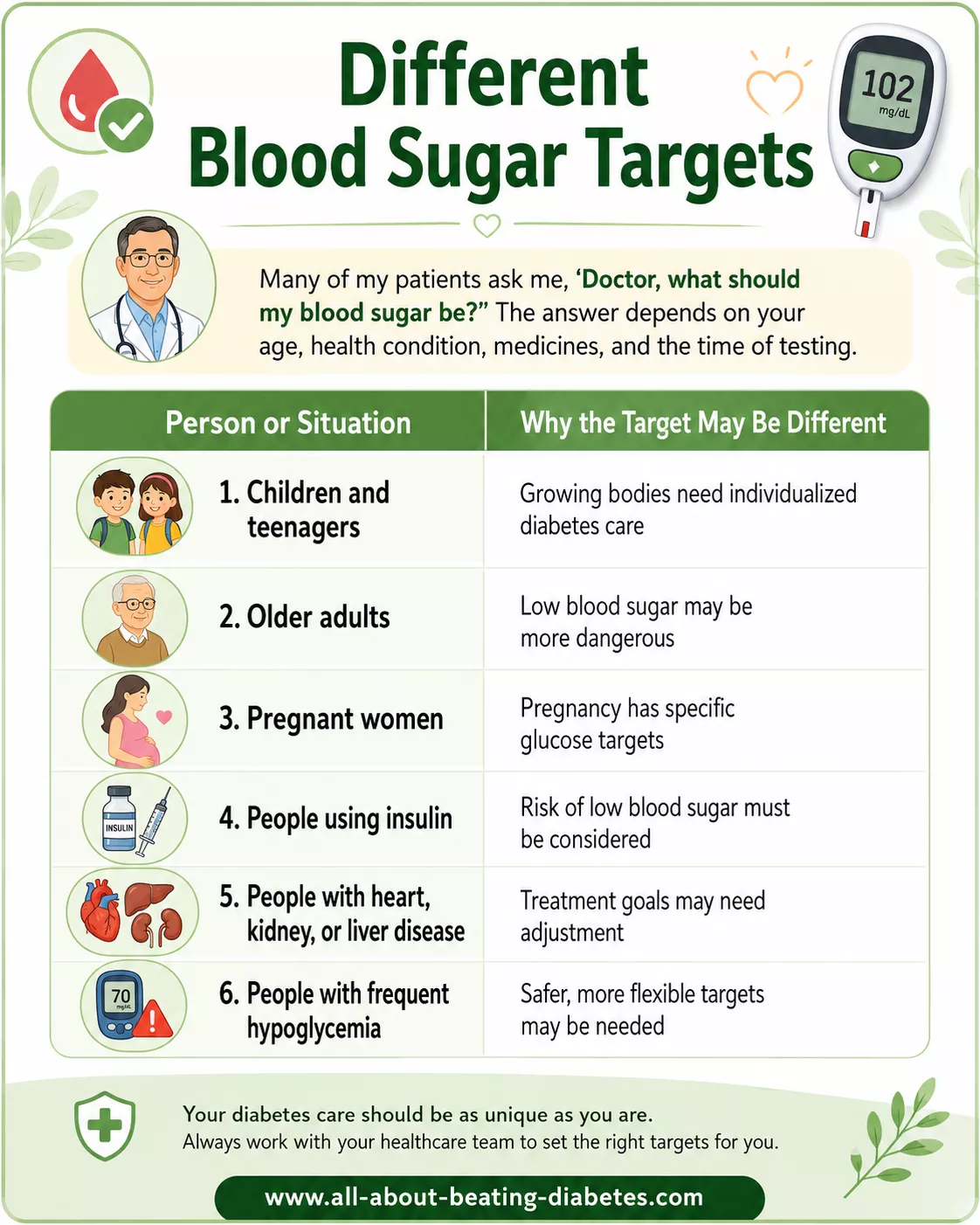
Why Your Personal Target May Be Different
I would not give exactly the same glucose goal to every patient. Your targets may need to be individualized if you:
- are pregnant or planning pregnancy;
- are a child or adolescent;
- are an older adult;
- have frequent or severe hypoglycemia;
- have impaired awareness of low blood sugar;
- have significant kidney, heart, liver or other medical disease;
- have cognitive or functional limitations;
- have lived with diabetes for many years; or
- use insulin or medicines that increase hypoglycemia risk.
An older adult who is otherwise healthy may still have relatively tight glucose goals. Someone with frailty, several serious illnesses or recurrent hypoglycemia may need more relaxed targets because preventing low blood sugar becomes the greater priority.
What Can Affect Your Blood Glucose Readings?
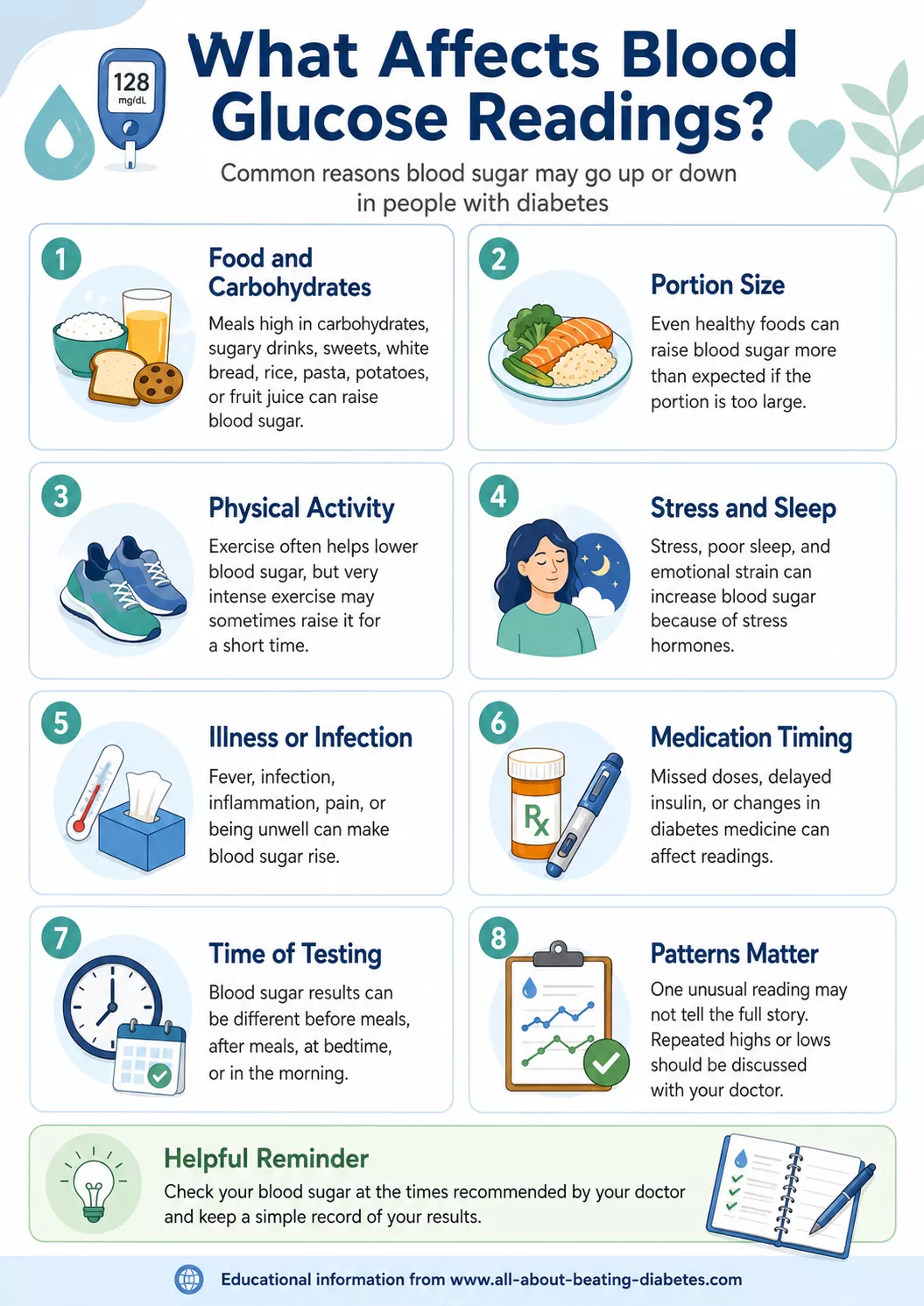
Even when your treatment plan has not changed, glucose can vary from day to day. Common influences include:
- meal size and carbohydrate content;
- physical activity;
- stress and sleep;
- infection, illness or pain;
- dehydration or alcohol;
- hormonal changes;
- medication timing;
- missed insulin or diabetes medicine; and
- corticosteroids and some other medicines.
This is why I encourage patients to look for patterns rather than reacting strongly to one unusual result.
How to Keep Blood Glucose Closer to Your Target
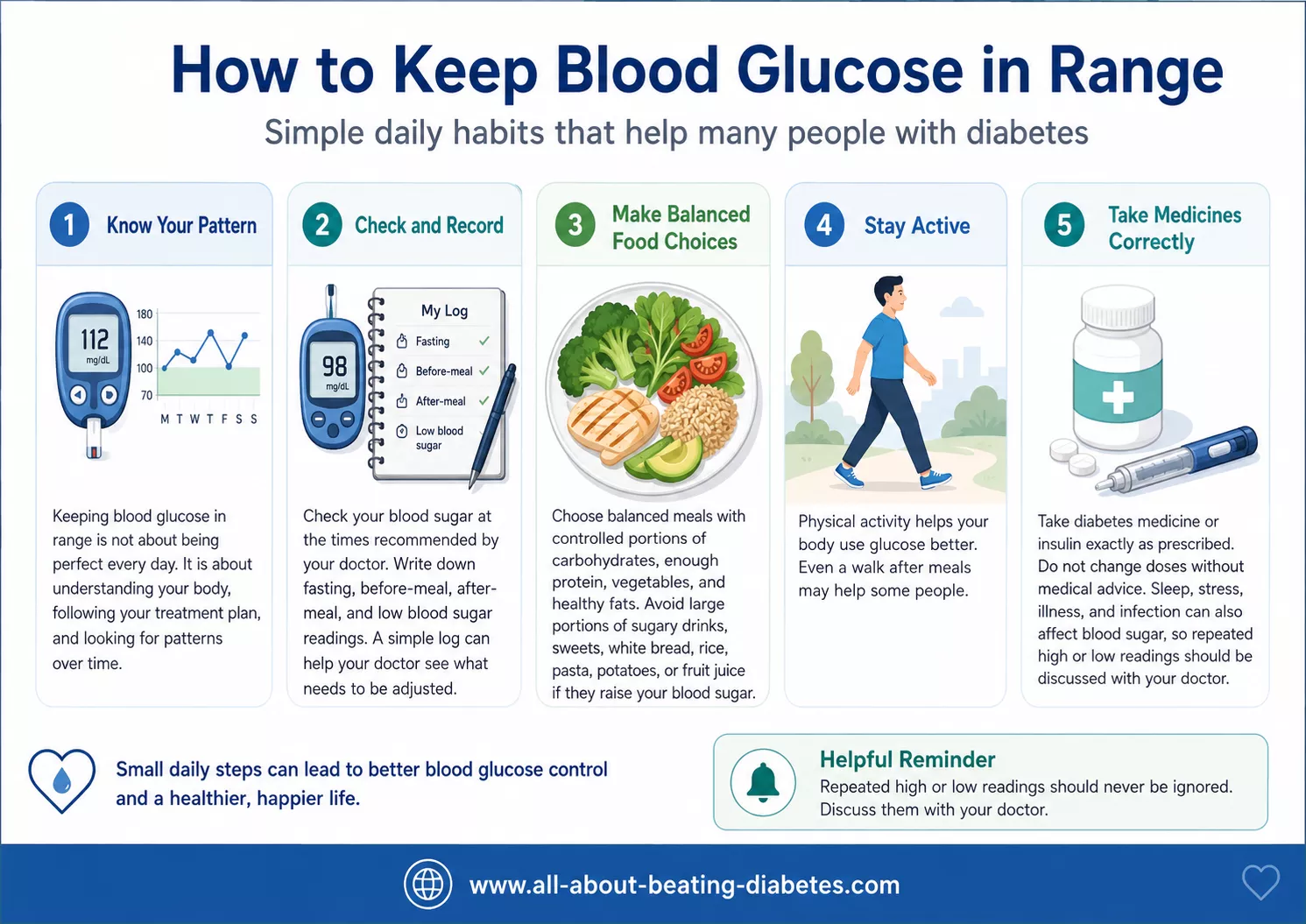
Keeping glucose in range does not require perfect numbers every day. The practical goal is to make the overall pattern safer and more consistent. Depending on your treatment plan, helpful steps may include:
- taking insulin or diabetes medicine exactly as prescribed;
- checking glucose at the times recommended by your healthcare team;
- keeping carbohydrate portions reasonably consistent when this is part of your plan;
- choosing meals with vegetables, protein, fiber and appropriate carbohydrate portions;
- being physically active regularly;
- reviewing repeated highs or lows instead of changing medication on your own;
- paying attention to sleep, illness, stress and hydration; and
- bringing your glucose log or CGM report to medical appointments.
Do not change insulin or medication doses because of one unusual result unless your healthcare professional has given you a specific adjustment plan.
Dr. Albana’s Perspective
When a patient asks whether a blood sugar number is “acceptable,” I first ask when it was measured and what target we agreed on for that person.
A premeal glucose of 125 mg/dL may be within the usual target for many adults with diabetes. The same number means something different if we are discussing a fasting laboratory test used to screen a person who has not been diagnosed with diabetes.
I also do not judge diabetes control from one good reading or one bad reading. I want to know whether most values are reasonably close to target, whether there are repeated highs, whether low glucose is occurring, and whether the A1C or CGM report tells the same story.
The best target is not the lowest number you can achieve. It is the range that offers meaningful long-term protection while remaining safe and realistic for your health and treatment.
When Should You Contact Your Doctor?
Contact your healthcare team if:
- glucose is repeatedly above your agreed target;
- you have repeated readings below 70 mg/dL;
- you experience nighttime hypoglycemia;
- your A1C is rising despite apparently reasonable daily readings;
- your CGM shows frequent highs or lows;
- you are ill and glucose becomes difficult to control;
- you are unsure whether medication or insulin needs adjustment; or
- your target may no longer be appropriate because of pregnancy, aging or a new medical condition.
Related Questions
Is 130 mg/dL acceptable for someone with diabetes?
It depends on when it was measured. For many nonpregnant adults, 130 mg/dL is at the upper end of the common premeal target. After a meal, it may also be within an acceptable range, but your individual target may differ.
Is 180 mg/dL after eating acceptable?
For many adults with diabetes, the common goal is a peak post-meal glucose below 180 mg/dL, assessed 1–2 hours after the beginning of the meal. Frequent readings at or above this level should be reviewed as a pattern.
Is 70 mg/dL acceptable?
Seventy mg/dL is the threshold at which we become concerned about hypoglycemia. A reading below 70 mg/dL should be treated according to your diabetes plan, and repeated lows should be discussed with your healthcare team.
Should everyone with diabetes have the same glucose target?
No. Age, pregnancy, medications, hypoglycemia risk, kidney or heart disease, functional status and other health conditions can all affect the safest goal.
What should my blood sugar be at bedtime?
There is no universal bedtime target for every adult with diabetes. Your bedtime goal should reflect your treatment plan, especially if you use insulin or are at risk of overnight hypoglycemia.
Is A1C below 7% right for everyone?
No. Below 7% is a common goal for many nonpregnant adults, but some people may benefit from a lower goal and others need a less stringent one for safety.
Related Tools and Calculators
Related Resources
Final Key Message
For many nonpregnant adults with diabetes, common treatment goals are 80–130 mg/dL before meals, below 180 mg/dL at the peak after meals, and A1C below 7% when these goals can be achieved safely.
If you use CGM, spending more than 70% of the time between 70 and 180 mg/dL is a common goal for many adults, while time below 70 mg/dL should remain limited.
Most importantly, your target should fit you. A safe plan balances glucose control with your risk of hypoglycemia, medications, age, other medical conditions and daily life. I would rather see a patient follow a realistic, individualized target safely and consistently than chase a “perfect” number that creates unnecessary risk.
References
- American Diabetes Association Professional Practice Committee. Glycemic Goals, Hypoglycemia, and Hyperglycemic Crises: Standards of Care in Diabetes—2026. Diabetes Care. 2026;49(Suppl. 1).
- American Diabetes Association Professional Practice Committee. Older Adults: Standards of Care in Diabetes—2026. Diabetes Care. 2026;49(Suppl. 1).
- American Diabetes Association. Checking Your Blood Sugar.
- National Institute of Diabetes and Digestive and Kidney Diseases. Managing Diabetes. National Institutes of Health.
Medical disclaimer: This information is for general education and does not replace professional medical advice, diagnosis or treatment. Follow the glucose targets and treatment plan recommended by your healthcare professional. Do not change insulin or diabetes medication doses without appropriate medical guidance.
Written by: Dr. Albana Greca Sejdini, MD, MMedSc
Medically reviewed by: Dr. Ruden Cakoni, MD, Endocrinologist
Last medically reviewed: July 2026
Gestational diabetes usually causes no obvious symptoms, so blood testing is an important part of prenatal care. Most people who were not already found to have diabetes are screened between 24 and 28 weeks of pregnancy. Earlier testing may be recommended when there is a previous history of gestational diabetes, obesity, polycystic ovary syndrome, a strong family history, an earlier large baby, or another reason to suspect preexisting diabetes or high-risk abnormal glucose metabolism.
When Is the Gestational Diabetes Test Performed?
For most pregnancies without previously identified diabetes, screening is performed at 24–28 weeks. Insulin resistance normally increases during the second and third trimesters because placental hormones change how the body responds to insulin. This is why a normal early result does not always replace routine testing later in pregnancy.
Testing may occur earlier when the patient:
- had gestational diabetes in a previous pregnancy;
- has overweight or obesity plus additional diabetes risk factors;
- has polycystic ovary syndrome;
- has a parent or sibling with type 2 diabetes;
- previously delivered a baby weighing more than 9 pounds or 4.1 kg;
- has prediabetes, abnormal glucose, or metabolic liver disease;
- has signs of insulin resistance such as acanthosis nigricans;
- uses a medicine that can raise glucose;
- has symptoms or laboratory findings suggesting preexisting diabetes.
Risk-factor lists and screening policies vary by country. Some health systems screen all pregnant patients; others use risk-based early testing followed by routine testing at 24–28 weeks.


What Is Early-Pregnancy Diabetes Testing?
Testing early in pregnancy has two related goals:
- Identify previously unrecognized type 1 or type 2 diabetes. Glucose in the usual nonpregnancy diabetes range early in pregnancy may represent diabetes that existed before pregnancy rather than ordinary gestational diabetes.
- Identify high-risk abnormal glucose metabolism. ADA 2026 recommends assessment before 15 weeks because some early abnormalities predict later gestational diabetes and adverse pregnancy outcomes.
The clinician may use fasting plasma glucose, HbA1c, random plasma glucose, or an early OGTT depending on the health system and clinical situation.
HbA1c is not the preferred stand-alone test for diagnosing gestational diabetes at 24–28 weeks. Pregnancy changes red-blood-cell turnover, and HbA1c does not show the same information as a glucose challenge or OGTT.
A normal early test may still need to be repeated at 24–28 weeks because pregnancy-related insulin resistance increases later.
Two-Step Testing: 50-g Screening Followed by a 100-g OGTT
This approach is commonly used in the United States.
Step 1: The 50-g glucose challenge test
The glucose challenge test is a screening test, not the final diagnostic test.
- It is usually performed without fasting.
- You drink a solution containing 50 grams of glucose.
- Blood is drawn one hour later.
- You should remain in the testing area and avoid food, smoking, and unplanned activity during the waiting period.
Clinics use different positive-screen thresholds, commonly 130, 135, or 140 mg/dL at one hour. A lower cutoff detects more possible cases but also sends more people for the diagnostic test.
A result above the clinic’s threshold means that a diagnostic OGTT is usually needed. It does not automatically mean that you have gestational diabetes.
Step 2: The fasting 100-g, three-hour OGTT
After an overnight fast, blood is drawn before the drink and at one, two, and three hours after consuming 100 grams of glucose.
The commonly used Carpenter-Coustan thresholds are:
| 100-g OGTT time | Abnormal at or above | mmol/L equivalent |
|---|---|---|
| Fasting | 95 mg/dL | 5.3 mmol/L |
| 1 hour | 180 mg/dL | 10.0 mmol/L |
| 2 hours | 155 mg/dL | 8.6 mmol/L |
| 3 hours | 140 mg/dL | 7.8 mmol/L |
Under the traditional two-step method, gestational diabetes is generally diagnosed when two or more values meet or exceed the thresholds. One abnormal result may still be associated with increased pregnancy risk and may lead to nutrition counseling, repeat testing, home monitoring, or closer follow-up depending on the clinician.
One-Step Testing: The Fasting 75-g, Two-Hour OGTT
The one-step strategy skips the separate 50-g screening test. After an overnight fast:
- A fasting blood sample is drawn.
- You drink a solution containing 75 grams of glucose.
- Blood is drawn one hour later.
- Blood is drawn again two hours after the drink.
The commonly used IADPSG/ADA/WHO thresholds are:
| 75-g OGTT time | Gestational diabetes at or above | mmol/L equivalent |
|---|---|---|
| Fasting | 92 mg/dL | 5.1 mmol/L |
| 1 hour | 180 mg/dL | 10.0 mmol/L |
| 2 hours | 153 mg/dL | 8.5 mmol/L |
With this approach, one or more values meeting or exceeding the threshold establishes the diagnosis.
Why Do Gestational Diabetes Thresholds Differ?
There is no single worldwide testing strategy. Different professional organizations and health systems may use:
- a two-step 50-g screen followed by a 100-g OGTT;
- a one-step 75-g OGTT with fasting, one-hour, and two-hour measurements;
- a 75-g OGTT using only fasting and two-hour values;
- different screening cutoffs or country-specific diagnostic thresholds.
The United Kingdom, for example, commonly uses a 75-g OGTT with different diagnostic criteria from the IADPSG/ADA one-step table.
The general adult “normal range” of 65–105 mg/dL should not be used to interpret all pregnancy test results. Each test has a specific glucose load, timing, and threshold.
Are Fasting, Random, and After-Meal Tests Diagnostic for Gestational Diabetes?
They may identify concerning hyperglycemia, but they are not interchangeable with a standardized gestational diabetes protocol.
Fasting plasma glucose
A fasting value may help identify preexisting diabetes or abnormal early-pregnancy glucose. It may also be one component of a 75-g or 100-g OGTT. A single fasting value does not replace the complete diagnostic test when the maternity protocol requires an OGTT.
Random plasma glucose
A random test may be useful when symptoms or severe hyperglycemia are present. “Random” means the sample is taken without regard to the last meal; it does not mean blood is routinely drawn three times before, during, and after meals.
Usual post-meal glucose
A glucose level two hours after an ordinary meal is useful for monitoring after diagnosis, but the meal does not contain a standardized amount of carbohydrate. It is not the same as an OGTT and should not be called the “second best” diagnostic test.
Urine glucose
Glucose in urine is not accurate enough to diagnose or rule out gestational diabetes. Pregnancy changes the kidney threshold for glucose, so glycosuria can occur without gestational diabetes and gestational diabetes can occur without glycosuria.
How Should You Prepare for the Test?
For the 50-g screening test
Fasting is usually not required, but follow your clinic’s written instructions. Some clinics advise avoiding a very sugary meal immediately before testing.
For the 75-g or 100-g diagnostic OGTT
- Follow the specified fasting period, commonly at least eight hours.
- Water is usually allowed, but confirm with the laboratory.
- Do not smoke, vape, chew gum, or consume coffee, tea, juice, milk, sweets, or caloric drinks during the fast.
- Do not stop prescribed medicines unless the maternity team instructs you.
- Tell the clinic about corticosteroids, beta-agonists, illness, vomiting, bed rest, bariatric surgery, or medicines that may affect the result.
- Eat normally in the days before testing unless the clinic provides a specific preparation plan.
- Do not deliberately restrict carbohydrate to try to obtain a lower result.
- Avoid unusual strenuous exercise immediately before or during the test.
The old instruction to consume at least 150 grams of carbohydrate for three days reflects older OGTT-preparation protocols. Some laboratories still provide carbohydrate guidance, while others advise the patient simply to maintain a normal unrestricted diet. Follow your laboratory’s protocol rather than a universal online rule.
What Happens During the OGTT?
Plan to remain at the laboratory for the entire testing period.
- The staff confirms your fasting status and collects the first sample.
- You drink the glucose solution within the instructed time.
- The clock begins according to the laboratory protocol.
- You remain seated or resting and do not eat, smoke, or exercise.
- Blood samples are collected at the required times.
Tell the staff immediately if you vomit, feel faint, develop severe nausea, or cannot finish the drink. Vomiting may invalidate the test, but do not decide this yourself or leave without speaking to the staff.
Bring reading material, wear clothing that allows easy blood draws, and consider having someone accompany you if you have a history of fainting or severe nausea.
Can the Glucose Drink Cause Side Effects?
Temporary symptoms may include:
- nausea;
- abdominal fullness;
- headache;
- dizziness or lightheadedness;
- sweating or shakiness;
- fatigue;
- vomiting;
- feeling unwell after the test as glucose falls.
Most symptoms resolve after the test and a permitted meal. Ask the clinic when you may eat, drink, drive, and take morning medicines.
A standard glucose drink does not cause gestational diabetes. It temporarily challenges the body with a measured glucose amount so the response can be assessed.
What If You Had Bariatric Surgery or Cannot Tolerate the Drink?
After gastric bypass or another procedure associated with dumping syndrome, a standard glucose drink may cause severe symptoms and unreliable results. Some patients also cannot complete an OGTT because of recurrent vomiting or another medical condition.
There is no single universal substitute. The obstetric and diabetes teams may consider structured fasting and post-meal home glucose monitoring, continuous glucose monitoring, or another locally approved strategy. Do not substitute home readings without a documented clinical plan.
What Does an Abnormal Result Mean?
An abnormal diagnostic result means that pregnancy-related insulin resistance has exceeded the pancreas’s ability to maintain glucose below the selected thresholds.
It does not mean that:
- you caused the condition by eating sugar;
- you had diabetes before pregnancy;
- the baby will definitely have a complication;
- insulin will always be required;
- diabetes will definitely continue after delivery.
It does mean that treatment and monitoring should begin promptly because managing glucose reduces pregnancy risks.
Possible risks of untreated or insufficiently controlled gestational diabetes include:
- large-for-gestational-age growth and birth injury;
- preeclampsia and high blood pressure;
- polyhydramnios;
- preterm delivery;
- cesarean delivery;
- newborn low blood glucose;
- newborn breathing problems;
- higher future risk of obesity and type 2 diabetes for the child;
- higher future type 2 diabetes risk for the mother.
Most people with gestational diabetes can have a healthy pregnancy and baby with appropriate care.
Common Glucose Targets After Gestational Diabetes Is Diagnosed
These are treatment targets, not OGTT diagnostic thresholds.
| Home monitoring time | Common ADA target | mmol/L |
|---|---|---|
| Fasting | Below 95 mg/dL | Below 5.3 mmol/L |
| 1 hour after beginning a meal | Below 140 mg/dL | Below 7.8 mmol/L |
| 2 hours after beginning a meal | Below 120 mg/dL | Below 6.7 mmol/L |
Your maternity team may use different goals based on the pregnancy, glucose method, medication, fetal growth, and hypoglycemia risk.
A reading of 140 mg/dL has a different meaning when it is:
- one hour after the 50-g screening drink;
- three hours into a 100-g OGTT;
- one hour after an ordinary meal;
- two hours after an ordinary meal.
Always record the timing.
What Happens After Diagnosis?
Care commonly includes:
- instruction on home glucose monitoring;
- an individualized pregnancy meal plan;
- appropriate carbohydrate distribution rather than eliminating carbohydrate;
- physical activity such as walking after meals when obstetrically safe;
- weight-gain guidance for pregnancy—not active weight-loss dieting;
- fetal growth and pregnancy monitoring;
- medicine when glucose remains above target.
Insulin is the preferred medicine in many guidelines when lifestyle measures are insufficient because it does not cross the placenta. Metformin is used in some health systems after individualized discussion, but it crosses the placenta and is not appropriate for every patient.
Do not start supplements, herbs, a ketogenic diet, prolonged fasting, or severe carbohydrate restriction to lower pregnancy glucose.
Read Gestational Diabetes Diet and Treatment Strategies and Tips for Controlling Gestational Diabetes.
Do You Need Testing After the Baby Is Born?
Yes. Glucose often improves after delivery when placental hormones fall, but this should be confirmed.
ADA 2026 recommends:
- a 75-g OGTT at 4–12 weeks postpartum using nonpregnancy diagnostic criteria;
- lifelong screening for prediabetes or type 2 diabetes every 1–3 years afterward.
The postpartum OGTT is preferred over HbA1c alone during the early postpartum period because blood loss, pregnancy-related changes in red-cell turnover, and iron status can affect HbA1c.
A history of gestational diabetes also increases the chance of recurrence in a later pregnancy. Tell future maternity teams early, even when postpartum glucose was normal.
When Should You Contact the Maternity Team Urgently?
Contact the maternity or diabetes team promptly for:
- repeated readings above your pregnancy targets;
- repeated low glucose;
- vomiting or difficulty keeping fluids down;
- illness, fever, or infection;
- ketones;
- severe thirst, frequent urination, or unexplained weight loss;
- a medication error or missed insulin;
- reduced fetal movement, bleeding, contractions, or fluid leakage.
Common Testing Mistakes to Avoid
- Assuming the 50-g screen is diagnostic.
- Using 75-g thresholds to interpret a 100-g test.
- Comparing an ordinary meal reading with an OGTT threshold.
- Eating or drinking calories during a required fast.
- Walking around or exercising during the waiting period.
- Leaving before all timed samples are collected.
- Restricting carbohydrate for several days to try to change the result.
- Using a home meter instead of laboratory plasma glucose for diagnosis.
- Assuming a normal early test means the 24–28-week test is unnecessary.
- Skipping postpartum testing because glucose improved after delivery.
Most Asked Questions
Do I need to fast for the one-hour glucose test?
The 50-g screening test is usually nonfasting. Follow your clinic’s instructions because local protocols differ.
What is a normal result on the one-hour screening test?
The clinic may use a cutoff of 130, 135, or 140 mg/dL. A value below its selected threshold usually means no diagnostic OGTT is needed unless there is another clinical concern.
Does failing the one-hour test mean I have gestational diabetes?
No. It usually means the diagnostic 100-g OGTT is needed. Some clinics use a one-step 75-g strategy instead.
Can I drink water during the fasting OGTT?
Water is commonly permitted, but confirm with the laboratory. Do not drink flavored, sweetened, or caloric beverages.
Can I walk around during the test?
Usually no. Physical activity can change glucose handling. Remain seated or resting unless staff instructs otherwise.
What happens if I vomit the glucose drink?
Tell the staff immediately. The test may need to be stopped and repeated or replaced with another clinically approved strategy.
Can HbA1c replace the gestational diabetes test?
Not routinely at 24–28 weeks. HbA1c does not provide the same diagnostic information as a pregnancy OGTT.
Can gestational diabetes occur after a normal test?
Yes, although it is less common. Contact the maternity team if later fetal growth, symptoms, glucose readings, medicines, or another clinical finding raises concern.
Will gestational diabetes disappear after delivery?
Glucose often returns to normal, but not always. A postpartum 75-g OGTT is required to check for persistent diabetes or prediabetes.
Related Questions
- Is Rapid Weight Gain a Sign of Gestational Diabetes?
- Can I Prevent Gestational Diabetes Again in This Pregnancy?
- How Should Different Fasting and Two-Hour Glucose Results Be Interpreted?
Related Resources
- Signs of Gestational Diabetes
- Gestational Diabetes Diet and Treatment Strategies
- Controlling Gestational Diabetes
- Blood Tests for Diabetes
- Blood Sugar Levels After Eating
- Blood Sugar Log Sheet
Medical disclaimer: This page provides general education and cannot select your pregnancy screening method, diagnose gestational diabetes, or replace your obstetric or diabetes team. Follow the exact preparation instructions and diagnostic thresholds supplied by your maternity clinic and laboratory.
References
- American Diabetes Association: Diagnosis and Classification of Diabetes—Standards of Care in Diabetes 2026
- American Diabetes Association: Management of Diabetes in Pregnancy—Standards of Care in Diabetes 2026
- American College of Obstetricians and Gynecologists: Gestational Diabetes
- National Institute of Diabetes and Digestive and Kidney Diseases: Gestational Diabetes
- Centers for Disease Control and Prevention: Gestational Diabetes
- U.S. Preventive Services Task Force: Gestational Diabetes Screening
- NICE: Diabetes in Pregnancy—Gestational Diabetes Testing and Management
- World Health Organization: Diagnostic Criteria and Classification of Hyperglycaemia First Detected in Pregnancy