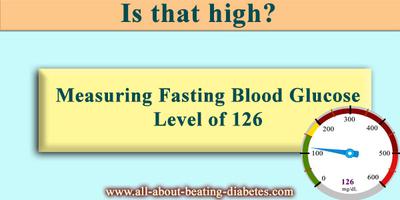
Measuring Fasting Blood Glucose Level of 126 - Is that high?

Question from Sunil:
I am 62 years old and have high blood pressure controlled by tablets. I check my blood sugar from time to time and it was usually okay, but yesterday my fasting blood sugar was 126 mg/dL. I do not smoke, drink, or have overweight. Is this high, and how can I control it?
Quick Answer
Yes. A fasting blood sugar of 126 mg/dL is high. If this was a laboratory fasting plasma glucose test and it is confirmed on repeat testing, it meets the usual diagnostic threshold for diabetes.
One reading alone does not always mean you have diabetes. Home glucose meters can vary, and fasting, stress, illness, sleep, medicines, and timing can affect the result.
Please repeat the test with your doctor and ask for HbA1c. Do not stop your blood pressure medicine unless your doctor tells you to.
Answer by Dr. Albana Greca, MD, MMedSc
Dear Sunil,
It is good that you are checking your blood sugar, especially because you are over 60 and have high blood pressure. These factors can increase cardiovascular and diabetes risk even if your weight is normal.
What Does Fasting Blood Sugar 126 mg/dL Mean?
A fasting blood sugar test should be done after at least 8 hours without food or caloric drinks. In general:
- Below 100 mg/dL is usually normal.
- 100–125 mg/dL is usually prediabetes.
- 126 mg/dL or higher may suggest diabetes if confirmed.
Your result of 126 mg/dL is exactly at the diabetes diagnostic threshold. It should be repeated and confirmed before making a diagnosis.
Helpful page: normal fasting blood sugar levels.
Does Age Make 126 mg/dL Normal?
No. Older age may increase diabetes risk, but it does not make a fasting glucose of 126 mg/dL “normal.” A result at this level deserves proper follow-up.
Also, many people with early diabetes or prediabetes have no symptoms. Lack of thirst, frequent urination, or weight loss does not rule out diabetes.
What Should You Do Next?
Ask your doctor for:
- Repeat fasting plasma glucose
- HbA1c test
- Oral glucose tolerance test if needed
- Cholesterol and triglycerides
- Kidney function and urine albumin test
- Review of your blood pressure medicines
Helpful resource: blood tests for diabetes.
Can Blood Pressure Medicines Affect
Sugar?
Some blood pressure medicines may slightly affect glucose in some people, but this does not mean you should stop them. High blood pressure treatment protects the heart, brain, kidneys, and blood vessels.
Bring the name and dose of your blood pressure tablet to your doctor. Your doctor can decide whether it is appropriate or whether a change is needed.
How to Help Control Fasting Blood Sugar
- Avoid large evening portions of rice, bread, pasta, potatoes, sweets, or fruit juice.
- Choose dinner with vegetables, lean protein, and a measured portion of high-fiber carbohydrate.
- Walk after dinner if your doctor says it is safe.
- Sleep regularly and manage stress, because both can raise morning glucose.
- Check your fasting blood sugar again on different mornings.
- Keep blood pressure controlled and follow up with your doctor.
Helpful page: why is my blood sugar high in the morning?
What Numbers Should Worry You?
If fasting glucose is repeatedly 126 mg/dL or higher, or HbA1c is 6.5% or higher, your doctor may diagnose diabetes. If fasting glucose is 100–125 mg/dL, this usually suggests prediabetes.
Do not rely on a single home meter result for diagnosis. Use it as a warning sign and confirm with laboratory testing.
Important Safety Note
Seek medical care promptly if high blood sugar comes with extreme thirst, frequent urination, vomiting, dehydration, confusion, severe weakness, deep breathing, fruity-smelling breath, chest pain, or trouble breathing.
Doctor’s Note
Sunil, fasting blood sugar 126 mg/dL should be taken seriously, but one reading is not enough for a final diagnosis. Repeat the fasting glucose, check HbA1c, and review your blood pressure medicine and heart risk with your doctor.
Educational safety note: This answer is for general diabetes education only. It does not replace personal medical advice, diagnosis, or treatment. Do not start, stop, or change blood pressure medicines, diabetes medicines, supplements, diet, or exercise plans without speaking with your healthcare provider.
Related Questions
- Is blood sugar 107 or 110 mg/dL high?
- What causes a sudden jump in fasting sugar?
- What causes high morning blood sugar?
- What are normal and borderline blood sugar readings?
Related Resources
- Normal fasting blood sugar levels
- Blood tests for diabetes
- HbA1c explained
- Blood sugar levels by time of day
- Blood sugar log sheet
Last reviewed: July 2026.
Click here to post comments or follow up
Ask the Doctor now? Simply click here to return to Diabetes Test and Levels.